


Improving the quality of education requires more than just well-designed programs. Teachers need continuous opportunities to learn and develop, schools require ongoing support, and educational needs must be reflected in local development planning. To ensure these efforts are sustainable, collaboration is needed among government institutions, schools, professional organizations, and other stakeholders committed to education.
Efforts to build this collective approach have been initiated through a series of advocacy activities under the KREASI Program in Pesisir Barat. In May 2026, stakeholders gathered for an Education Forum (Rembuk Pendidikan) and a stakeholder mapping exercise to discuss various educational challenges in the region. This process continued through the KREASI Footprints Forum (Forum Jejak KREASI) in July, which strengthened the Pesisir Barat Education Consortium as a platform where different actors could continue networking and contributing to education-related issues.
Shortly after the consortium was established, discussions began focusing on a more specific question: How can educational priorities identified collectively receive support through local government planning processes?
This question became a central theme of activities held in August 2026. The Education Consortium, together with local government representatives and other stakeholders, began examining teacher professional development needs more closely while exploring ways to ensure these needs could be incorporated into regional education planning.
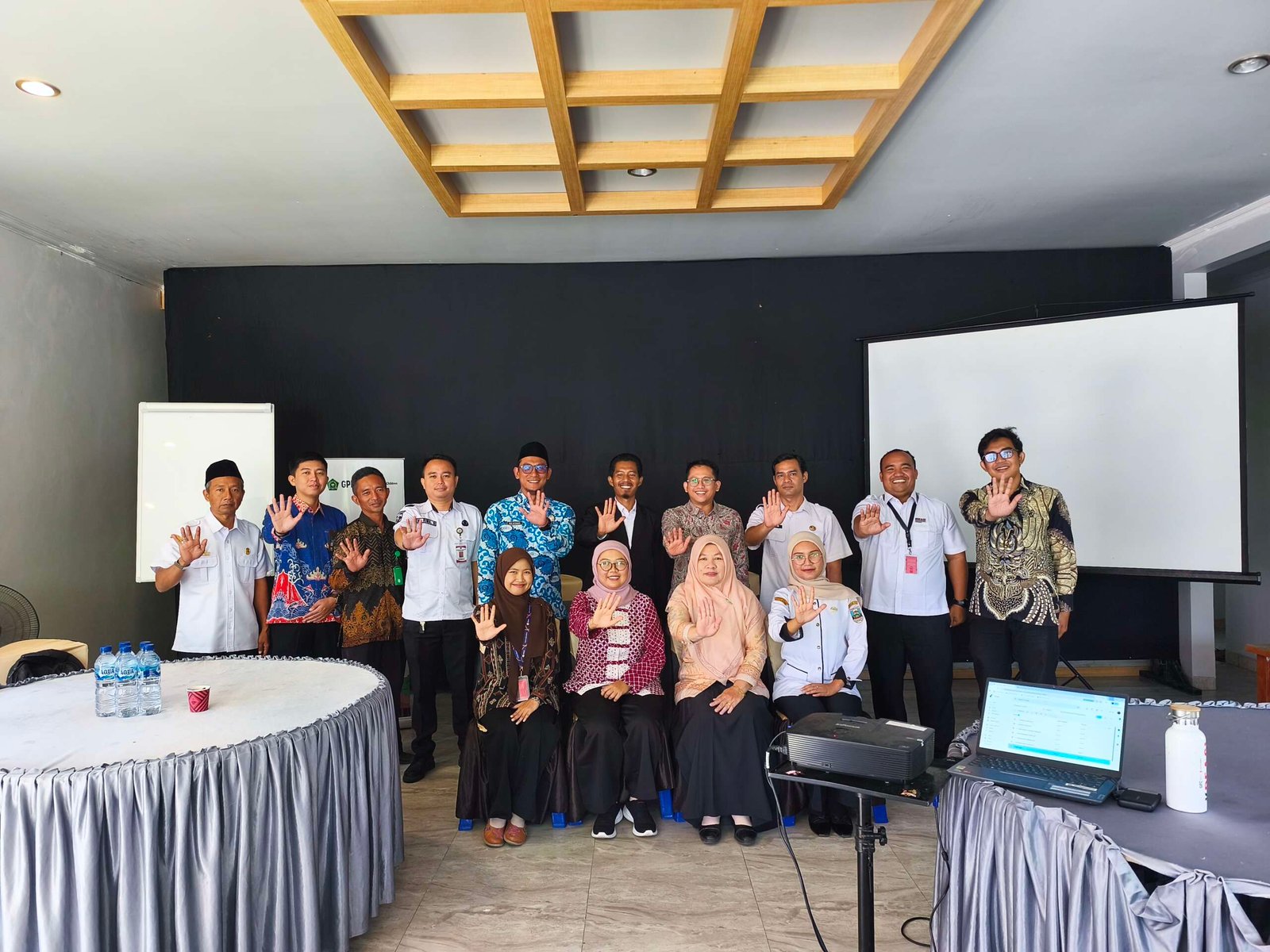
One of the key steps was a workshop held on 26 August 2026. During the workshop, participants reviewed education data as well as existing planning and budgeting documents from the local government. These materials were used to better understand the professional development needs of primary school (SD) and Islamic primary school (MI) teachers, identify teacher development programs already in place, and determine what additional support was needed to enable teachers to continue learning and improving their skills.
This process helped participants develop a more comprehensive understanding of teachers’ professional development needs. By grounding discussions in evidence and data, teacher needs could be addressed more systematically rather than relying solely on assumptions.
The analysis went beyond educational data alone. Participants connected findings from the Education Report Card (Rapor Pendidikan) with existing programs and support mechanisms. Together, they identified areas requiring further strengthening and developed recommendations that could serve as considerations for local government decision-making.
The discussion brought together a wide range of stakeholders, including representatives from Bapperida, the Education Office, the Ministry of Religious Affairs Office (Kemenag), the Regional Finance Agency, school and madrasah supervisors, professional organizations such as PGRI and IGI, early childhood education organizations, schools, and members of the Pesisir Barat Education Consortium. The participation of diverse stakeholders was essential because educational challenges do not belong to a single institution. Each participant contributed experiences, data, and perspectives that helped create a more holistic understanding of the issues.
The day after the workshop, the process continued with a Consultative Forum on Strengthening Commitment and Refining Recommendations, held on 27 August 2026 in Pesisir Barat. The forum provided an opportunity to gather feedback on the analysis that had been developed and to ensure that the resulting recommendations were aligned with local realities and needs.
During the forum, discussions expanded beyond teacher professional development to include broader educational priorities. Participants explored topics such as strengthening safe and inclusive school cultures, ensuring education remains connected to local culture, improving teacher competence and professionalism, strengthening literacy and numeracy, increasing the use of technology in learning, and promoting data-informed education planning.
The discussions also highlighted that each priority requires collaboration among multiple stakeholders. Strengthening teacher learning communities, for example, depends on support from schools, professional associations, and government agencies. Similarly, efforts to improve literacy, numeracy, and technology integration require coordinated action. The Consortium recognized the importance of connecting existing resources and initiatives across organizations so they can reinforce one another.
Participants then worked together to draft and refine recommendations. This collaborative process further strengthened their understanding of teacher professional development needs. By relying on data and evidence, discussions became more focused and strategic rather than speculative.
This process marks an important stage in the evolution of the Pesisir Barat Education Consortium. Having first created a platform for dialogue and a shared commitment to collective action, the Consortium is now learning how to bring educational issues into more strategic planning and policymaking spaces.
The journey will continue. The findings and recommendations generated through the consultative forum will serve as a foundation for future advocacy efforts, including dialogue with the Regional House of Representatives (DPRD), public consultations, and continued advocacy for teacher professional development within regional planning processes and the 2027-2028 Musrenbang cycles.
For education in Pesisir Barat, sustaining this process is essential to ensure that the needs of teachers and schools remain visible when local governments determine development priorities. For the Education Consortium, it is an opportunity to continue learning, listening to diverse perspectives, and jointly advancing recommendations that can strengthen education throughout the region.
_____
KREASI (Collaboration for the Education of Indonesian Children) is a program to improve the quality of education by strengthening literacy, numeracy, and character education. KREASI in Pesisir Barat is managed by Save the Children and implemented by Yayasan Guru Belajar, with funding from the Global Partnership for Education (GPE), as well as support from the Government of Pesisir Barat and Indonesia’s Local Education Group, led by the Ministry of Primary and Secondary Education (Kemendikdasmen) and the Ministry of Religious Affairs (Kemenag).
Writer: Clara Sidharta | Editor: Andika Ramadhan | Photo: Clara Sidharta/KREASI/Yayasan Guru Belajar/Save the Children