


For years, observing, analysing, and reporting on social issues had been at the heart of Bayu’s life. As a journalist, he was accustomed to working behind the scenes—witnessing and reporting on various events, including the troubling realities of education. Yet one realization continued to weigh on his mind: publishing a story in the media did not necessarily resolve the root causes of problems in the field.
“Bringing issues into the public sphere is important, but taking direct action to solve them is a calling of conscience,” Bayu said.
His calling to create tangible change eventually found its path. Stepping away from the familiarity of the newsroom, Bayu decided to take on a new role as a Local Facilitator for the KREASI Ketapang Safe and Comfortable School Culture (BSAN) initiative.
“My main consideration was simple: I wanted to contribute directly,” Bayu said firmly. “I believe every child has the right to a safe and comfortable learning environment that supports their growth and development, free from bullying, violence, and discrimination.”
Responding to Reality: Shifting from Sanctions to Culture
The urgent need for BSAN in Ketapang District and its surrounding areas is grounded in reality. Observing the prevalence of bullying and violence involving school-aged children in recent times, Bayu realized that these issues could not be resolved through legal measures or sanctions alone.
He highlighted that violence is often rooted in systems, communication patterns, and environments that do not yet fully support child protection. BSAN provides a more preventive and participatory approach.
“Child protection is not only about handling cases after problems arise. What is far more crucial is creating a school ecosystem capable of preventing those problems from occurring in the first place,” Bayu explained.
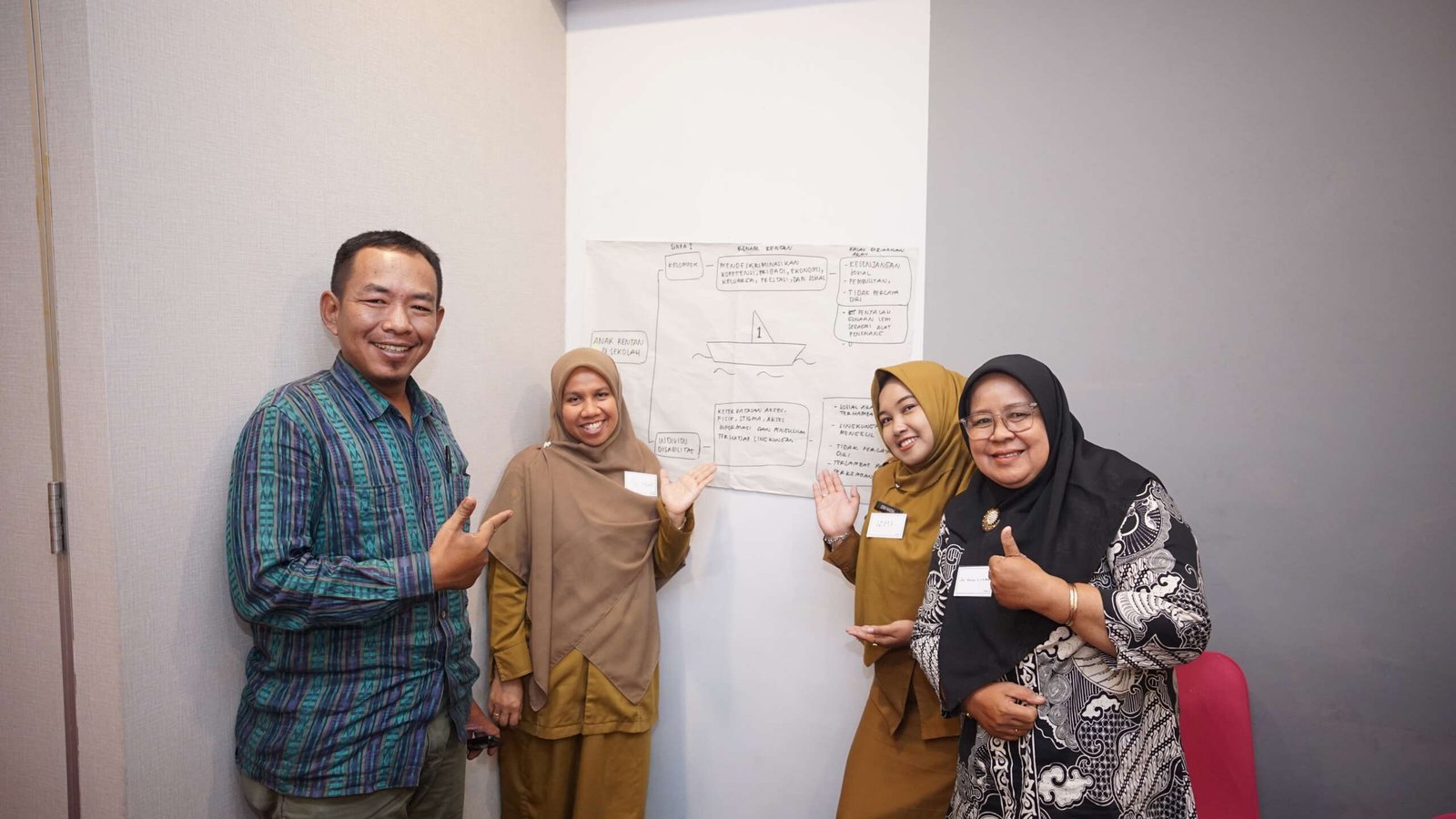
The KREASI Ketapang BSAN Local Facilitator Capacity-Building Training, which he attended from 8–12 June 2026, broadened Bayu’s perspective. He learned that strengthening schools is not merely about improving academic achievement, but also about building the quality of relationships among the people within them. When children feel valued and protected, classrooms become happier places, and the learning process can directly contribute to improving Ketapang’s Human Development Index (HDI).
Ensuring BSAN Becomes More Than a Slogan
One major challenge facing every new program is the risk of it becoming merely another administrative burden. Drawing on his public networks and close relationship with the media, Bayu is determined to ensure that BSAN is genuinely practised and embraced by school communities.
He emphasized the importance of strengthening public networks to amplify good practices from schools to wider audiences. Bayu also proposed that the local government involve Local Facilitators and media representatives in the BSAN Working Group to strengthen transparent and qualitative monitoring and evaluation.
“A program will thrive when those implementing it experience its benefits directly. If teachers, students, and parents feel its impact, BSAN will grow into a culture within the community rather than merely become an obligation to fulfil.”
Investing in the Future from the School Level
As the conversation drew to a close, Bayu shared a heartfelt message for educators at the schools he would support, whose capacity-building activities were scheduled to begin in July.
To teachers in remote areas and across Ketapang, he emphasized that his role was not to judge them, but to walk alongside them. Change may not happen overnight, but openness and consistency can pave the way towards child-friendly schools. “My commitment is to provide wholehearted support, listen with empathy, and work together to find solutions tailored to each school’s needs. Ultimately, every small step we take today is a major investment in our children’s future,” Bayu concluded.
_____
KREASI (Collaboration for the Education of Indonesian Children) is a program to improve the quality of education by strengthening literacy, numeracy, and character education. KREASI in Ketapang is managed by Save the Children and implemented by Majelis Dikdasmen dan PNF PP Muhammadiyah, with funding from the Global Partnership for Education (GPE), as well as support from the Government of Ketapang and Indonesia’s Local Education Group, led by the Ministry of Primary and Secondary Education (Kemendikdasmen) and the Ministry of Religious Affairs (Kemenag).
Writer: Afriyandi Nur Huda | Editor: Andika Ramadhan | Photo: Afriyandi Nur Huda/KREASI/Majelis Dikdasmen dan PNF PP Muhammadiyah/Save the Children