


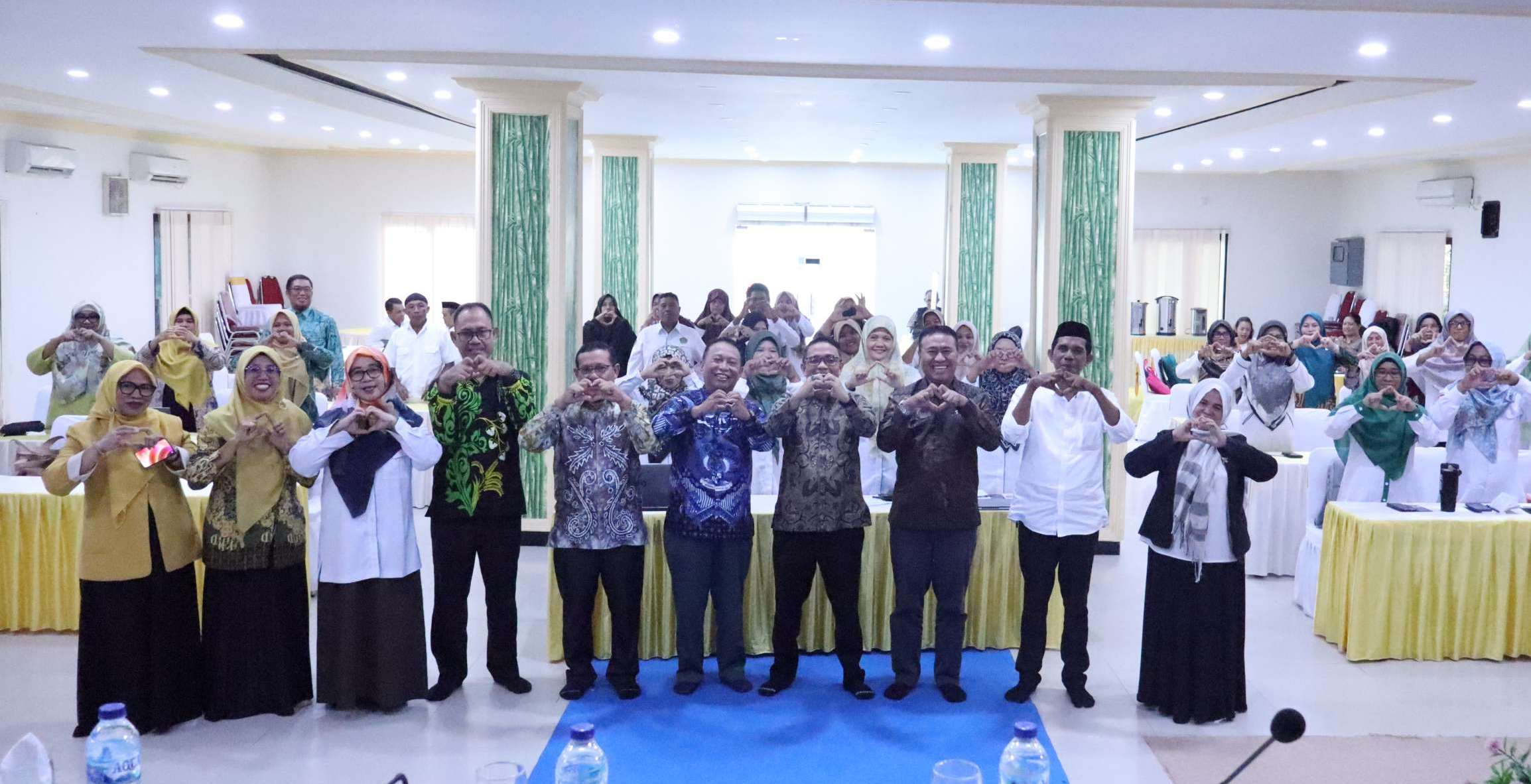
KREASI Halmahera Utara, in collaboration with the Regional Office of the Ministry of Religious Affairs of Maluku Utara, conducted a Supervision Program for Madrasah Principals on 13–15 January 2026. A total of 39 madrasah principals in Halmahera Utara took part in the activity, consisting of 21 MI principals, 13 RA principals, 2 MTs principals, and 3 MA principals. This supervision activity was the first of its kind in Halmahera Utara since it was last held in 2021.
This training is a pioneering initiative in Maluku Utara that focuses on the implementation of the Kurikulum Berbasis Cinta (KBC – Love-Based Curriculum) and the strengthening of madrasah principals’ managerial competencies. The module used in this activity is based on standards from the Ministry of Religious Affairs and equips the 39 participants with new understanding of teacher supervision techniques, which they had not previously mastered in depth.
The activity featured speakers including the Chair of the National Madrasah Supervisors Working Group (Pokjawas) of the Ministry of Religious Affairs of Indonesia, Zurni; the Chair of the Provincial Pokjawas of Maluku Utara, Ridwan Husein; and the Chair of the Pokjawas of Halmahera Utara, Yusri Siraju.
The main agenda covered managerial supervision, the strategic role of madrasah principals, implementation of the Love-Based Curriculum, and the socialization of establishing the Team for Prevention and Handling of Violence (TPPK) in accordance with Regulation No. 73 of 2024.
Beyond leadership capacity building, this training emphasized the importance of student character grounded in human values and tolerance. Madrasah principals were guided to integrate a love-based curriculum approach to create a positive, moderate, and inclusive school culture.
One of the most interesting aspects of this activity was how the “Panca Cinta” (Five Loves) practice was applied directly by the facilitators and participants. Participants were required to take off their shoes and neatly arrange them outside the meeting room. Before starting the sessions, they were asked to prepare themselves and pray so they could stay focused throughout the training.
During coffee breaks, participants were invited to sit together on the floor, with food and drinks served by fellow participants. This setup was intended to help them learn about ethics and appreciation for the process behind how food is prepared and served. It was not only about manners and etiquette; the facilitator also shared the story behind a cup of tea or coffee and a plate of traditional snacks served in front of them.
The facilitator narrated how a cup of tea could be served thanks to farmers who planted and picked the tea leaves, workers who processed them in factories, distributors who transported them, traders who sold them, hotel staff who brewed them, and fellow participants who served them. This taught participants that every drop of drink they consume represents the contribution of many people and therefore should be appreciated by not wasting food or drinks.
The same approach was used for lunch, where a narrative was shared about how the meal made its way to the table. After lunch, participants were asked to wash their own eating utensils. This practice taught them important lessons about cleanliness and responsibility.
Numaira, a principal of a Madrasah Ibtidaiyah Negeri, felt that the activity was very helpful for managerial needs and expressed hope that similar programs would continue. According to her, the activity involved spiritual and emotional aspects in every component to create a more human-centered work culture.
The materials delivered were considered crucial for madrasah leadership, especially in the preparation of Lesson Plans (RPP). The focus was not only on practical aspects but also on providing concrete techniques for principals to supervise teachers. The application of values through tangible actions—such as starting with prayer, enjoying food mindfully, and independently preparing and cleaning eating utensils—are practices that madrasah principals need to adopt so they can be role models for the entire madrasah community.
Direct education on waste management and the use of tumblers to reduce plastic waste was also provided as a form of loving the environment and an effort to prevent the negative impacts of climate change, which ultimately affect humans themselves.
In this activity, the importance of establishing Teams for Prevention and Handling of Cases (TPPK) in madrasahs was also highlighted. Beyond creating a safe, conducive, and child-friendly learning environment, the establishment of TPPK aims to ensure that madrasahs have a clear and transparent mechanism for handling cases of violence and abuse against children. Such cases are often treated as a “gray area” and taboo to discuss, which in the end leads to various assumptions in the community.
Madrasah supervisor Yusri stated that the crucial aspect emphasized in this session was the urgency of establishing active and structured TPPKs in every madrasah to ensure that problems are resolved more transparently and without bias in society.
Furthermore, Yusri explained that the ultimate goal of this activity is the internalization of the “Panca Cinta” values and character through co-curricular activities, as well as the application of eco-theology concepts in preserving the environment. As part of the follow-up plan (RTL), each madrasah principal is required to immediately apply these values within their respective institutions and socialize them with their colleagues. Supervisors will also coordinate with the Ministry of Religious Affairs to conduct intensive monitoring and determine piloting madrasahs as successful models for implementing this humanistic and sustainable curriculum.
Writer: Devina Prim Kesumaningtyas; Yatno Punyia | Editor: Andika Ramadhan | Photo: KREASI/Wahana Visi Indonesia/Save the Children