


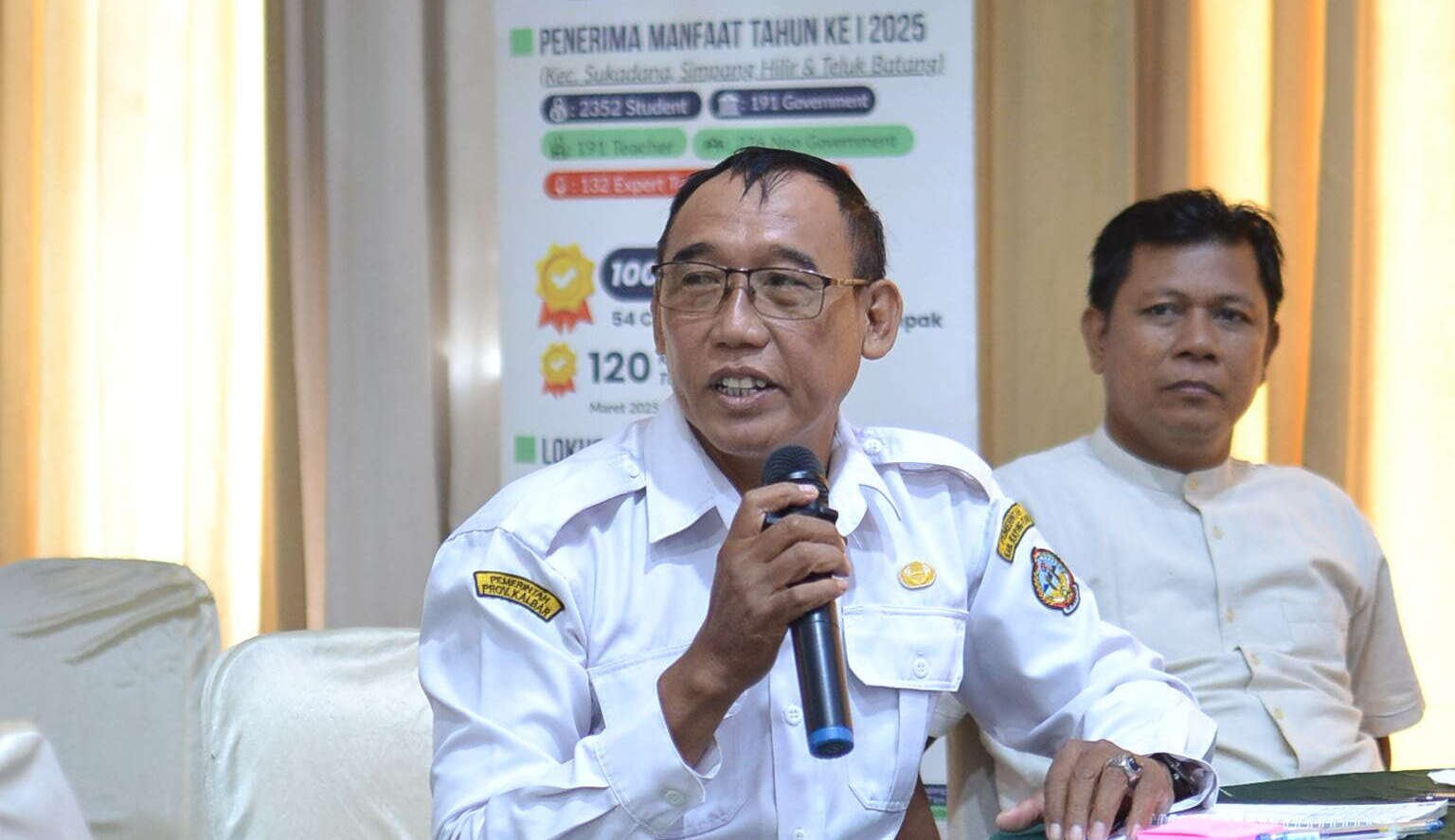
Suharyo initially felt concerned when he joined the Professional Development Training for Peer Learning Group Facilitators held by KREASI Kayong Utara. He had never participated in a training program that used this type of approach. However, those concerns gradually faded as he realized that being a facilitator does not mean being the person who talks the most.
“At first, I was worried because I had never attended a training like this before. But after the first day, I realized that a facilitator’s strength does not lie in delivering or dictating content. Instead, it lies in the ability to listen and draw out the experiences of fellow educators,” said Suharyo.
This experience was part of a training process designed by the KREASI Kayong Utara Program to strengthen the role of Group Facilitators (Faskel) in Peer Learning activities. Participants not only learned about the roles and competencies required of facilitators but also gained an understanding of the Peer Learning process within the KREASI Program, including the responsibilities that need to be carried out before, during, and after each learning session.
Their understanding was then put into practice through discussions, reflections, and simulations. Participants practiced leading discussions, managing group dynamics, responding to diverse participant characteristics, and developing follow-up action plans. Through these activities, facilitators were prepared not merely to run learning sessions but to create learning spaces where teachers and school principals can share experiences, reflect on their practices, and discover solutions through their own professional experiences.
Ultimately, the training conveyed a simple but powerful message: a good facilitator is not necessarily the center of the learning process. Instead, an effective facilitator enables others to learn from their own experiences and insights. This is the key competency that participants are expected to bring with them as they support Peer Learning activities in their schools.
_____
KREASI (Collaboration for the Education of Indonesian Children) is a program to improve the quality of education by strengthening literacy, numeracy, and character education. KREASI in Kayong Utara is managed by Save the Children and implemented by Majelis Dikdasmen PNF PP Muhammadiyah, with funding from the Global Partnership for Education (GPE), as well as support from the Government of Kayong Utara and Indonesia’s Local Education Group, led by the Ministry of Primary and Secondary Education (Kemendikdasmen) and the Ministry of Religious Affairs (Kemenag).
Writer: Arif Kudianta| Editor: Andika Ramadhan | Photo: Arif Kudianta/KREASI/Majelis Dikdasmen PNF PP Muhammadiyah/Save the Children