


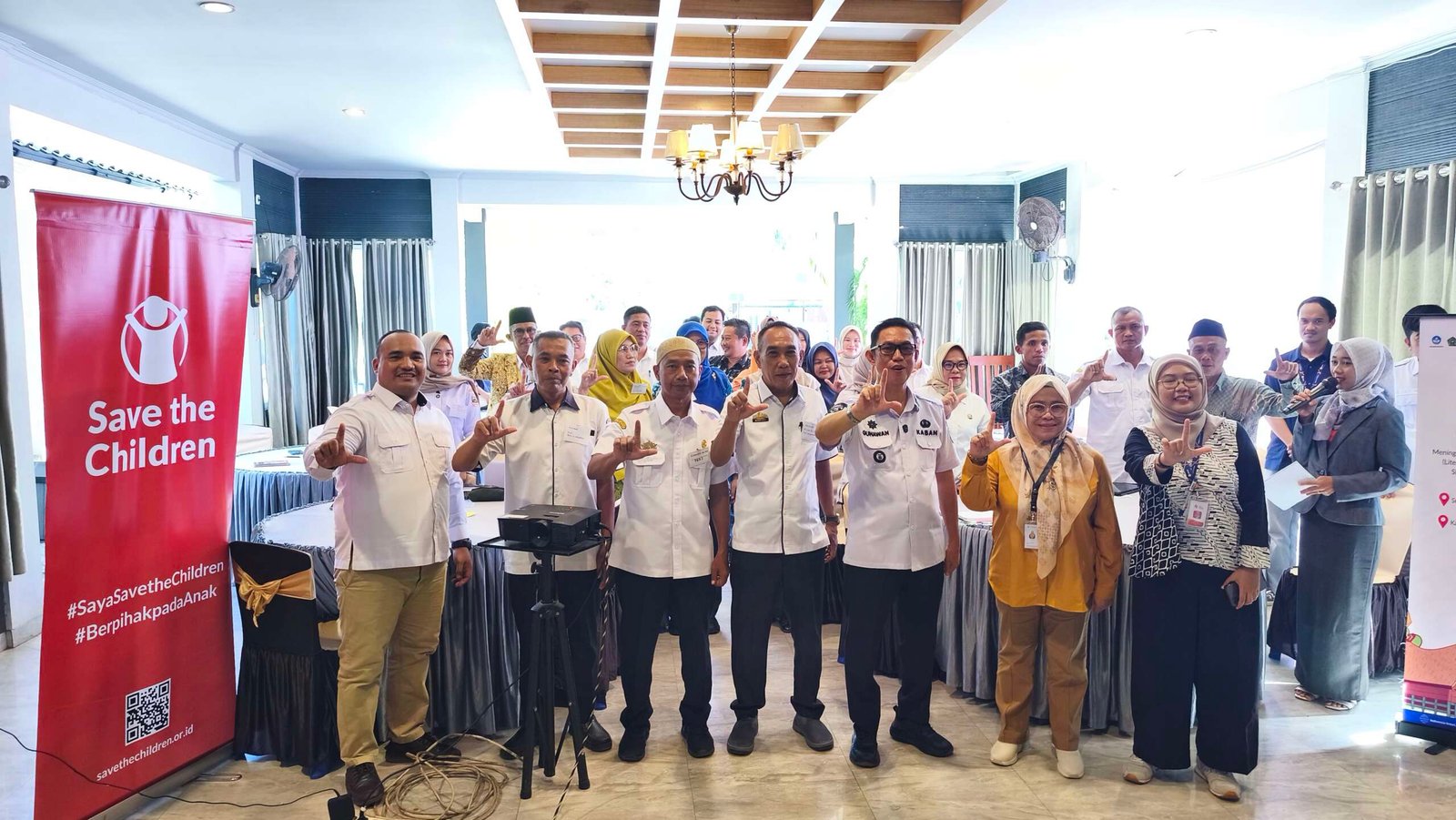
Improving the quality of education cannot be achieved by a single institution alone. It requires a platform that brings together diverse stakeholders to listen to one another, develop shared strategies, and take collective responsibility. This spirit was at the heart of the KREASI Reflection Forum: Ratification and Activation of the Education Consortium, held on 1 July 2026.
The KREASI Reflection Forum built upon discussions that had taken place on 25–26 May 2026. During the Education Dialogue and Stakeholder Mapping sessions, stakeholders came together to identify educational challenges in Pesisir Barat, map key actors with strategic roles, and develop an initial vision for how collaboration could address various educational issues across the district.
Building on these earlier discussions, the KREASI Reflection Forum provided an opportunity to transform ideas into concrete action. While previous meetings focused on reaching a shared understanding of the importance of collective action, this forum concentrated on establishing a collaborative structure through the formation of the Education Consortium. As a result, the ideas developed together moved beyond consensus and began to take shape through a formal structure, clearly defined roles, and actionable work plans designed for long-term implementation.
The event brought together 23 representatives from regional government agencies, professional associations, civil society organizations, and other education stakeholders. The forum formed part of KREASI’s advocacy efforts to strengthen collaboration and support improvements in the quality of basic education in Pesisir Barat District. Prior to this event, the process had been initiated through the Ecosystem Focus Adjustment Workshop and Stakeholder Mapping sessions, which resulted in a shared understanding of the importance of cross-sector collaboration.
One distinctive feature of this forum was the active role of the local government, not only as a participant but also as the primary facilitator. The entire discussion process was led by Eman Sulaeman, Acting Head of the Governance and Human Development Division of the Pesisir Barat Regional Development Planning Agency (Bapperida). This involvement marked an important step forward, demonstrating a growing sense of ownership by the local government in strengthening the education ecosystem. From the outset, the forum was positioned not merely as a program activity but as a shared platform for shaping the future of education in Pesisir Barat.
Throughout the event, participants discussed a range of educational challenges that continue to affect the district. Topics included limited opportunities for children to continue their education, the need to improve teacher quality, and growing concerns regarding out-of-school children. These discussions highlighted that while each institution brings different experiences and priorities, they all share a common goal: ensuring better educational services for the children of Pesisir Barat.
The discussions then evolved into a collaborative process of developing the Education Consortium’s organizational structure and operational mechanisms. Notably, the process was highly participatory. Participants not only proposed agencies and organizations to fill specific roles but also voluntarily expressed their willingness to contribute according to their capacities and areas of expertise. This atmosphere demonstrated that collaboration emerged not from formal assignment but from a shared recognition that every stakeholder has a role to play in improving education quality.
The forum resulted in the establishment of an Education Consortium management structure involving representatives from government institutions, teacher professional organizations, civil society organizations, and educational institutions. Participants also agreed on coordination mechanisms, a collective commitment document, and an initial work plan to guide collaborative efforts over the coming months. In addition, the forum established a schedule for regular meetings and communication channels to ensure ongoing coordination among members.
The establishment of the consortium marks the beginning of a longer journey. Following the forum, consortium members will participate in a series of capacity-strengthening activities designed to enhance their ability to identify, monitor, and advocate for strategic education issues in Pesisir Barat District. These efforts are expected to enable the consortium to perform its role more effectively as a cross-sector collaboration platform capable of driving sustainable change.
Looking ahead, the Education Consortium is expected to serve not only as a coordination mechanism among stakeholders but also as an active participant in strategic district-level forums, including the Regional Development Planning Consultation (Musrenbang). Through this engagement, key education challenges, ranging from improving learning quality to addressing the issue of out-of-school children, can be more closely linked to local planning and policymaking processes. In this way, the collaboration that has been established will continue to grow beyond a shared commitment and evolve into a movement that delivers meaningful and lasting impact for education in Pesisir Barat.