


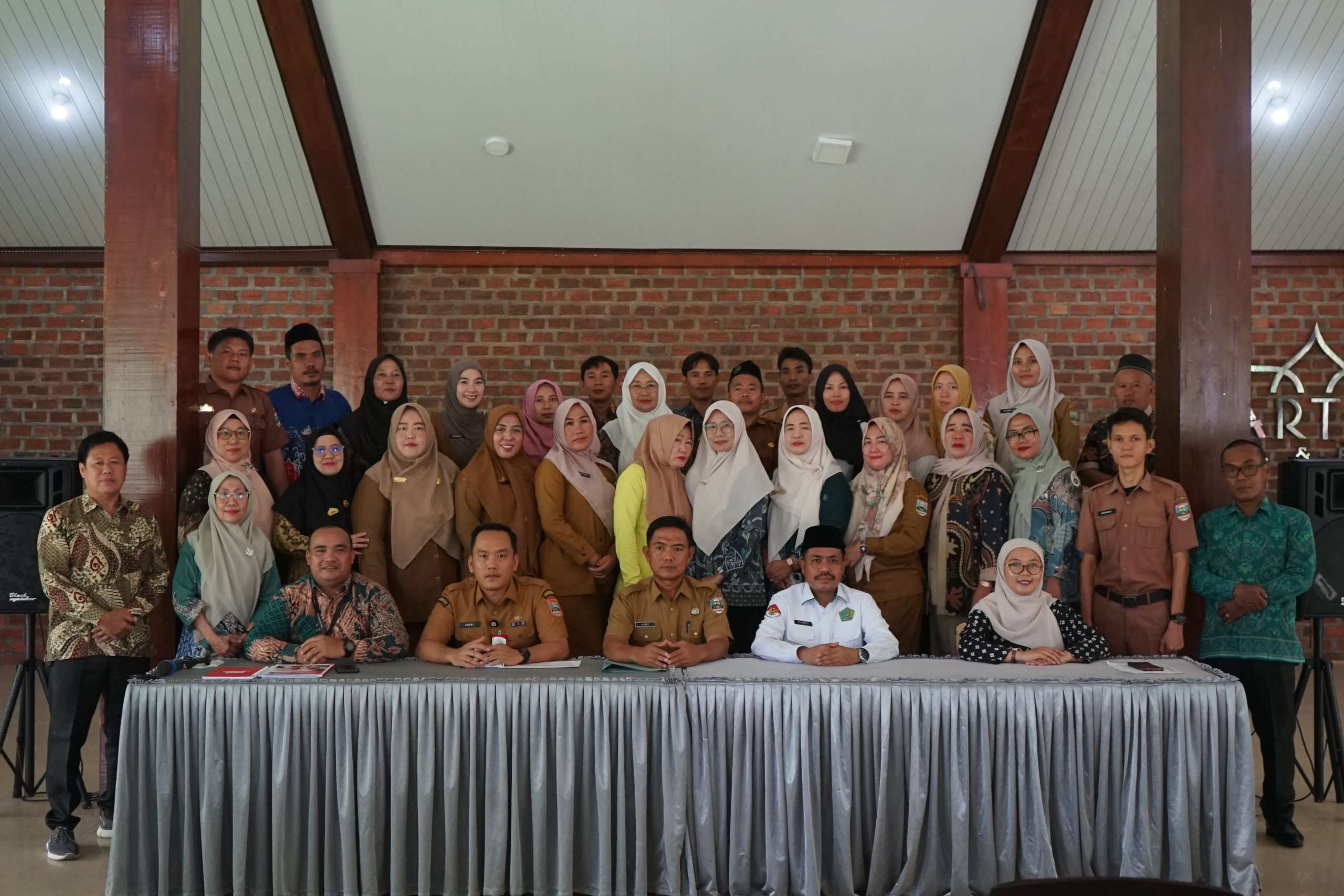
On 26 May 2026, KREASI held the Year Two KREASI Pesisir Barat Program Socialization activity for partner schools. This activity served as an initial step to build a shared understanding of the implementation of the second year of the KREASI Program, while also strengthening the commitment of various parties in efforts to improve the quality of basic education in Pesisir Barat.
The activity was attended by 30 principals of KREASI’s year-two partner elementary schools and madrasah ibtidaiyah, representatives of the Pesisir Barat District Office of the Ministry of Religious Affairs, the Pesisir Barat District Education Office, Save the Children, and the Yayasan Guru Belajar team as the implementing partner. The presence of these various stakeholders demonstrated shared support for efforts to improve the quality of education in the Pesisir Barat area.
The series of activities began with remarks from the KREASI Pesisir Barat Program Manager of Yayasan Guru Belajar, Sari Lestari, who stated that this activity served as an entry point for partner schools to understand the program’s direction and prepare for its second-year implementation.
The next remarks were delivered by Slamet, Head of the Islamic Education Section at the Pesisir Barat Office of the Ministry of Religious Affairs, who expressed appreciation for the presence of the KREASI Program and hoped that all schools would be able to take part in every learning process effectively.
The activity was then officially opened by the Secretary of the Pesisir Barat District Education Office, Albert Gunata Putra. In his remarks, he expressed hope that schools would make the most of the learning opportunities provided through the program and build strong collaboration to improve the quality of education. The opening moment was also marked by the handover of the Decree on KREASI Year Two Intervention Schools by the Education Office and the Office of the Ministry of Religious Affairs.
In the main session, participants received presentations on the achievements of first-year partner schools, an overview of school-level implementation in the second year, the six KREASI program packages, and a more in-depth explanation of the Principal Profesional Development (PPD).
Participants’ enthusiasm was evident from the various questions raised. School principals showed interest in understanding the program targets, implementation mechanisms, and teacher involvement in the different activity packages. The discussion was active and showed that schools had begun mapping out the roles and contributions they could make during program implementation.
In addition to discussing the program, the activity also became a space for sharing the real conditions faced by schools. Several school principals shared challenges such as difficult geographical access, limited road conditions to schools, flood risks, limited internet connectivity, minimal literacy facilities, and limited budgets for teacher capacity development. At the same time, these stories also reflected the spirit and resilience of the schools. Some schools had initiated classroom reading corners despite not yet having libraries, while principals continued striving to build a learning culture and support teachers to keep developing amid various limitations.
The atmosphere of the activity was warm, orderly, and participatory. Participants followed the sessions attentively and actively provided responses and input. From the discussion process, a shared hope emerged that the KREASI Program can help improve the quality of education, strengthen literacy and numeracy learning practices in the classroom, create a safe and comfortable learning environment for children, and provide a tangible impact on students’ development. The enthusiasm shown by the school principals also became an early indicator of their commitment to collaborating in implementing the program over the next two years.
Through this socialization activity, a shared understanding was built regarding the direction, objectives, and implementation strategy of the second year of the KREASI Program. Going forward, it is hoped that collaboration between schools, the local government, the Ministry of Religious Affairs, Save the Children, and Yayasan Guru Belajar can continue to be strengthened so that each program package can be implemented optimally. With the spirit of mutual cooperation and the commitment shown from the outset, the KREASI Program is expected to bring sustainable change to improve the quality of learning and the future of children in Pesisir Barat District.
_____
KREASI (Collaboration for the Education of Indonesian Children) is a program to improve the quality of education by strengthening literacy, numeracy, and character education. KREASI in Pesisir Barat is managed by Save the Children and implemented by Yayasan Guru Belajar, with funding from the Global Partnership for Education (GPE), as well as support from the Government of Pesisir Barat and Indonesia’s Local Education Group, led by the Ministry of Primary and Secondary Education (Kemendikdasmen) and the Ministry of Religious Affairs (Kemenag).
Writer: Clara Sidharta | Editor: Andika Ramadhan | Photo: Clara Sidharta/KREASI/Yayasan Guru Belajar/Save the Children