


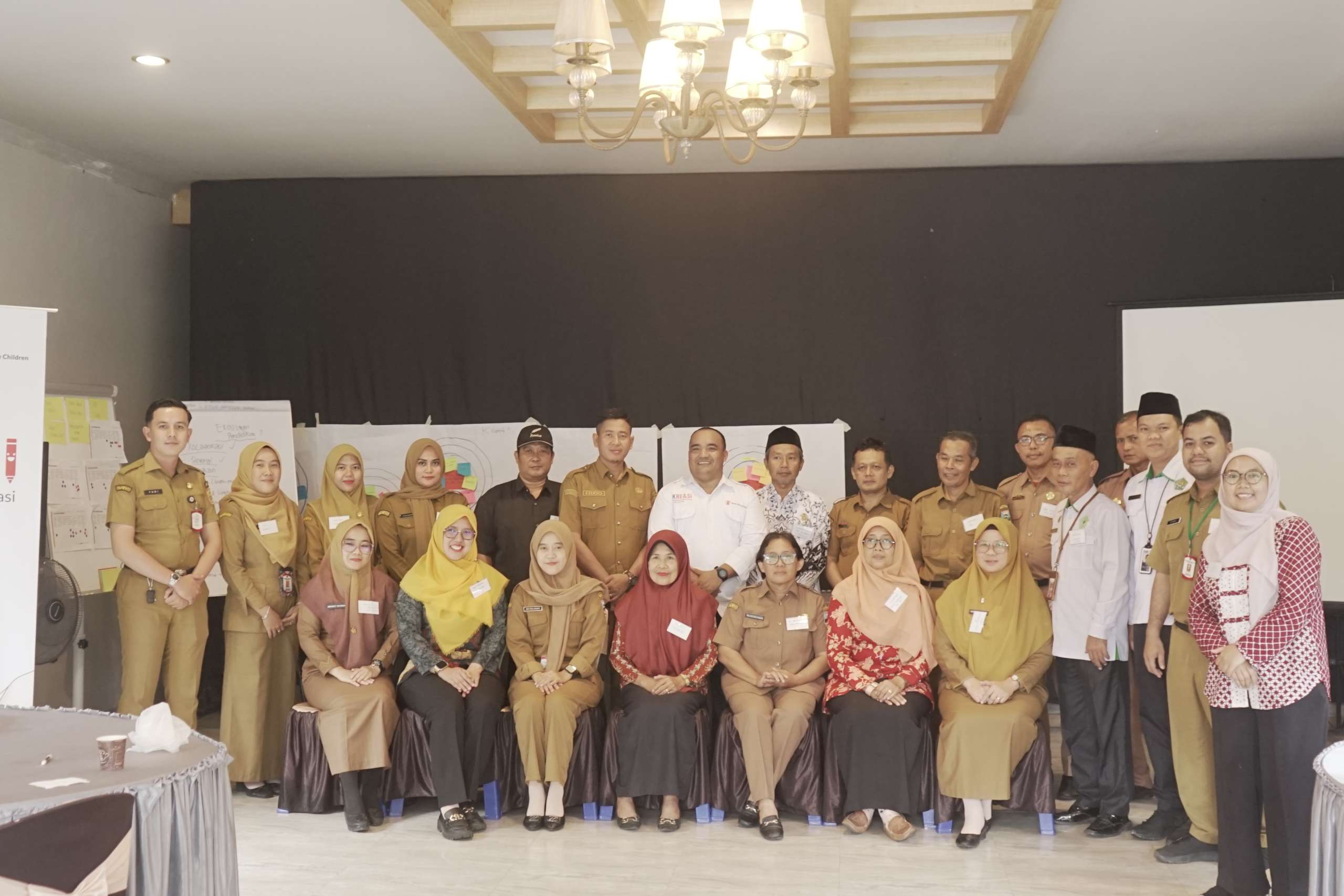
Improving the quality of education is not only determined by what happens in the classroom, but also by the strength of the ecosystem that supports it. This awareness served as the foundation for the implementation of “Education Forum: Mapping Roles, Uniting Efforts for Education in Pesisir Barat,” an Ecosystem Focus Adjustment Workshop held on 25 May 2026 in Krui, Pesisir Barat District.
Through this education forum, KREASI brought together 21 stakeholders consisting of representatives from Regional Apparatus Organizations (OPD), teacher professional organizations such as PGRI, IGI, K3S, K3M, and KKG, as well as civil society organizations such as Dharma Wanita Persatuan and LPAI. The forum was designed as a participatory dialogue space to build a shared understanding of the education ecosystem concept, identify initial entry points for advocacy, and introduce an early draft of the role of the education consortium to be jointly developed.
The activity, facilitated by the KREASI Team, took place actively from morning until late afternoon.
In his remarks, KREASI Save the Children Advocacy Coordinator, Rikson Simanjuntak, emphasized the importance of cross-sector collaboration as the foundation for sustainable education change.
The same spirit was also conveyed by representatives of the regional institutions in attendance. Hudri from the Pesisir Barat District Library and Archives Office encouraged schools and communities to make use of libraries as more vibrant learning spaces.
Erido R. from DPRKPPLH reminded participants that environmental issues and waste management are shared responsibilities that can be strengthened through education.
Meanwhile, Rahmad Wahyudi, representing the Pesisir Barat District Education and Culture Office, expressed appreciation for the KREASI Program and the local government’s commitment to supporting various efforts to improve the quality of education.
Throughout the activity, participants were invited to reflect on the state of education in Pesisir Barat, map the relationships among actors who have been involved so far, and identify opportunities for stronger collaboration. The warm and open discussions showed that each institution shares the same concern for the future of education in Pesisir Barat. Differences in background and authority instead became strengths that enriched perspectives and opened broader opportunities for cooperation.
This Education Forum did not stop at building a shared understanding. It became an initial step toward establishing a more structured collective movement. The discussion results from 25 May 2026 were then followed up through the “Stakeholder Mapping Session for Education Ecosystem Connectivity in Pesisir Barat” on 26 May 2026. This follow-up activity involved 24 participants from 17 organizations and institutions to conduct a more in-depth stakeholder mapping process. Through the 3A Analysis method, Power-Interest Grid mapping, and stakeholder identification and classification, participants jointly identified strategic actors who can play a role in driving education change in Pesisir Barat District.
This process produced a validated stakeholder map, identified priority actors to be engaged, and generated an initial design for an engagement strategy that will serve as the basis for establishing and strengthening the regional education consortium. These results provide an important foundation for more coordinated education policy and budget advocacy efforts, while also ensuring that each party can take on roles according to its capacity and authority.
Through this series of activities, stakeholders were not only brought together in one forum, but were also invited to build awareness and commitment that improving the quality of education is a shared responsibility. With increasingly aligned understanding, clearer roles, and emerging collaboration strategies, it is hoped that all available resources in Pesisir Barat District can move in a more integrated manner to support the improvement of learning quality that is equitable, inclusive, and sustainable for all children.
_____
KREASI (Collaboration for the Education of Indonesian Children) is a program to improve the quality of education by strengthening literacy, numeracy, and character education. KREASI in Pesisir Barat is managed by Save the Children and implemented by Yayasan Guru Belajar, with funding from the Global Partnership for Education (GPE), as well as support from the Government of Pesisir Barat and Indonesia’s Local Education Group, led by the Ministry of Primary and Secondary Education (Kemendikdasmen) and the Ministry of Religious Affairs (Kemenag).
Writer: Clara Sidharta | Editor: Andika Ramadhan | Photo: Clara Sidharta/KREASI/Yayasan Guru Belajar/Save the Children