


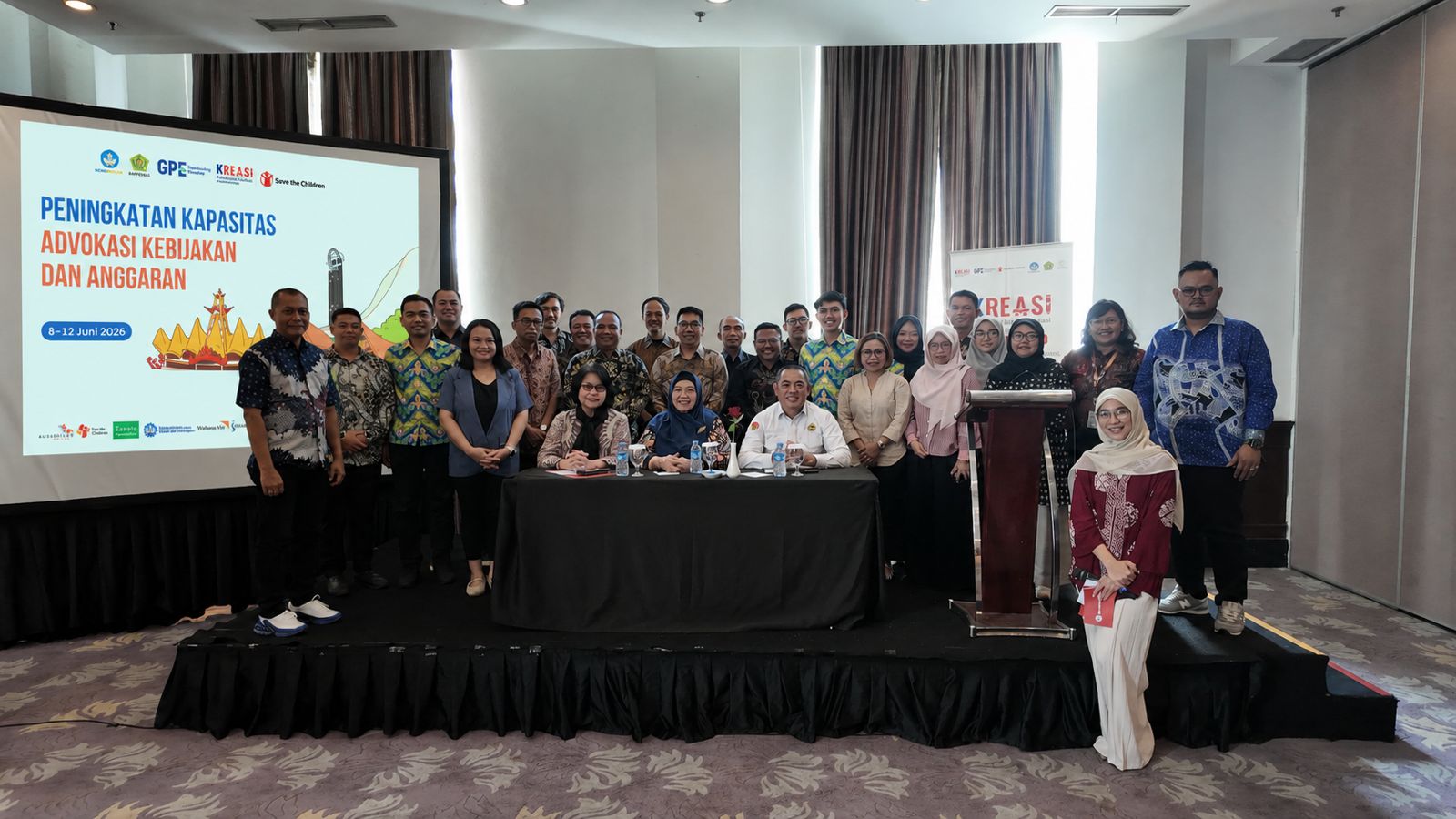
KREASI held an Advocacy Capacity Strengthening activity for local implementing partners from eight districts on 8–12 June 2026 in Jakarta. The activity aimed to strengthen partners’ capacity to promote the sustainability of literacy and numeracy improvement programs through local policies, appropriate budgeting, and collaboration across stakeholders.
The training served as a shared space for local implementing partners to align their understanding, reflect on program achievements, and formulate more targeted advocacy strategies. Through this activity, participants are expected to ensure that the good practices and approaches developed by KREASI can be integrated into local policy systems, so that the program’s impact does not stop at technical interventions in schools or madrasahs alone.
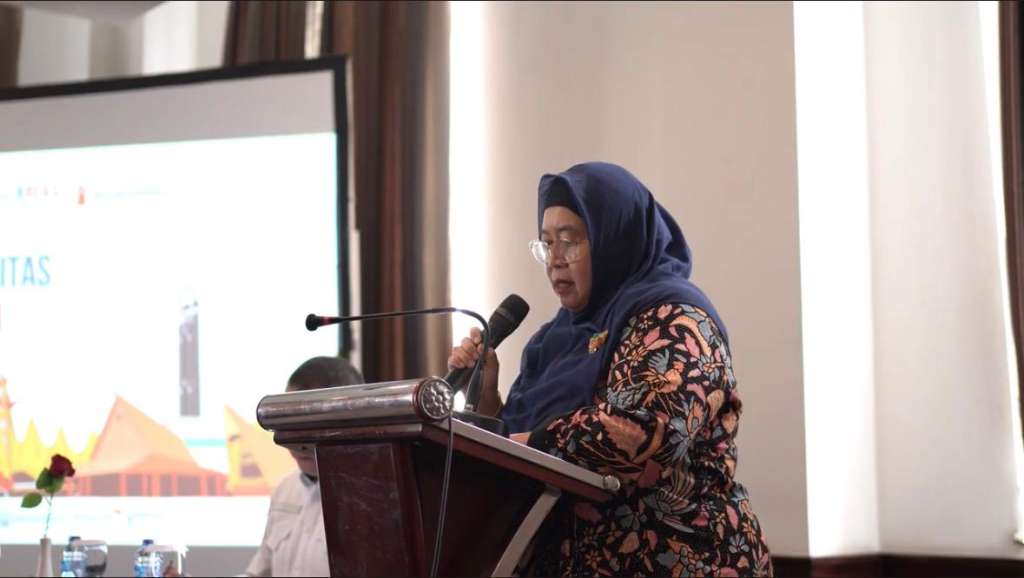
KREASI Save the Children Chief of Party, Alifah Sri Lestari, emphasized that change in the education sector requires a broader and more sustainable approach. According to her, technical interventions in schools need to be supported by appropriate policies and sound budgeting.
“Change in the education sector cannot rely solely on technical interventions in schools. Appropriate policies and sound budgeting are needed, making advocacy a key strategy to ensure that program impact can be sustained and integrated into local policy systems,” she said during the opening session.
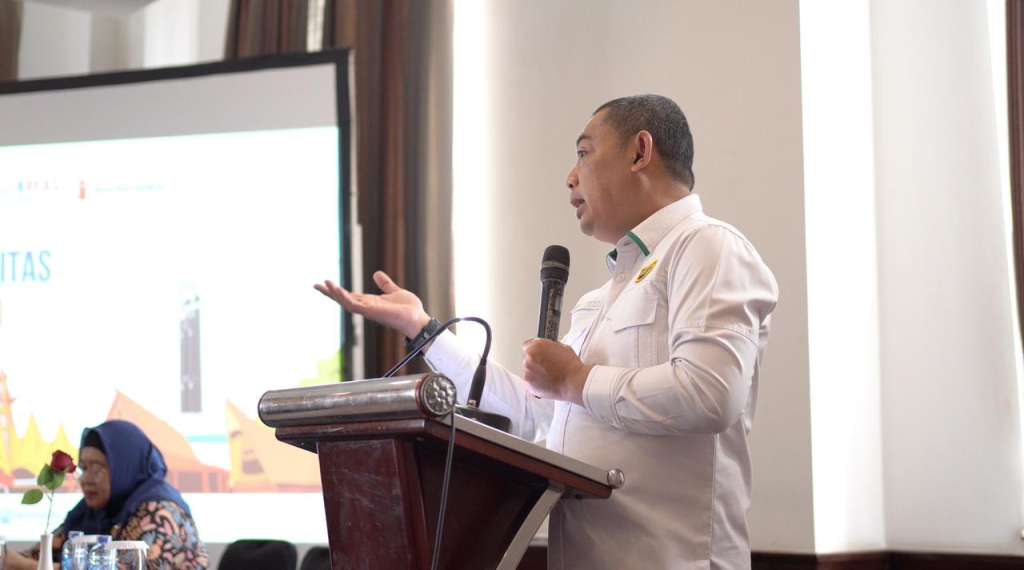
The activity also received appreciation from Abdul Basit, Head of the Curriculum Subdirectorate at the Directorate of Madrasah Curriculum, Facilities, Institutions, and Student Affairs of the Ministry of Religious Affairs, who represented the Co-Chair of Indonesia Local Education Group. He said that KREASI continues to demonstrate its commitment through various activities, including this advocacy training that brought together local implementing partners from eight districts.
Abdul Basit considered the forum important for aligning perceptions around the program, while also serving as a space for brainstorming among regions that share the same spirit in supporting the government’s efforts to improve literacy and numeracy.
“We appreciate KREASI’s activities, which continue to move forward through various initiatives, including this important meeting to align perceptions around the program. This discussion can be used as a brainstorming space for the eight districts, as we share the same spirit in supporting the government’s efforts to improve literacy and numeracy,” Abdul Basit said.
He also emphasized the importance of data-based evaluation to assess the impact of the support that has been provided. According to him, after one year of support, it is necessary to examine whether there has been an improvement in the performance of the supported madrasahs or schools, including by comparing the 2024 and 2025 Education Report Card baselines.
“After one year of support, we need to evaluate whether there has been an increase in the scores of the supported madrasahs or schools. This can be checked by comparing the 2024 Education Report Card baseline with 2025, because we always talk about outputs,” he explained.
Furthermore, Abdul Basit emphasized that the budget provided to local implementing partners must be ensured to generate real impact. One way to do this is by comparing the achievements of supported madrasahs or schools with those that are not supported, in order to see the position and contribution of the program to improving literacy and numeracy.
He also encouraged participants to engage in muhasabah, or introspection, regarding the approaches that have been implemented so far. According to him, strengthening processes, systems, and culture in schools and madrasahs can be done as long as principals, teachers, and facilitators share the same spirit.
“We need to conduct muhasabah on whether our approach has had an impact or not. Strengthening processes, systems, and culture in schools or madrasahs is believed to be possible as long as principals, teachers, and facilitators share the same spirit,” Abdul Basit added.
He further noted that educational challenges should not be viewed solely from the perspective of administration or infrastructure limitations. The presence of KREASI is instead expected to drive changes in the “substance” of education, including building teachers’ mindsets to be more oriented toward improving the quality of learning.
Through this training, KREASI encourages local implementing partners to strengthen evidence-based advocacy strategies, build dialogue with local governments, and ensure that the results of program support can be integrated into local policies and budgets. In this way, efforts to improve literacy and numeracy in schools and madrasahs can continue in a systematic, measurable, and widely impactful manner.