


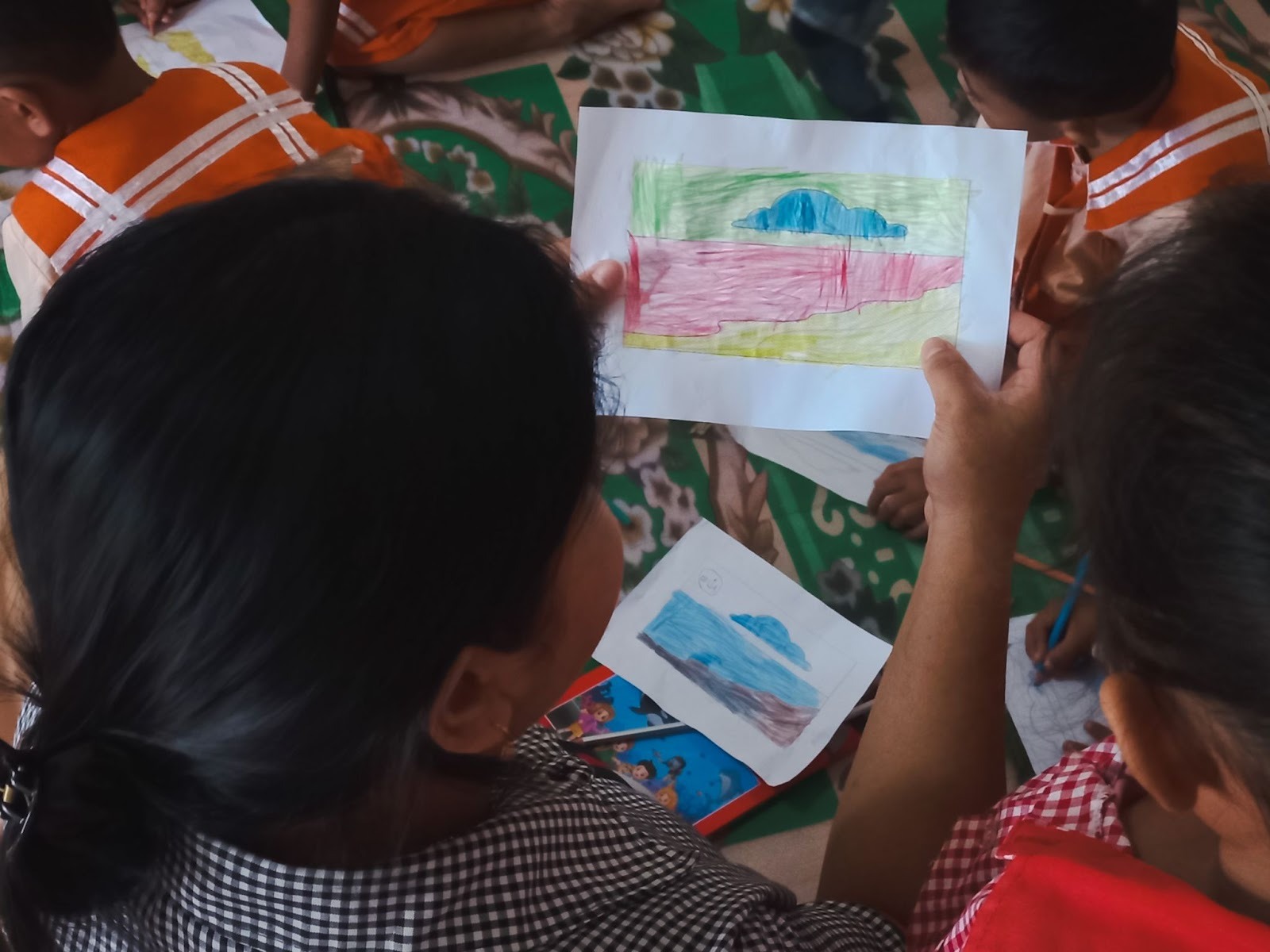
Teachers in Nias Utara implemented project-based learning from 20–23 January 2026 in their respective schools, applying project-based lesson plans. One of the practices was carried out in a kindergarten class by teacher Ester, who raised the theme of environment and climate change through the topic of ocean waves and sea winds.
In the learning process, children watched videos about waves and sea winds, discussed the dangers of high waves, made paper boats, and designed safety solutions for the community. The project continued with the creation of “no swimming during high waves” warning boards. The children worked in groups, identified the materials needed, divided tasks among themselves, and produced the warning board as the final product of the learning process.
Through these activities, children not only learned about the environment and safety, but also developed numeracy, collaboration, communication, and decision-making skills throughout the learning process. Project-based learning provided meaningful hands-on experiences while fostering environmental awareness from an early age.
As a follow-up, teachers will continue implementing PjBL in their classrooms, conduct joint reflections, and participate in further mentoring from the program team. It is hoped that through sustained mentoring, project-based learning practices will drive tangible changes in teaching and learning processes and improve the quality of inclusive education services in target schools in Nias Utara.
Training
Previously, KREASI Nias Utara, implemented by Article 33 Indonesia, conducted training and mentoring on the Project-Based Learning (PjBL) method with the theme of environment and climate change on 19 January 2026 in Lotu, Nias Utara Regency. The activity was part of the KREASI Program, which aims to strengthen teachers’ capacity to implement contextual and inclusive learning in schools.
The training was attended by eight teachers from eight target schools in the sub-districts of Afulu, Lahewa, and Lotu, representing early childhood education (PAUD), Raudhatul Athfal (RA), primary schools (SD), and madrasah ibtidaiyah (MI). Representatives from the Nias Utara District Education Office and the Office of the Ministry of Religious Affairs also participated. During the training, participants engaged in project-based learning simulations, role-played classroom processes, and developed PjBL-based lesson plans (RPP) ready to be implemented in their classrooms.
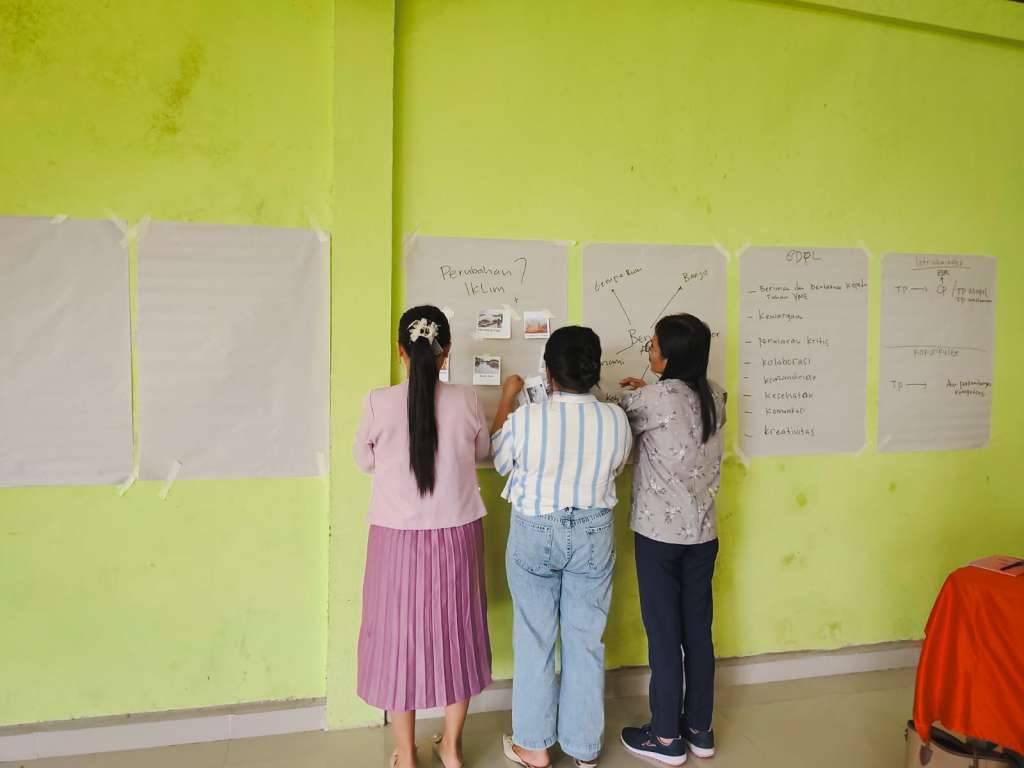
In her remarks, the Program Manager of KREASI Nias Utara emphasized the importance of strengthening teachers’ capacity to integrate environmental and climate change issues into learning. She expressed hope that teachers would be able to educate students about waste management and environmental awareness from an early age through meaningful learning activities.
A representative from the Office of the Ministry of Religious Affairs expressed hope that students would be able to understand environmental conflicts and climate change issues through contextual learning. Meanwhile, a representative from the Education Office stressed that learning can be developed by utilizing the surrounding environment and by encouraging teacher teamwork to enhance literacy skills and collaborative learning in schools.
This training was a follow-up to previous activities that showed some teachers still faced challenges in understanding the PjBL concept and linking it to daily classroom practice. Therefore, a continuous mentoring program has been designed to support teachers in internalizing the concept, practicing lesson design, and reflecting on inclusive and contextually relevant learning processes aligned with school conditions.
_____
The Program of KREASI or Kolaborasi untuk Edukasi Anak Indonesia (Collaboration for the Education of Indonesian Children) is funded by the Global Partnership for Education, developed by the Ministry of Primary and Secondary Education, and the Ministry of Religious Affairs. KREASI is being implemented by Save the Children with Article 33 Indonesia nd support by the Government of Nias Utara. KREASI aims to improve the quality of education in Nias Utara by strengthening teaching, learning, and student development.
_____
Writer: Calvin Telaumbanua | Editor: Andika Ramadhan | Photo: Calvin Telaumbanua/KREASI/Article 33 Indonesia/Save the Children