


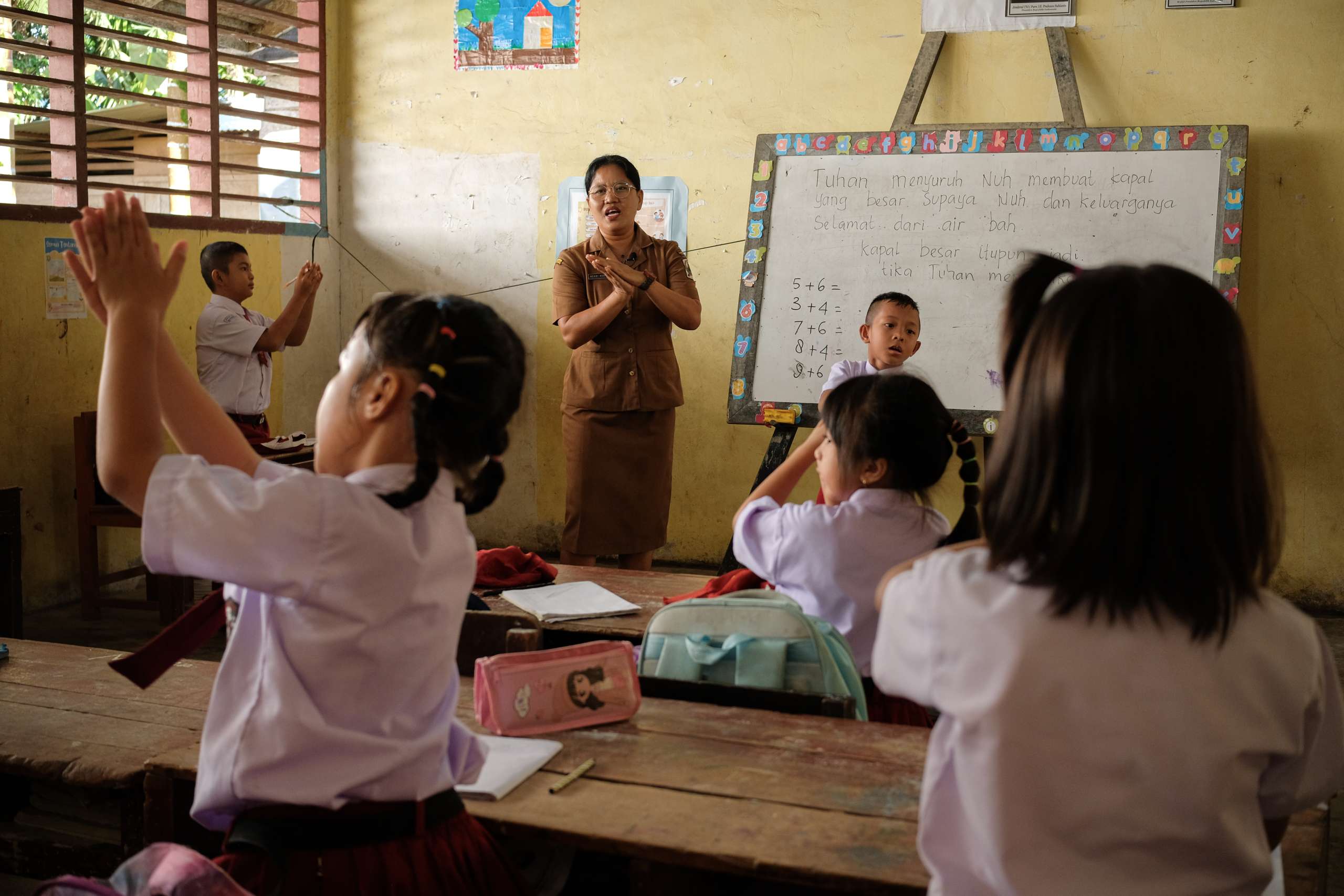
Mornings in Lotu, the center of Nias Utara District, are rarely truly quiet, but never quite crowded either. From a half-open wooden window, the damp air carries the sound of chickens, fine dust from the broken road silently drifts in, and in the middle of it all, Henni Hedianti stands in front of a first-grade classroom—a room that once felt to her like a small space full of repetition.
Seventeen years of teaching in this primary school have made her memorize the order of everything: greetings, reading, writing, arithmetic. Done. No surprises, no questions that make her pause and rethink.
“In the past I only knew how to make children able to read and write,” she says. “That alone was already considered enough.”
But “enough” slowly began to feel narrow. Children came in with bored faces, repeating the same things every day, in the same ways. Some would doze off on their desks. Others just stared blankly at the blackboard. She started to suspect: maybe it wasn’t the children who had lost their motivation—but herself.
That understanding began to shift when Henni joined the Program ofKREASI—a learning space for teachers in Nias Utara to experiment and remind each other that learning can start from curiosity. Not from lecturing, but from experience—letting children discover meaning for themselves.
At first, Henni was skeptical. She wasn’t used to letting children “play” in class. But after trying one or two methods, she discovered something simple: children actually understood more quickly when they learned through their own experiences. Maybe this is how the ancestors once learned—treating nature and everything around them as their learning universe.
But this story is not only about methods. It is about two children who taught her again what it means to be a teacher.
Dhavy and Wilson, two students in her class, were often called “special children.” There was no formal label, no diagnosis from a doctor. But Henni’s experience told her they were different. In the past, every time she began to explain, both of them would lower their heads, then slowly lay them on the desk. Sometimes they fell asleep. Sometimes they just stared at the ceiling, as if the world around them was too noisy to understand, too unfamiliar.
“In the past, I didn’t know what to do,” she says. “I’m not an extraordinary teacher; I’m just an ordinary elementary school teacher.”
She tried waking them up, giving them extra exercises, scolding them gently—nothing worked. Until one day, in a KREASI training session, she heard about deep learning and joyful learning. Learning through play, and learning with awareness.
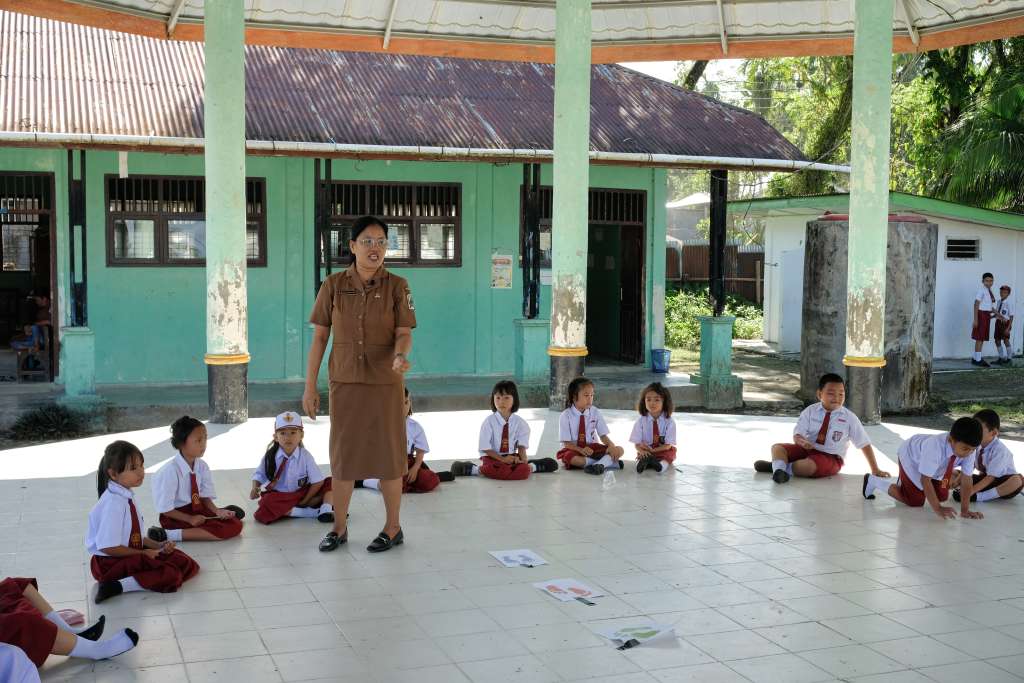
She decided to try. That day, she took the children outside. In the schoolyard, dry and dusty because the rains hadn’t yet come, they gathered small stones.
“Let’s learn to write letters with stones,” she said. The children laughed. Including Dhavy and Wilson, who usually just sat quietly and refused to join in. They began to move around, arranging stones one by one, forming shapes that looked like letters, then trying to spell their own names.
“At that moment I saw their eyes filled with curiosity,” she recalls. “They were happy.”
It might seem like a small thing to other teachers, but for Henni, it was like a door opening. She no longer saw Dhavy and Wilson as students who “couldn’t,” but as children who needed a different way to understand the world.
From that day on, her class was never the same. There were no more long lectures. Children were encouraged to find answers from the world around them—flowers, leaves, stones, fruit; everything could be a learning tool. She taught numbers using pictograms made from objects nearby, and colors using wild flowers from the school yard.
And her two special students were part of it. They were no longer left behind; in fact, they often led small groups during outdoor learning. Wilson, who previously refused to write, now starts to write, even if sometimes he just scribbles on paper with pride. “It’s not just that he knows letters,” Henni says, “but that he knows he can.”
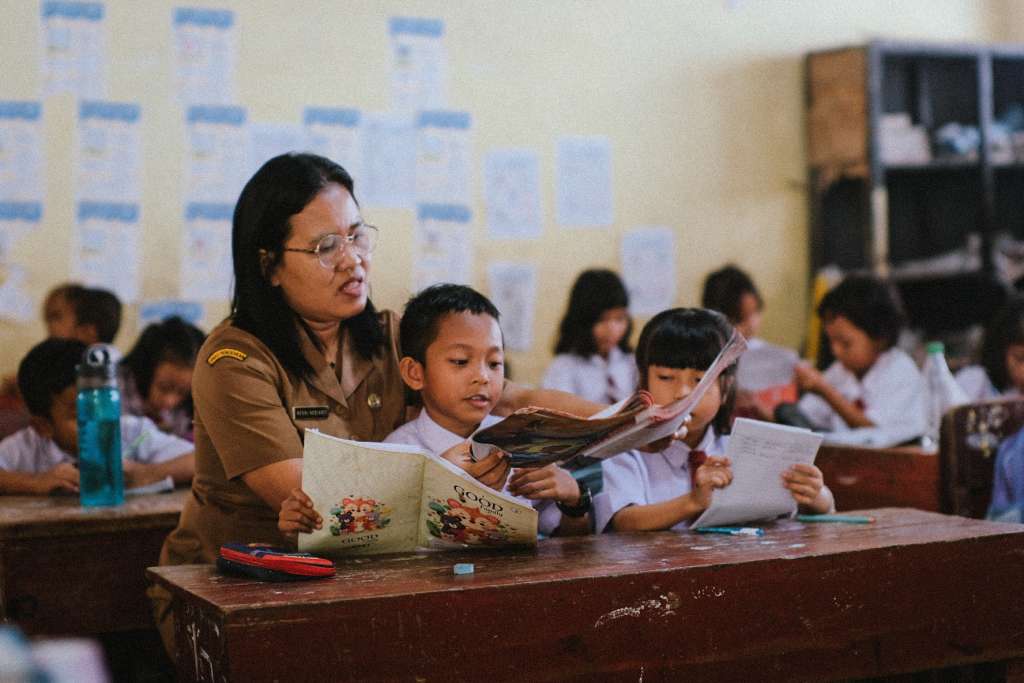
In Nias, education is often seen as a formality. Many parents, especially in the surrounding villages, still think school is not that important—especially for girls. Some cannot read at all, which makes it hard for them to help their children learn. “I have a student whose parents both cannot read,” she says. “They don’t even know how to write their own names.”
In such a situation, school becomes the only place where children can get to know the world. But teachers, too, are limited. Trainings are rare, methods are minimal—if not absent altogether. It really happens: reports are often thicker than teaching guides, and teachers learn to improvise with whatever they have.
Out of that scarcity, something more important emerged: an awareness that learning is not just about cognition, but about human relationships.
Henni began to realize that teaching is not about telling, but about accompanying children in their search for understanding. She no longer busies herself only with textbooks, but more often looks at the small faces in front of her, reading their curiosity. Sometimes they learn numbers by counting stones in the yard; sometimes they learn about togetherness by arranging leaves into the shape of a heart.
“In the past, I thought teaching was nothing more than a job,” she says, looking around at the now-empty classroom. “Now I know it’s not that simple.”
Over the last six months, the changes in her class have become very visible. Children who once stayed quiet now compete to answer. They are no longer afraid of being wrong. Even Dhavy and Wilson are now more confident. “If I ask, who wants to come to the front?” she says, “they raise their hands right away. They come forward without waiting to be told.”
Other teachers were surprised. “That child didn’t pass to the next grade before,” one of them said. But now they write, count, and even invite other friends to learn through play in their own way.
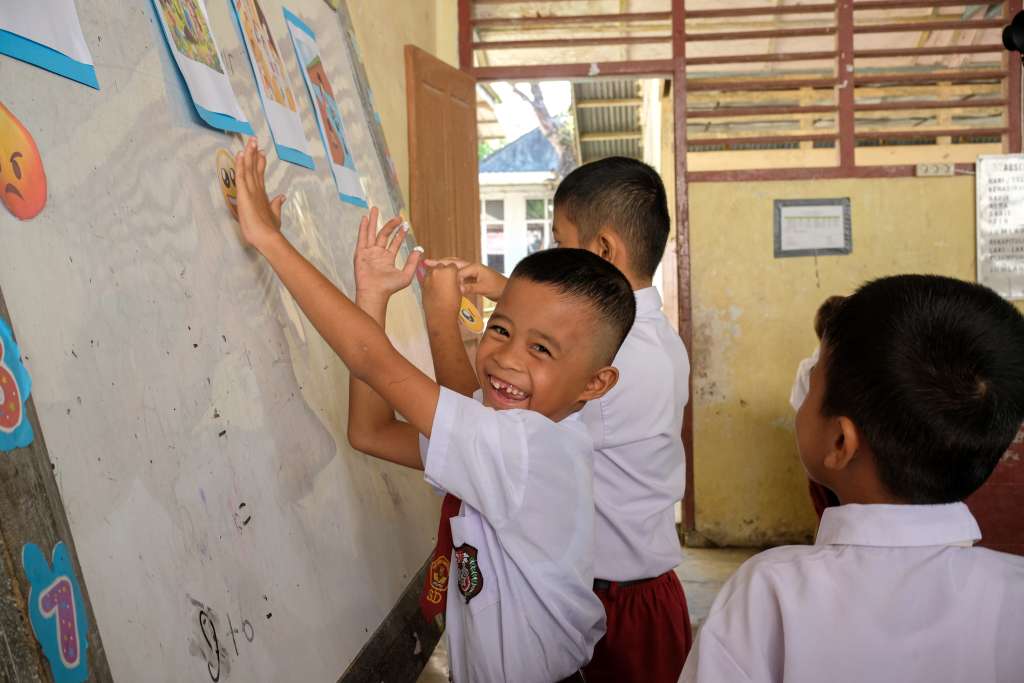
That change spread
Other teachers began to take interest. They asked what method she used, how she got children to be that active. From there, new conversations emerged in the staff room: about joyful learning, about children who can grow without fear, about teachers who rediscover their own passion.
That afternoon, after class ended, Henni sat on a wooden bench at school, wiping her smudged glasses. The children’s voices could still be heard in the distance, mixed with laughter and the noise of passing vehicles. She looked out at the field where they usually learned. Small stones were still scattered there, remnants of that day’s lesson.
“In the past, I thought I was the one teaching them,” she says softly. “But it turns out they are the ones teaching me.”
She now understands that learning is not just about academic matters. It is a way for human beings to find each other—in simple spaces like her classroom in Lotu.
And perhaps, that is where education in Nias Utara begins to change: not from grand curriculum reforms, but from one teacher—or anyone—who decides to believe that every child, including those with special needs, can learn, as long as there is someone willing to listen and walk alongside them. Without realizing it, what Henni lives out echoes what Paulo Freire, the Brazilian philosopher and educator known for his sharp and revolutionary ideas, once said: that teaching is not about pouring knowledge into students’ heads, but about building dialogue between two consciousnesses that grow together.
_____
The Program of KREASI or Kolaborasi untuk Edukasi Anak Indonesia (Collaboration for the Education of Indonesian Children) is funded by the Global Partnership for Education, developed by the Ministry of Primary and Secondary Education, and the Ministry of Religious Affairs. KREASI is being implemented by Save the Children with Article 33 Indonesia nd support by the Government of Nias Utara. KREASI aims to improve the quality of education in Nias Utara by strengthening teaching, learning, and student development.
_____
Writer: Adzwari Ridzki | Editor: Andika Ramadhan | Photo: Calvin Telaumbanua, Adzwari Ridzki/KREASI/Article 33 Indonesia/Save the Children