


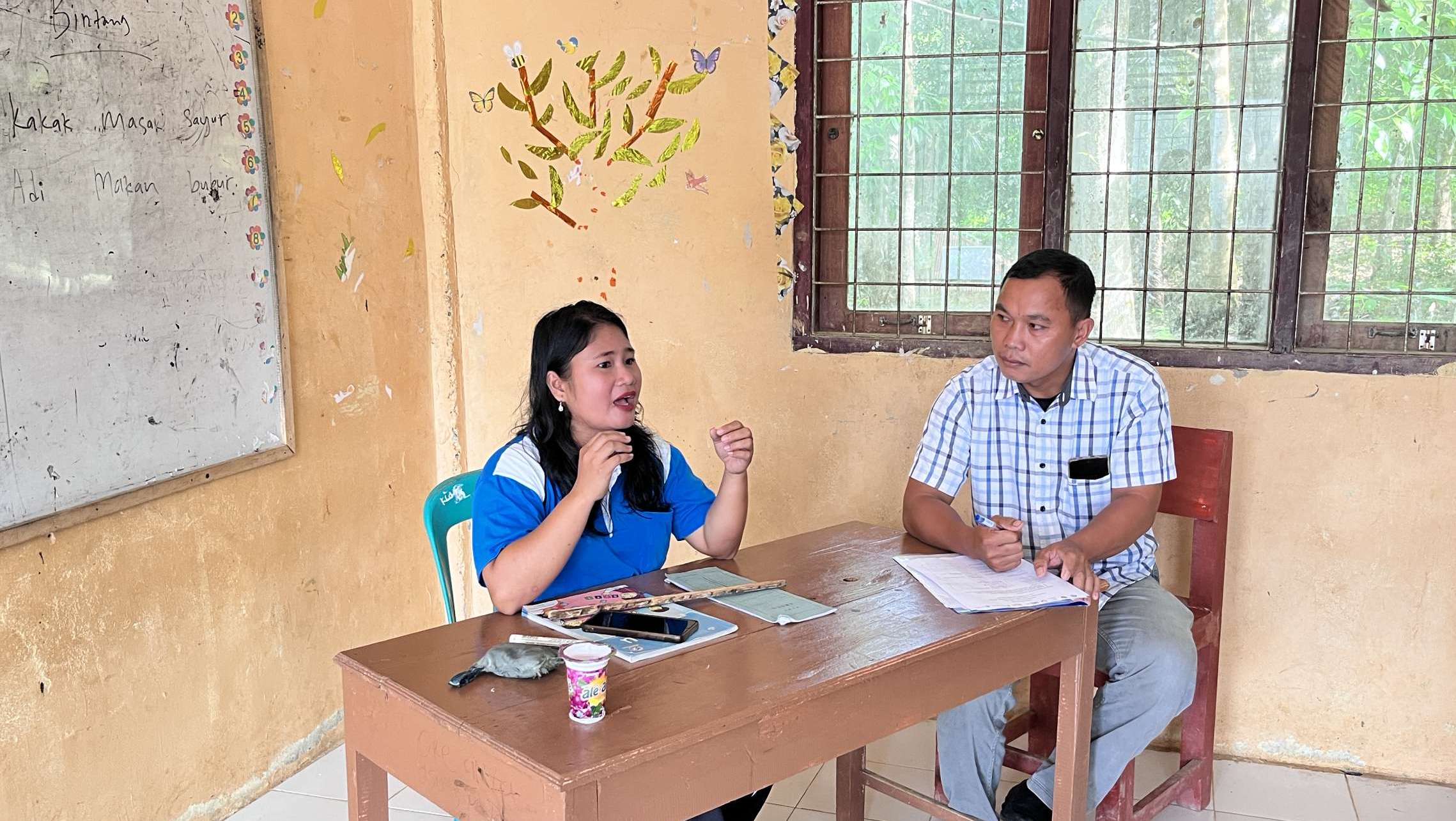
KREASI (Collaboration for the Education of Indonesian Children), conducted monitoring activities for the Teaching at the Right Level (TaRL) approach in seven districts of Nias Selatan District, North Sumatra Province. This activity is part of an effort to support a transformation in learning that is more adaptive to students’ needs.
Monitoring was carried out by the implementing partner Ikatan Guru Indonesia in the districts of Onolalu, Maniamolo, Teluk Dalam, Fanayama, Luahagundre, Mazino, and Toma. The team visited more than 20 educational institutions ranging from PAUD (early childhood education), TK/RA (kindergarten), and SD/MI (primary schools). The aim was to directly observe the implementation of the TaRL approach in partner schools and identify challenges and opportunities in the field.
In Onolalu District, the team visited SDN 078440 Hilionaha, SDN 078567 Hilimondregeraya, and TK Pembina Onolalu. The main challenges found were limited facilities, low student numbers, and low teacher confidence in applying the TaRL method.
In Maniamolo District, monitoring was conducted at TKK Pembina Hiliaurifa, SDN 078443 Bonia, and SDN 078442 Bawogosali. Challenges included a lack of teaching aids, irregular student attendance, and the TaRL method not yet being disseminated to other classes or teachers.
Six schools were visited in Teluk Dalam District. Monitoring results showed that TaRL implementation varied. Some schools, such as MIN 1 Teluk Dalam and SDN 076728 Bawolowalani, had begun implementing the method with positive impact, while others were still facing obstacles in preparing lesson plans (RPP) and conducting initial student assessments.
In Fanayama District, the implementation of TaRL faced obstacles at the PAUD level and in early grade classes. Teachers struggled with classroom management and distinguishing between playtime and learning time. In some schools, initial assessments had not been conducted, or trained teachers had not been placed in early-grade classrooms.
In Luahagundre District, the implementation of learning group methods did not align with core TaRL principles. One school faced the challenge of having very few students, while in another, trained teachers were not placed in appropriate classes.
Monitoring in Mazino District took place on 24 May 2025, with a visit to SDN 078505 Hiliotalua. Teachers at this school struggled with conducting initial assessments and were still using conventional approaches. A major constraint was the lack of teaching aids.
In Toma District, monitoring lasted two days and covered five schools. Some schools had begun implementing TaRL with the support of lesson plans and learning media, although issues remained with student comprehension and transportation access to the school locations. The monitoring results show that the implementation of TaRL in South Nias still faces various challenges, such as limited facilities, lack of technical understanding, and suboptimal initial assessments. These findings will serve as a foundation for planning follow-up actions and enhancing the capacity of teachers and school principals.