


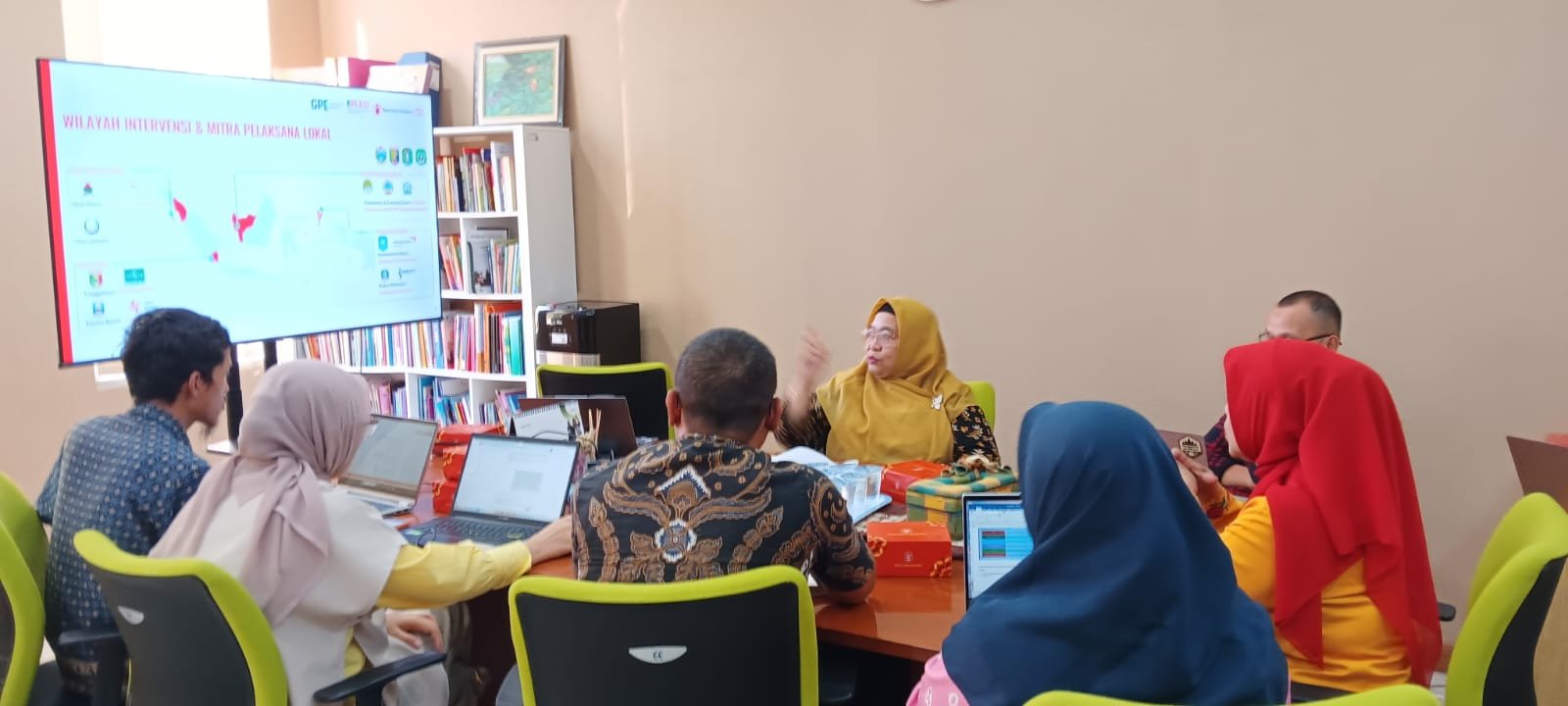
As part of its efforts to expand engagement with national stakeholders and strengthen the KREASI Program’s National Steering Committee, the KREASI team conducted a series of courtesy meetings to reintroduce the program to newly appointed government officials and share updates on program implementation. The visits were carried out by KREASI Chief of Party, Alifah Sri Lestari, and Director of External Relations, Imelda Usnadibrata, to several government ministries and agencies throughout July 2026.
To support these efforts, KREASI held meetings with key ministries to introduce the program and reinforce collaboration through the National Steering Committee.
The first visit took place on 14 July 2026 at the Ministry of Women’s Empowerment and Child Protection (Kementerian PPPA), where the team was received by Rini Handayani, Deputy for the Fulfillment of Children’s Rights.
On 27 July 2026, the KREASI team visited the Ministry of National Development Planning (Bappenas) and met with Suprapto Budinugroho, Director of Primary and Secondary Education.
The final visit was held on 28 July 2026 at the Coordinating Ministry for Human Development and Culture (Kemenko PMK), where the team met with Ivan Syamsurizal, Assistant Deputy for Early Childhood, Primary and Secondary Education, and Veronica Enda Wulandari, Assistant Deputy for Education Resources.
In principle, the Ministry of Women’s Empowerment and Child Protection, Bappenas, and the Coordinating Ministry for Human Development and Culture welcomed the presence and contributions of the KREASI Program in supporting improvements in the quality of early childhood and basic education in Indonesia, particularly in underserved areas. The three institutions also expressed their readiness to join and actively participate in the KREASI Program’s National Steering Committee.
Bappenas, in particular, highlighted the importance of strengthening KREASI’s flagship initiatives through approaches that enable successful interventions and proven good practices to be replicated and scaled up. According to Bappenas, the lessons learned and innovations generated through KREASI have the potential to serve as national models for education development.