


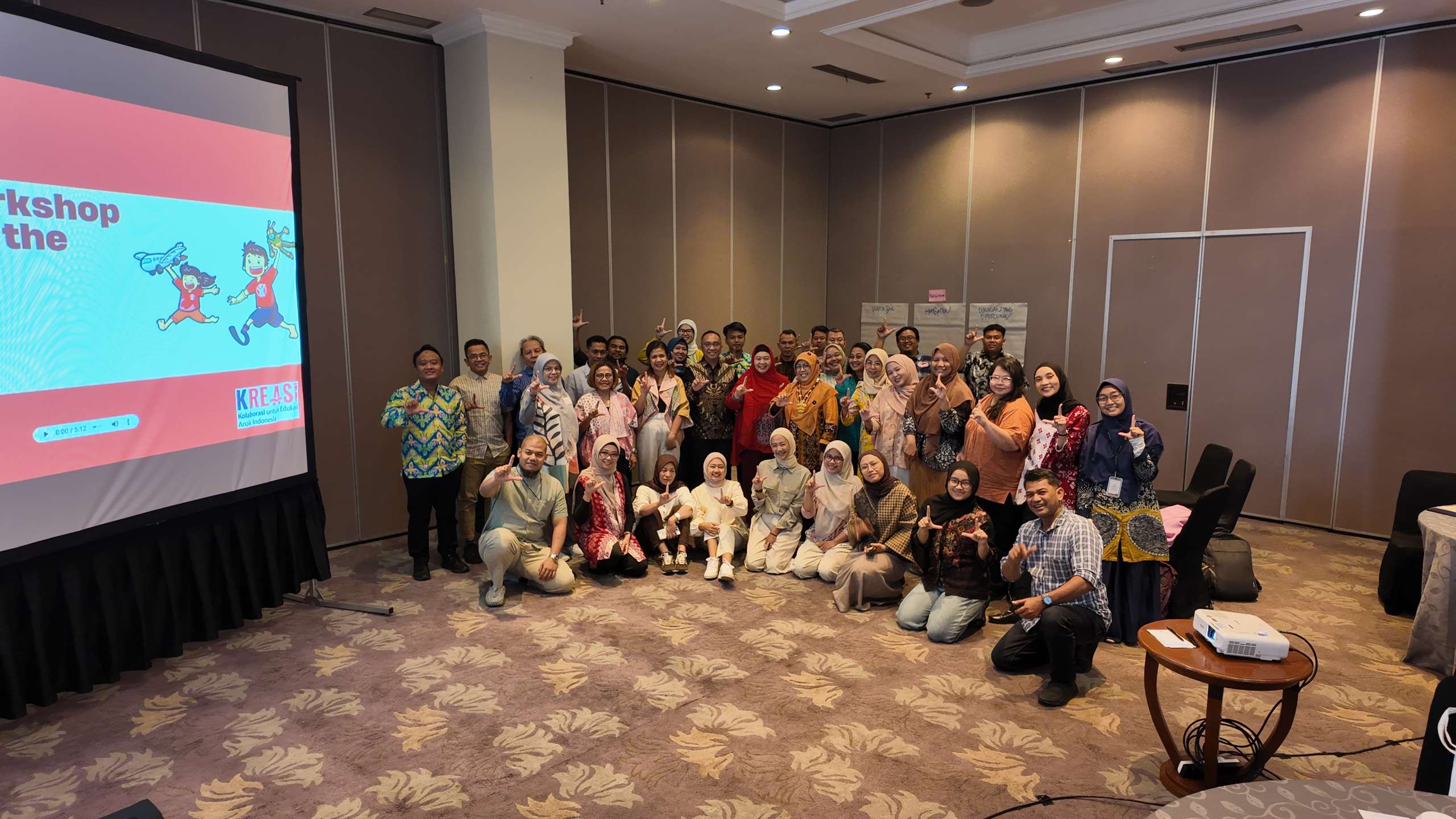
KREASI conducted a safeguarding capacity-building training for six local implementing partner organisations on 9–10 June 2026 in Jakarta. The training supported efforts to strengthen safeguarding practices in the implementation of the KREASI Program across its eight intervention districts.
The training provided a space for participants to strengthen their understanding, exchange experiences, and identify challenges in creating programs that are safe for children and adults. Safeguarding was understood not merely as a program requirement, but as a shared commitment that must be upheld by all parts of an organisation.
Over the two days, participants explored the four main pillars of safeguarding: awareness, prevention, reporting, and response. These pillars provide a foundation for ensuring that every activity includes risk-mitigation measures, safe reporting channels, and clear, survivor-centred mechanisms for handling reports.
The training also covered the use of Safeguarding Risk Assessments (SRA) to identify and mitigate risks before, during, and after activities. Participants were encouraged to adapt risk assessments to their local contexts, taking into account gender, local cultures, access to services, and the safety and security of children and staff.
Through group discussions, safeguarding officers mapped good practices already implemented by their respective organisations. These included conducting safeguarding briefings before activities, providing codes of conduct and consent forms, establishing multiple reporting channels, appointing safeguarding focal points, and incorporating risk-mitigation measures into activity planning.
Participants also identified several challenges, including uneven understanding of safeguarding across organisational levels, limited human resources, focal points holding multiple roles, and suboptimal reporting and referral mechanisms. Differences between local cultural values and safeguarding standards were also highlighted as an important consideration when implementing policies at the local level.
Reporting and response mechanisms were among the main topics discussed during the training. Every report should be addressed promptly while maintaining confidentiality, safety, and protection for survivors, reporters, and focal points. Anonymous reports must also be followed up and should not be disregarded.
Participants also discussed the importance of clarifying the role of safeguarding focal points. Focal points are responsible for receiving and referring reports through the appropriate mechanisms, but do not necessarily act as investigators or decision-makers. Organisational support, clear divisions of responsibility, as well as protection and psychological support for focal points, are therefore essential to enable them to perform their roles effectively.
The training also highlighted the importance of referral systems and external support in handling cases that require specialised services. Partners were encouraged to map government agencies, civil society organisations, universities, healthcare services, legal assistance providers, and other institutions that could form part of referral networks in their respective areas.
Through the training, the six local implementing partner organisations are expected to strengthen their safeguarding policies, procedures, human resource capacity, and action plans across KREASI’s intervention areas. These efforts are essential to ensuring that all program activities are implemented safely, inclusively, and accountably while upholding child protection and the best interests of the child.