


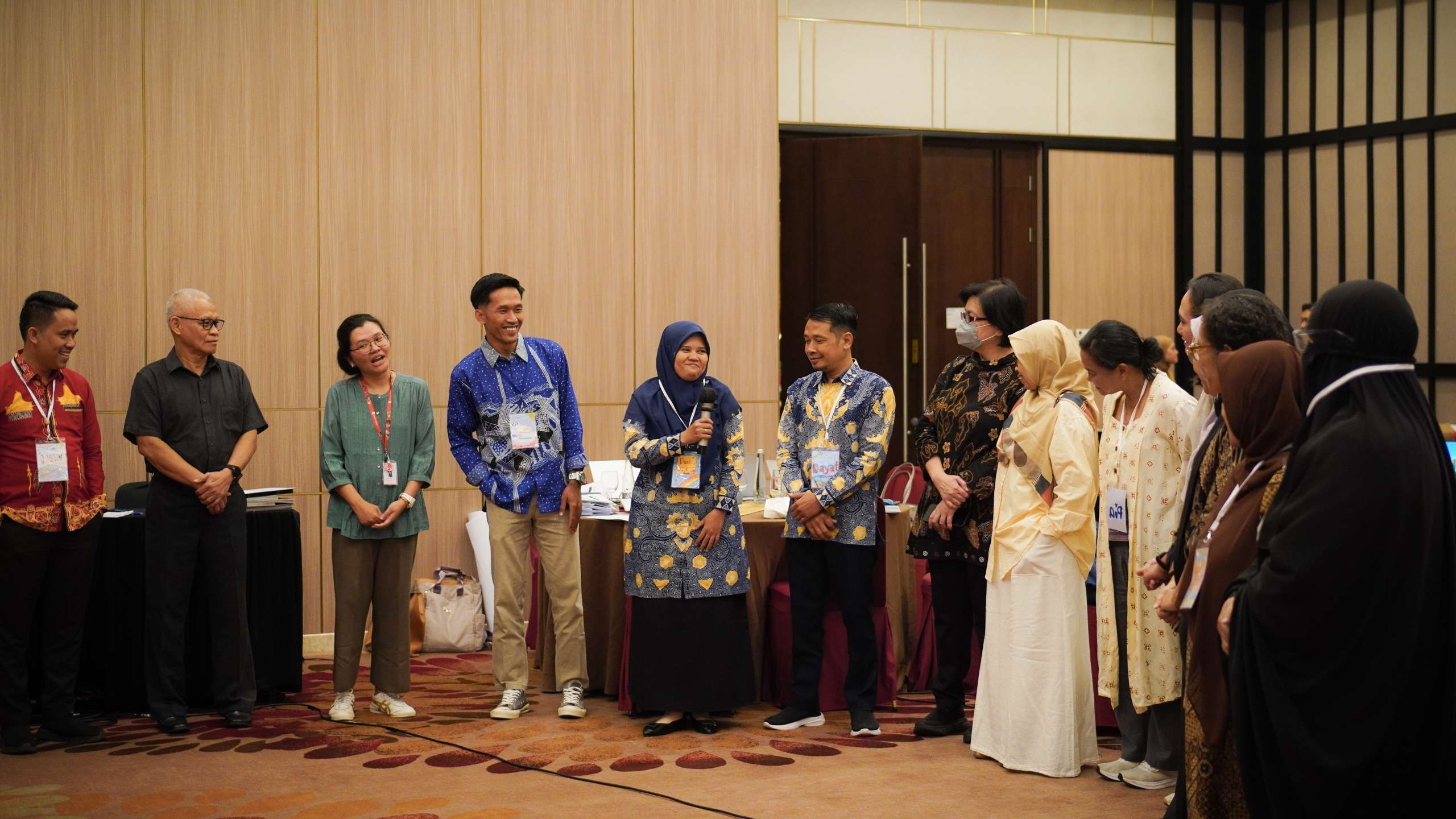
Save the Children through KREASI organized a workshop to strengthen literacy capacity, understanding, and classroom mentoring strategies for Regional Facilitators and Local Implementing Partners (LIP). The activity involved Teacher Professional Development (TPD) Officers, Regional Master Trainers, coordinators, and facilitators from eight KREASI intervention districts.
The training aimed to prepare and equip participants for the implementation of the program’s second year.
This workshop not only focused on strengthening technical understanding related to literacy learning, but also promoted participatory facilitation approaches, inclusive education, and sustainable follow-up planning for school-level implementation.
Building a Participatory and Inclusive Learning Environment
From the first day, participants demonstrated active engagement and enthusiasm throughout each session. Facilitators created a safe, comfortable, and collaborative learning environment that encouraged participants to confidently share experiences, engage in discussions, and try new strategies.
Several initial sessions covered Universal Design for Learning (UDL), Gender Equality, Disability, and Social Inclusion (GEDSI), and Positive Discipline. During reflection sessions, participants and facilitators emphasized the importance of directly connecting these materials to the real contexts faced by teachers and schools to ensure easier implementation in the field.
The workshop also strengthened participants’ understanding of inclusive education through the introduction of three disability models: the charity model, medical model, and social model. This approach aimed to encourage teachers to move away from pity-based perspectives and instead ensure equal access and learning opportunities for all students.
In addition, positive discipline competency levels—from beginner to advanced—were integrated into observation sheets as guidance for developing more effective and child-friendly classroom management practices.
Strengthening Literacy Learning and Facilitation Skills
On the second and third days, the workshop focused on strengthening literacy instruction, including literacy awareness, vocabulary development, reading fluency, phonological awareness, reading comprehension, and microteaching practice.
Participant engagement remained consistently strong and balanced. Group dynamics were well-managed with minimal dominance, allowing all participants equal opportunities to contribute actively. Simulation and modeling sessions facilitated collaboratively by TPD Officers, coordinators, and Regional Master Trainers were considered highly effective in helping participants understand classroom implementation strategies.
Participants also highlighted the importance of using Indonesian equivalents for foreign terminology to make concepts easier for grassroots teachers to understand. In addition, workshop reflections identified the need to mainstream climate change issues through relevant reading materials and learning examples.
Throughout the microteaching sessions, participants provided constructive and supportive feedback to one another. This positive learning culture helped participants improve without feeling judged while strengthening reflective and self-evaluation skills.
However, the workshop also identified varying levels of participant readiness and facilitation skills. Some participants still required additional support, particularly in understanding assessment concepts and applying participatory facilitation approaches.
Strengthening Assessment Understanding and Classroom Implementation
The fourth day focused on assessment practice, lesson planning, and learning journeys. Participants engaged in simulations and direct practice using literacy assessment tools.
During daily reflections, participants noted that the relationship between learning scope and learning achievement indicators with assessment approaches still needed further clarification. In addition, technical guidance such as word counting procedures and assessment implementation required more detailed instructions to avoid confusion during school implementation.
The workshop also emphasized the importance of distinguishing between negotiable and non-negotiable aspects of program implementation. This clarity is expected to help Regional Facilitators maintain implementation quality while still adapting approaches to local contexts.
Furthermore, books were emphasized as a core component of the program. Facilitators were encouraged not only to use books as examples during training sessions, but also to actively foster a reading culture and create print-rich learning environments in schools.
Preparing Regional Trainers for Sustainable Implementation
The final day of the workshop focused on facilitation techniques, simulation practices, and the development of follow-up action plans (RTL). Participants demonstrated strong readiness, both mentally and technically, to conduct training at the district level.
One important reflection highlighted that several Regional Master Trainers with lecturer backgrounds still tended to use lecture-based approaches. Therefore, further mentoring is needed to strengthen participatory and interactive facilitation skills.
The workshop concluded by reaffirming the roles and responsibilities of Regional Master Trainers and Regional Facilitators. Each participant was encouraged to develop facilitation plans, coaching schedules, and training timelines as part of post-workshop implementation efforts.