


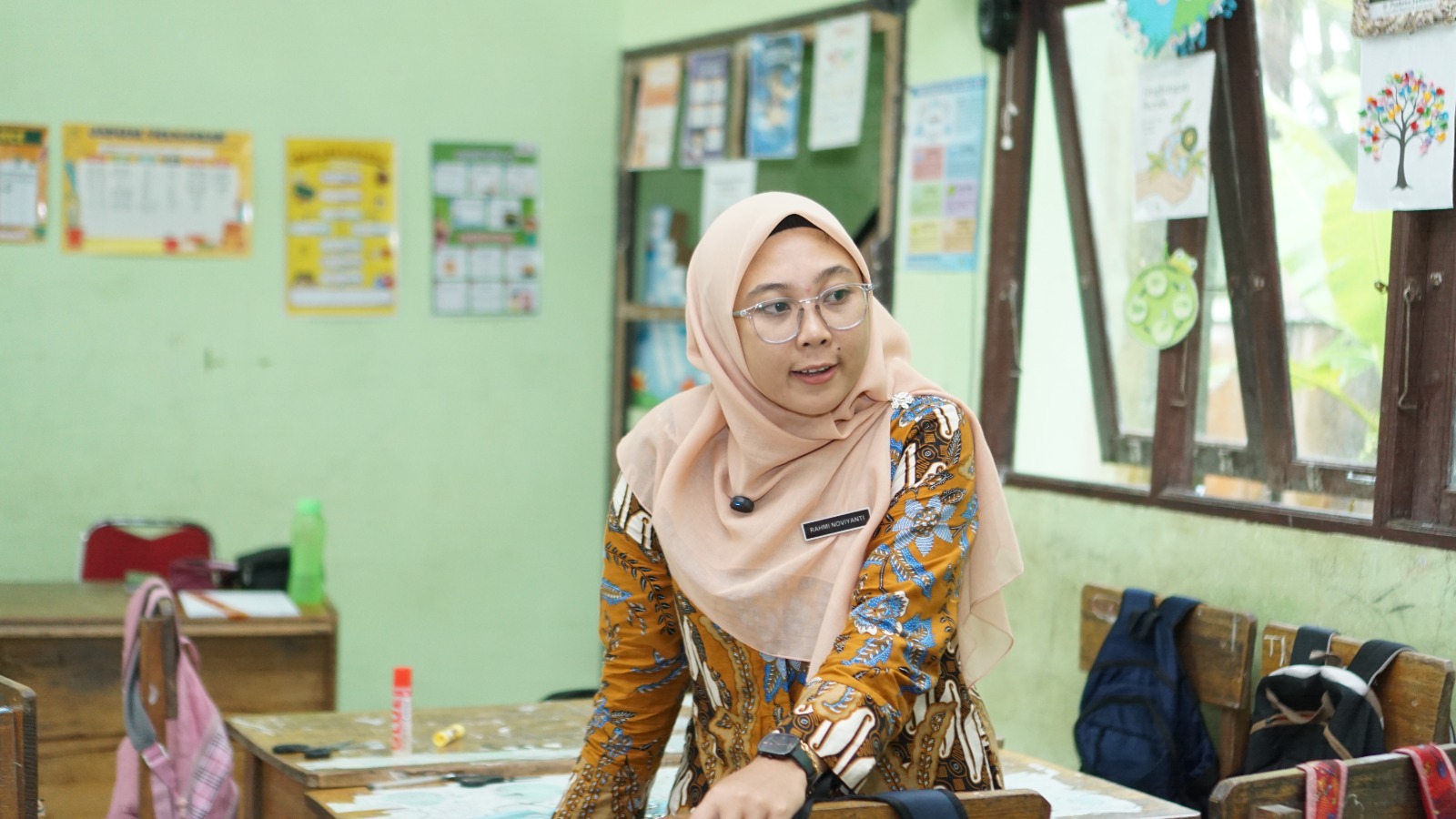
The atmosphere in a grade 3 classroom at a madrasah in Ketapang looked different than usual. Under the guidance of Rahmi Noviyanti, students were not just sitting and listening to explanations — they were actively creating their own worlds through an ecosystem diorama project.
The lesson began with an information-observation session using PowerPoint slides and videos about ecosystems. But learning did not stop at theory. The information they received was immediately transformed into a concrete product. Using simple materials such as cardboard, glue, and pictures, students turned abstract concepts from the screen into physical forms they could touch and design themselves.
Sharpening Reasoning through Biotic and Abiotic Components
At this stage, students’ reasoning skills were tested more deeply. They did not merely paste pictures, but had to think logically as they sorted and grouped elements. Students learned to count and balance the number of biotic components (living things) and abiotic components (non-living things). They had to ensure that every animal they chose had a suitable supporting environment, so that logical grouping and classification emerged naturally through hands-on action.
Nurturing Public Speaking Confidence from an Early Age
After the dioramas were completed, each group was given a stage to present the results of their hard work. This session became a proud emotional moment, where these third graders learned to overcome nervousness and appear confident in front of others. Holding their diorama, they took turns explaining the relationship between biotic and abiotic components in coherent sentences. Their courage in answering questions and engaging in discussion with their peers proved that communication skills can grow rapidly when students feel proud of what they have created.
A Growth Space for a Smart Generation
Through this good practice, Rahmi Noviyanti has succeeded in creating a classroom that is not just a place for memorizing, but a growth space for a smart generation. Students learn that science is about understanding life, and that courage is key to sharing that knowledge. This innovation becomes a foundation for character and reasoning skills that they will carry with them to higher levels of education.
_____
The Program of KREASI or Kolaborasi untuk Edukasi Anak Indonesia (Collaboration for the Education of Indonesian Children) is funded by the Global Partnership for Education, developed by the Ministry of Primary and Secondary Education, and the Ministry of Religious Affairs. KREASI in Ketapang is being implemented by Save the Children and local implementing partner Majelis Dikdasmen dan PNF PP Muhammadiyah, support by the Government of Ketapang with aims to improve the quality of education in Indonesia by strengthening teaching, learning, and student development.
_____
Writer: Afriyandi Nur Huda | Editor: Andika Ramadhan | Photo: Afriyandi Nur Huda/KREASI/Majelis Dikdasmen dan PNF PP Muhammadiyah/Save the Children