


One of the challenges in teaching literacy and numeracy to young learners is the need for creative learning methods. Children in early childhood education (PAUD) tend to be active and require hands-on learning experiences. Therefore, teaching media must not only be engaging but also interactive, so that children don’t get bored and develop more interest in learning.
Together with her colleagues at school, a teacher known as Indah uses materials from her surroundings to create teaching media, including used items that can be cleaned and reused, such as plastic bottles.
“Trash, as long as it can be cleaned, can be turned into something interesting for kids to learn with,” said Indah when met on Monday (15/9/2025).
Indah is a teacher at a PAUD in Pesisir Barat. Her school is one of KREASI’s intervention sites.
For Indah, making teaching media from used materials is one way to reduce the negative impact of climate change—starting with herself. She added, “Besides making use of what’s already available, we can also help reduce the harmful effects of waste in our area.”
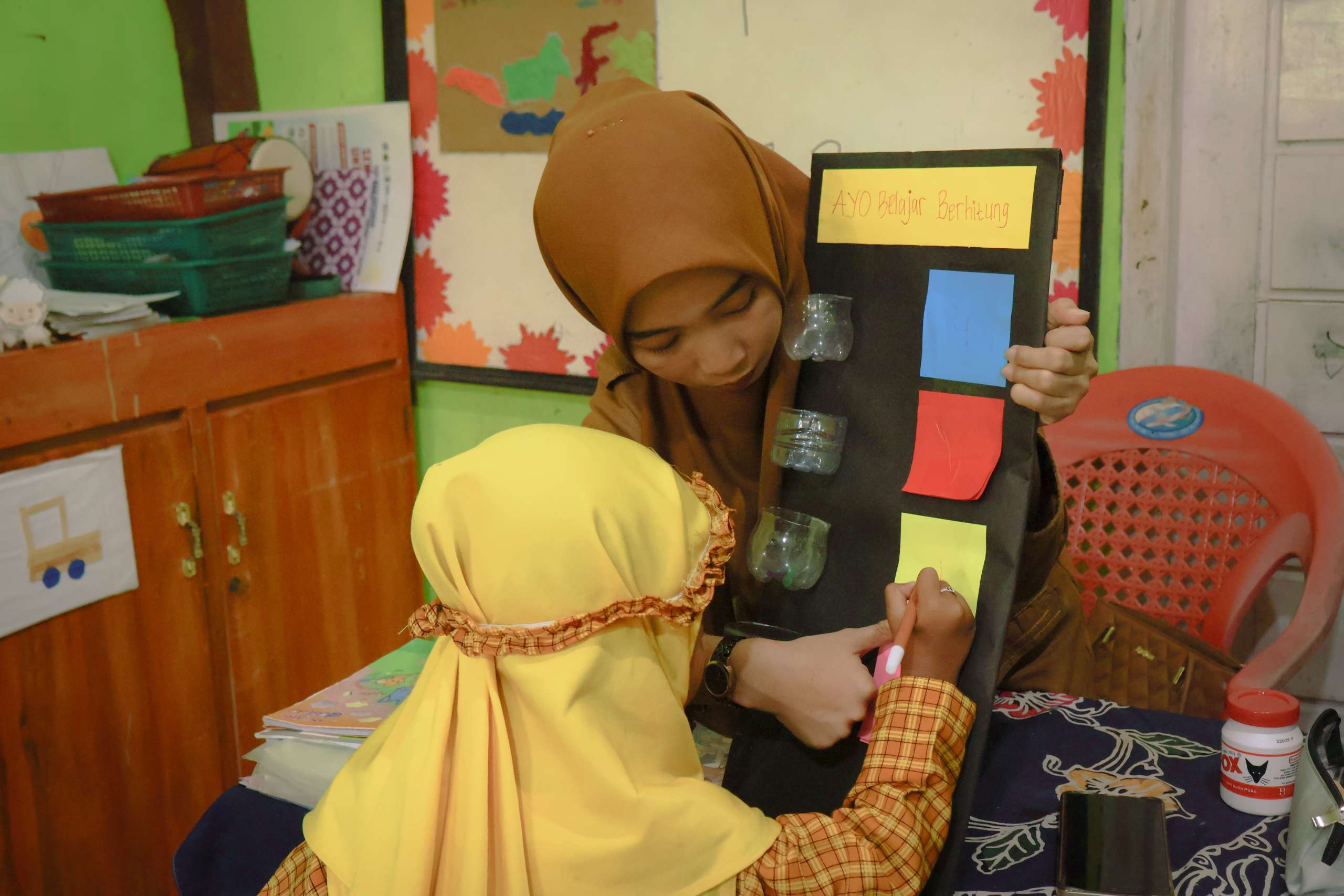
One of the tools she created is a math learning media using used bottles, used ice cream sticks, and sticky notes. Indah prepares clean, used bottles and puts a different number of ice cream sticks inside each one. The children are then asked to count how many sticks are inside each bottle, write the number on sticky notes, and stick them onto the respective bottles.
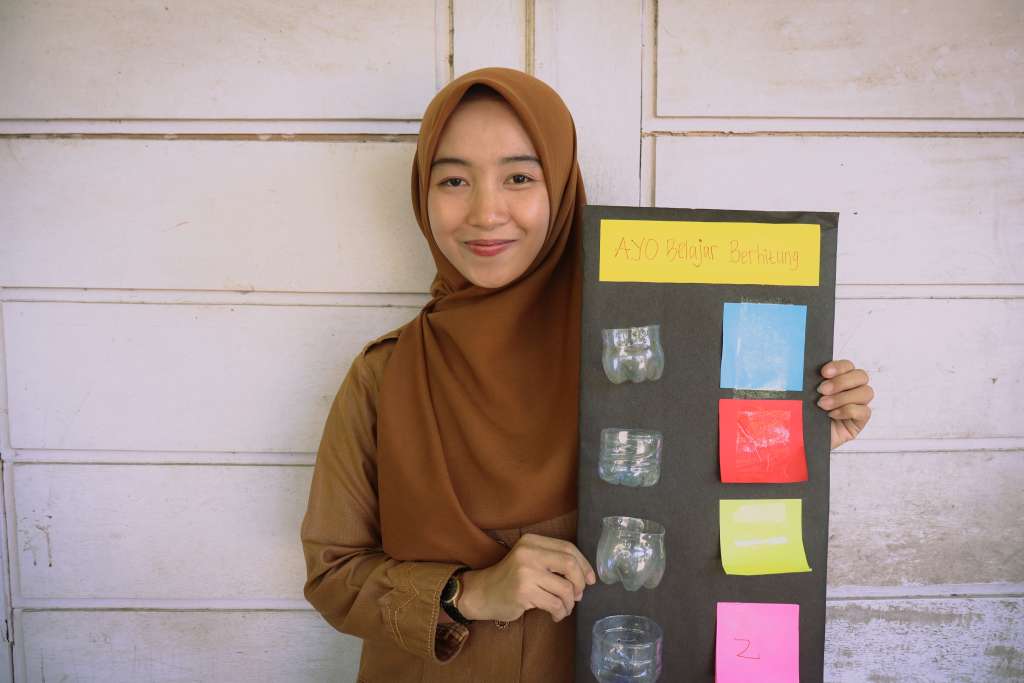
This activity not only helps children learn counting but also introduces them to number symbols in a fun way. They get to hold, count directly, and see the connection between real objects and the numbers they write down.
This simple activity lets children move, play, and learn numbers and letters in an enjoyable way.
Little by little, Indah promotes a broader message: it’s not about expensive tools, but about how to present lessons in a more engaging way by using materials available around us. Reused items that are still functional can become exciting teaching media for introducing literacy and numeracy to young learners at school.
_____
The Program of KREASI or Kolaborasi untuk Edukasi Anak Indonesia (Collaboration for the Education of Indonesian Children) is funded by the Global Partnership for Education, developed by the Ministry of Primary and Secondary Education, and the Ministry of Religious Affairs. KREASI in Pesisir Barat is being implemented by Save the Children and local implementing partner Yayasan Guru Belajar, support by the Government of Pesisir Barat with aims to improve the quality of education in Indonesia by strengthening teaching, learning, and student development.
_____
Writer: Putri Lalitaningtyas; Editor: Andika Ramadhan
Photo: Putri Lalitaningtyas/KREASI/Yayasan Guru Belajar/Save the Children