


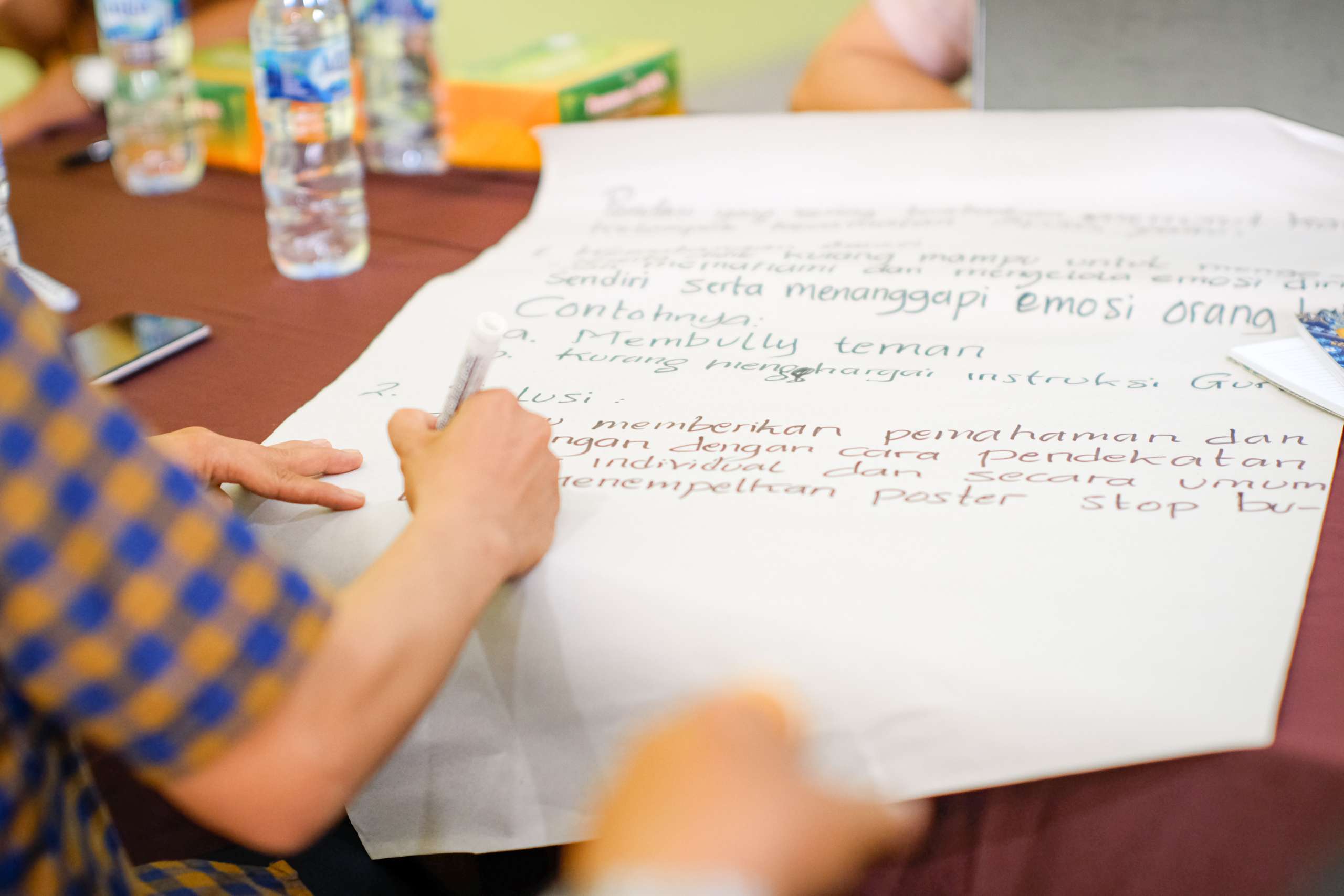
KREASI Nias Utara conducted a Social and Behavior Change Awareness Workshop focused on early childhood education for preschool-aged children. The event took place in Lotu, Nias Utara, on 16 September 2025, and was attended by 30 participants, including teachers from primary schools (SD), Islamic schools (MI), early childhood centers (PAUD), and kindergartens (RA), as well as school supervisors and representatives from the Nias Utara Education Office and the Ministry of Religious Affairs.
The workshop aimed to strengthen collective understanding of the importance of foundational skills before children enter primary education. Two resource persons were featured: Head of Early Childhood Education Division at the Nias Utara Education Office, Abiudin Gea, who presented on Foundational Skills in Early Childhood, and Early Childhood Education Specialist, Ahmad Zakky, who delivered a session on Inspiring Learning Practices for Building Foundational Skills.
Head of PAUD Division, Abiudin Gea explained that school readiness should not be measured solely by a child’s ability to read, write, and count. Instead, attention span, self-regulation, socio-emotional skills, motor coordination, and independence are critical foundations.
“A child who can follow instructions, interact positively, and complete simple tasks is more prepared for school than a child who can only read,” said Abiudin Gea.
He also emphasized the importance of early assessment to map each child’s developmental level, so teachers can tailor learning approaches based on individual needs.
Early Childhood Specialist, Ahmad Zakky complemented this message by highlighting the value of fun, collaborative, and meaningful learning practices. He provided examples such as play-based learning centers, group discussions, and simple campaigns that engage parents.
“When children feel safe and valued, they are more enthusiastic about learning. Foundational skills must be developed through play and activities that are rooted in the child’s world,” said Ahmad Zakky.
The workshop also featured an educational poster outlining the Six Foundational Skills for Early Childhood as part of the campaign. The poster reinforced the message that foundational development goes beyond basic reading, writing, and arithmetic. It includes a broader set of skills that must be nurtured consistently from ages 0 to 8.
The six foundational skills highlighted were: (1) Religious and moral values, (2) Social and language skills, (3) Emotional maturity, (4) Positive learning disposition, (5) Motor skills, and (6) Cognitive abilities.
The poster illustrated observable behaviors as indicators of whether each skill is being met, with short-term (at home and school) and long-term (life readiness) examples. Each skill was presented with a comparison between “if fulfilled” and “if not fulfilled,” to help teachers, parents, and the wider community understand the potential impacts.
During the discussion session, participants were invited to review the poster and reflect on how it connects to their current classroom practices. Facilitators emphasized that the poster could serve as an effective tool for raising awareness about the importance of early childhood foundational skills.
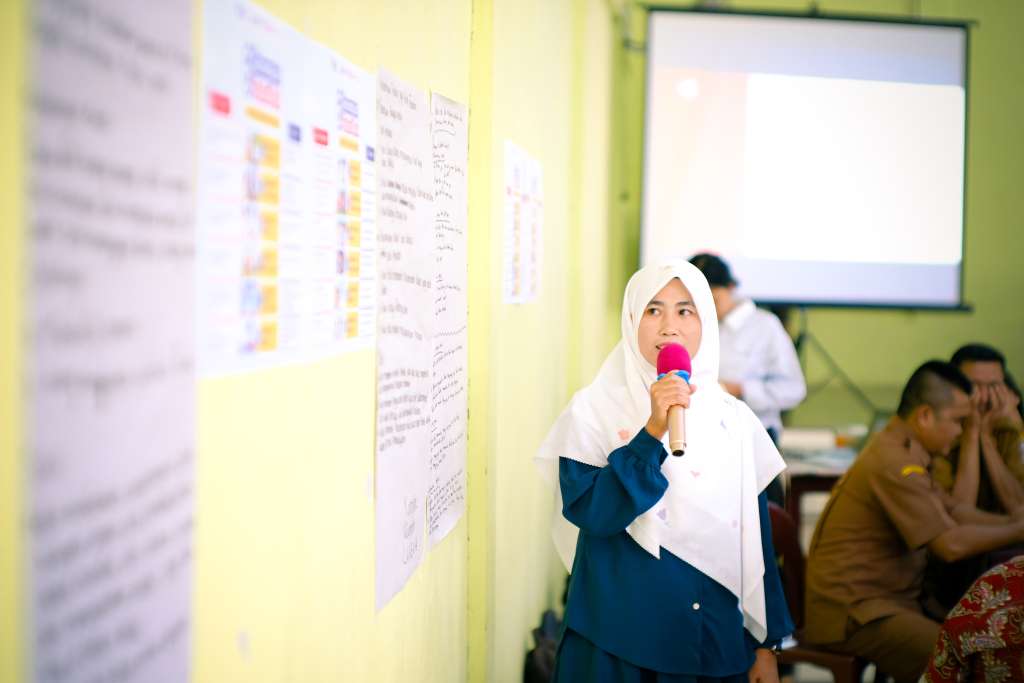
In the Q&A session, participants discussed challenges such as large class sizes, pressure from parents who expect fast academic results, and limited teaching resources. The facilitators recommended strengthening parental engagement through regular communication and parenting classes, as well as emphasizing motor skills as a foundation for academic readiness.
Participants expressed high enthusiasm for the workshop, noting that it provided not only new insights but also practical methods they could apply in their schools.
Kindergarten teacher, Murni shared her appreciation for the opportunity to join the session.
“Alhamdulillah, I feel very fortunate to have gained new knowledge, especially about foundational skills for young children. The group activities led by the facilitator were fun and allowed us to collaborate with fellow teachers from other sub-districts,” said Murni.
Primary school teacher, Yusra found the material on the six foundational skills especially useful.
“The session was very detailed. From the group discussions, we were inspired to carry out our own school campaign, with Stop Bullying as one of the themes,” she said.
School supervisor, Surdin also found the group activities helpful in encouraging participation.
“I’m happy to have learned so much. Through the group discussions, we were able to present our work and exchange feedback. It was a truly memorable experience,” said Surdin.
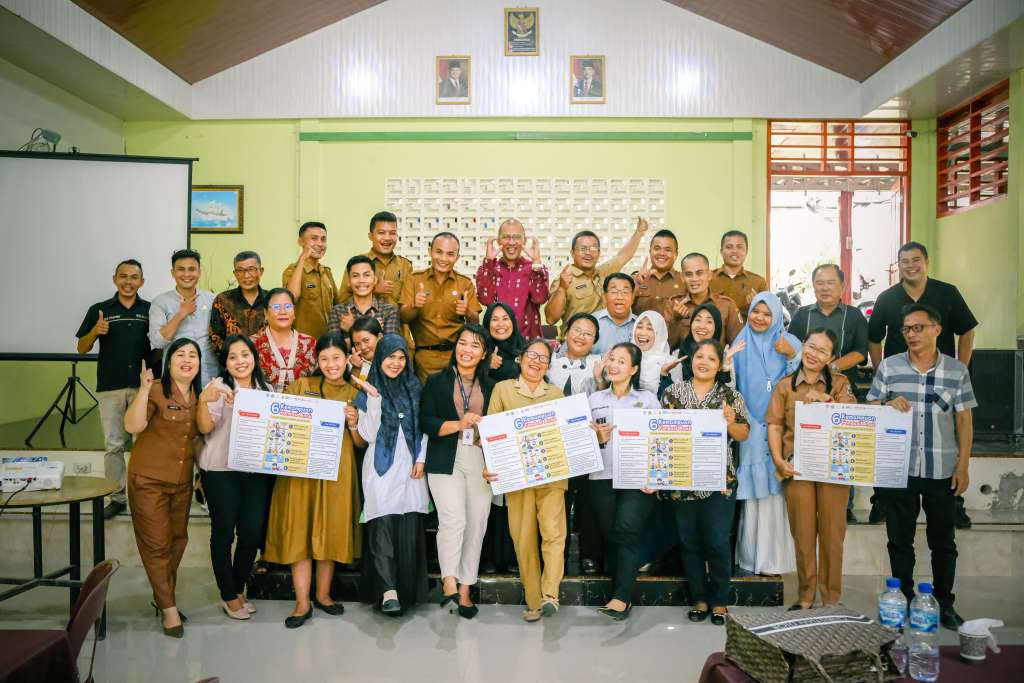
The workshop concluded with closing messages from both speakers. Head of PAUD Division, Abiudin Gea, reaffirmed the importance of building strong foundations from an early age, while Early Childhood Specialist, Ahmad Zakky, emphasized that meaningful education requires collaboration between teachers, parents, and the broader community.
“Foundational skills are the beginning of a lifelong learning journey. Let us build this foundation together, so that our children grow into a high-quality generation for the future,” concluded Ahmad Zakky.
_____
The Program of KREASI or Kolaborasi untuk Edukasi Anak Indonesia (Collaboration for the Education of Indonesian Children) is funded by the Global Partnership for Education, developed by the Ministry of Primary and Secondary Education, and the Ministry of Religious Affairs. KREASI is being implemented by Save the Children with Article 33 Indonesia nd support by the Government of Nias Utara. KREASI aims to improve the quality of education in Nias Utara by strengthening teaching, learning, and student development.
_____
Writer: Calvin Telaumbanua, Editor: Andika Ramadhan
Photo: Calvin Telaumbanua/KREASI/Article 33 Indonesia/Save the Children