


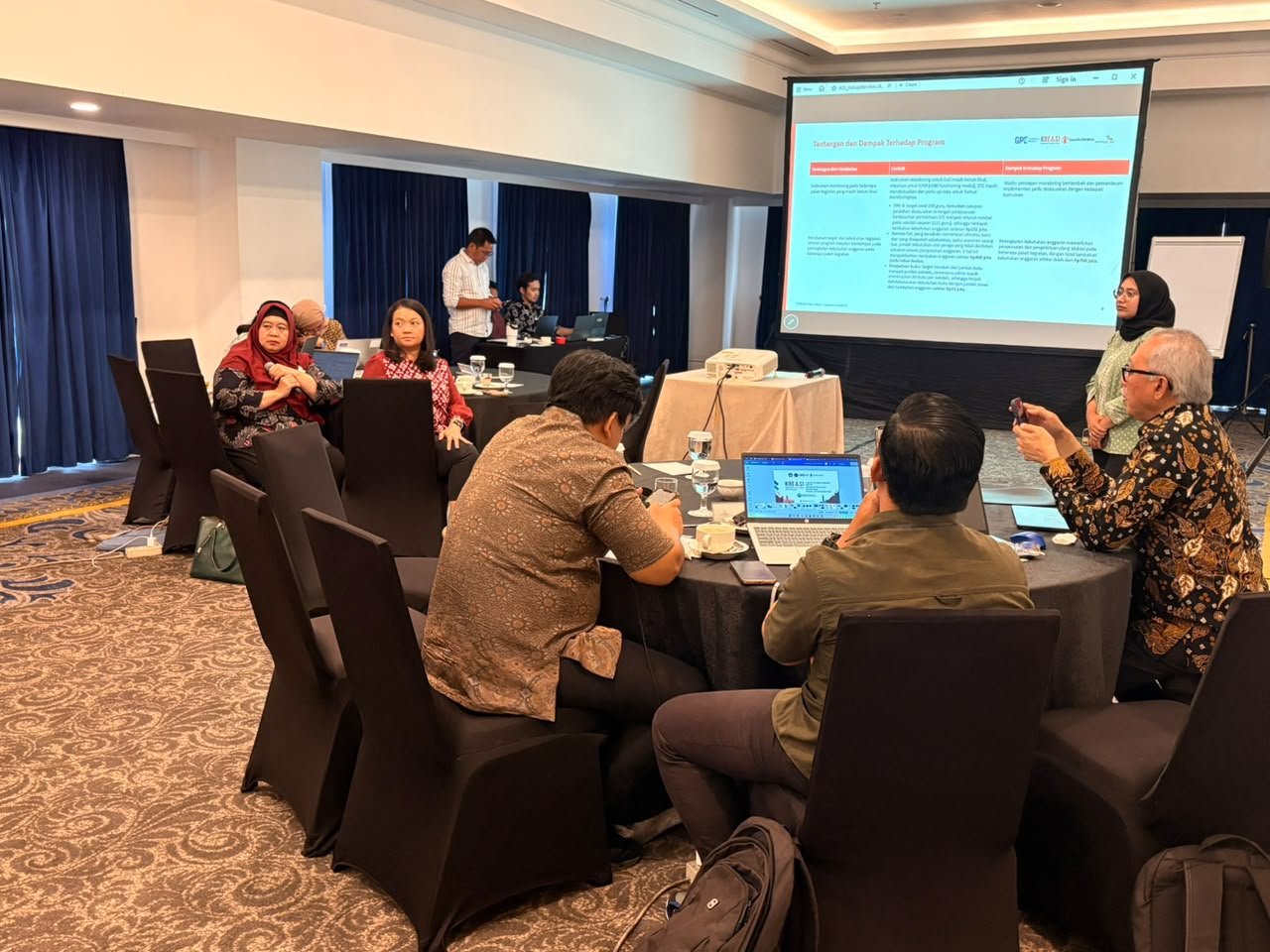
Through the KREASI Program, Save the Children convened its second-quarter coordination meeting with Local Implementing Partners (LIPs) as a platform for collective coordination and reflection to ensure effective program delivery across regions and alignment with established targets. Held on 23 September 2026, the meeting also provided an opportunity for partners to share achievements, identify challenges, and develop strategic actions for the next implementation period.
During the meeting, the national program team presented updates on program implementation from July to September 2026. A range of capacity-strengthening activities had been completed, including cascading trainings for trainers and regional facilitators, as well as workshops aimed at enhancing partner capacities in supply chain management, financial management, monitoring, evaluation, learning, and program communications. These accomplishments reflect a shared commitment to strengthening the quality of program implementation at the local level.
In addition to reviewing program progress, the quarterly meeting served as a valuable opportunity for Local Implementing Partners to share field experiences and lessons learned. Participants engaged in open discussions on various implementation challenges, including the impact of haze caused by forest and land fires in West Kalimantan, which affected several program activities. Through this forum, participants collaboratively explored solutions and adaptive strategies to ensure activities could continue while addressing local needs and contexts.
The meeting further underscored the importance of collaboration between the national team and local partners in achieving the program’s objectives. Through regular quarterly coordination, all stakeholders can strengthen synergy, align work plans, and ensure that emerging challenges are addressed collectively and in a timely manner.
Looking ahead, the KREASI Program will continue implementing key strategic activities, including the Provincial Steering Committee meetings and preparations for developing the third-year activity package through reflection workshops and strengthened school monitoring mechanisms. These efforts are expected to enhance the program’s impact in supporting improved education quality for children across Indonesia.