


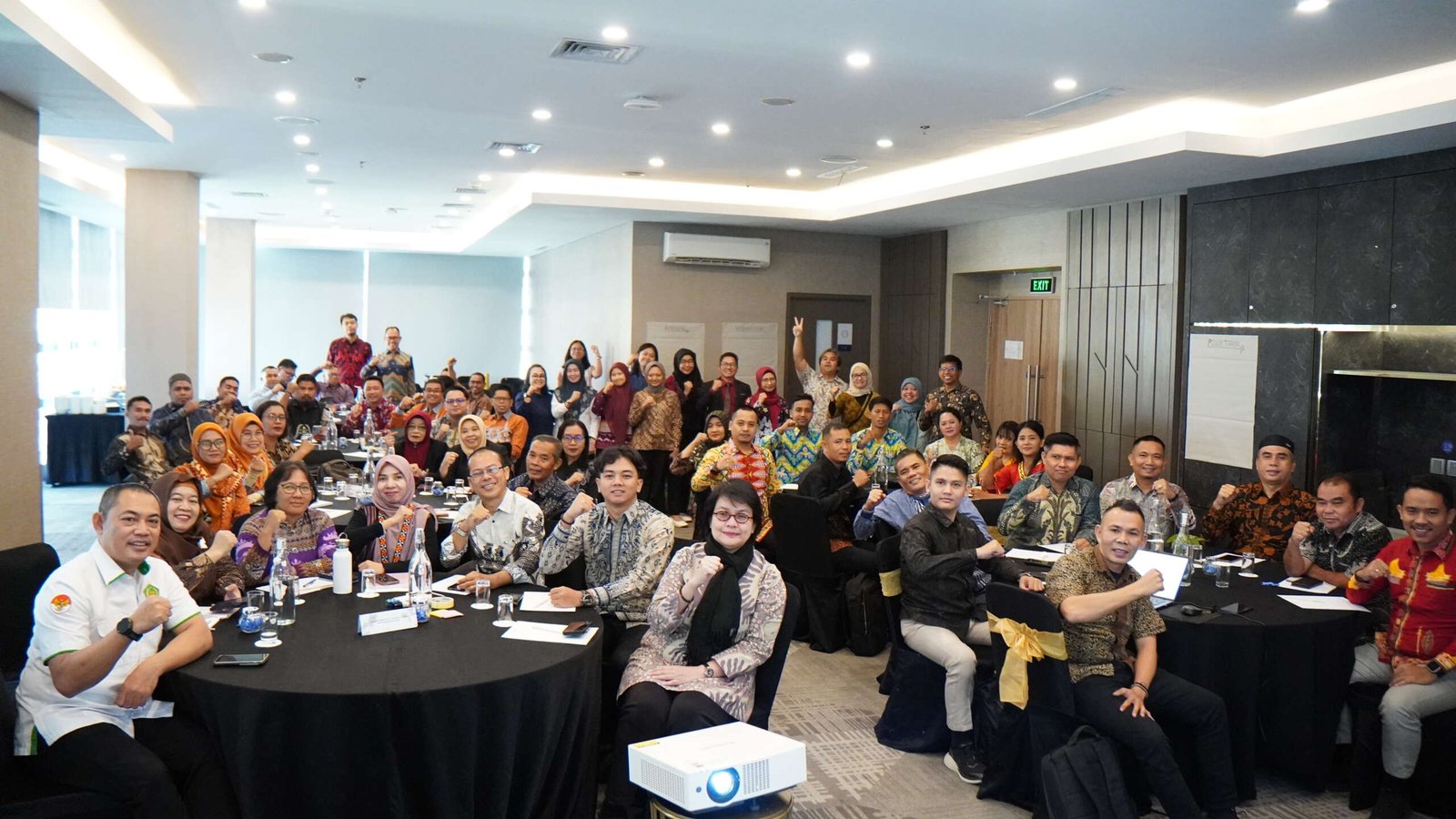
KREASI Save the Children conducted the Principal Professional Development (PPD) Module II Training for Local Facilitators (Fasilitator Daerah/Fasda) from 14-18 September 2026. The training forms part of KREASI’s efforts to strengthen the capacity of school and madrasah leaders in improving foundational learning outcomes, particularly in literacy, numeracy, and character development, across the program’s eight partner districts.
The training brought together local facilitators and implementating partner staff to explore various dimensions of school leadership, encompassing both managerial and social responsibilities. Topics covered included developing school vision statements, asset management and mobilization, fostering a Safe and Comfortable School Culture (Budaya Sekolah Aman dan Nyaman/BSAN), school program management, leadership delegation, the development of impactful School Activity and Budget Plans (Rencana Kegiatan dan Anggaran Sekolah/RKAS), and strengthening school partnerships to support student learning.
In his opening remarks, Abdul Basit, Head of the Curriculum and Evaluation Sub-Directorate of the Directorate of Madrasah Education, Ministry of Religious Affairs, highlighted the strategic role of school and madrasah principals as instructional leaders.
According to him, school leaders should no longer focus primarily on teaching duties due to staffing limitations. Instead, they must embrace their core role as leaders and supervisors who drive continuous improvements in educational quality within their institutions.
“Local facilitators play an important role in helping school and madrasah principals build a shared vision and collective commitment to achieving literacy and numeracy improvement targets. A school’s success is not simply measured by implementing programs, but by achieving meaningful outcomes that all those involved in the mentoring process can take pride in,” he said.
Throughout the training, participants not only studied the content of PPD Module II but also strengthened their facilitation skills through daily facilitation practice sessions. This approach was designed to ensure that Fasda participants are well prepared to deliver the training effectively to school leaders and cluster facilitators within the cascading training system implemented by KREASI.
In addition to strengthening leadership competencies, the training integrated character education, climate change awareness, Gender Equality, Disability, and Social Inclusion (GEDSI) principles, and positive discipline approaches as essential elements of inclusive and student-centered leadership practices.
At the end of the training, participants developed follow-up action plans to guide the implementation of PPD Module II training in their respective regions. These plans are expected to support consistent mentoring for school leaders and contribute to improvements in teaching and learning quality at target schools.
The training was officially closed by Iwan Junaedi, Director of School Principals, School Supervisors, and Education Personnel at the Ministry of Primary and Secondary Education, who expressed appreciation for the collaboration among various stakeholders in strengthening school leadership capacity. In his closing remarks, he emphasized that school principals play a central role in fostering positive learning cultures and ensuring that every child receives quality education services.
He expressed hope that the local facilitators who participated in the training would become agents of change in their respective regions and effectively support school leaders in implementing leadership practices that are data-driven, effective, and focused on improving student learning outcomes.
Through this training, the KREASI Program reaffirms its commitment to strengthening the quality of foundational education in Indonesia by developing school leaders who can drive sustainable change at the school level.