


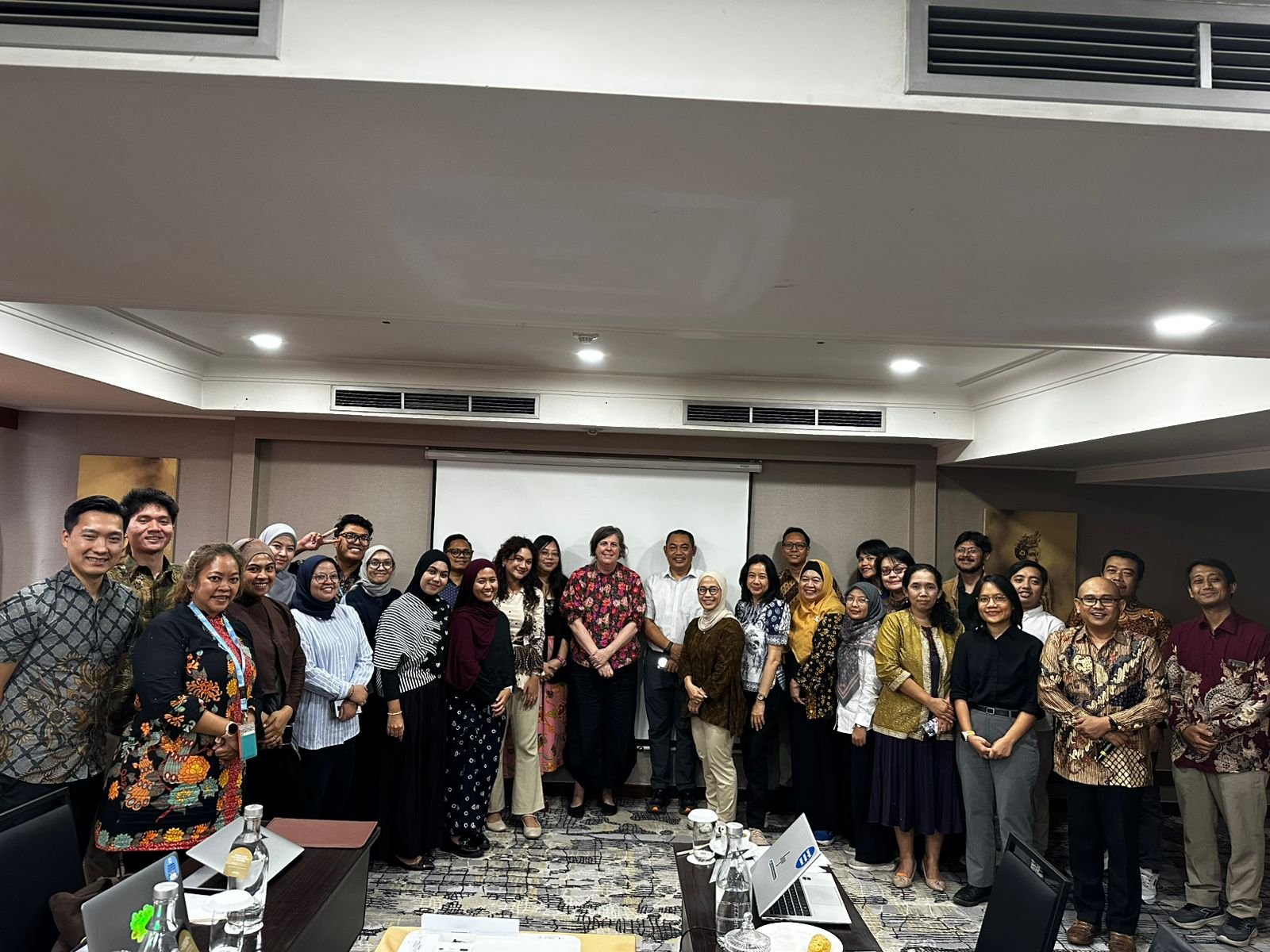
Save the Children presented the progress of the KREASI Program during the Indonesia Local Education Group (Mitra Pendidikan Indonesia/MPI) Third Quarter Workshop 2026, which brought together government representatives, donors, and education development partners on 1 September 2026. The meeting was attended by a wide range of partner organizations, including UNICEF, Plan Indonesia, the Center for Education Standards and Policy (Pusat Standar dan Kebijakan Pendidikan/PSPK), the Southeast Asian Ministers of Education Organization (SEAMEO), UNESCO, SMERU, Article 33 Indonesia, JPPI, as well as the Global Partnership for Education (GPE), the World Bank, and LP Ma’arif NU, who joined virtually.
During the discussion on GPE-supported programs in Indonesia, participants reviewed a range of ongoing and planned education initiatives. Updates were provided on several strategic programs, including the GPE System Capacity Grant managed by UNICEF, the GPE Multiplier Grant implemented by Save the Children through the KREASI Program, GPE KIX EMAP implemented by PSPK, and GPE Education Out Loud managed by JPPI.
Progress achieved by the KREASI Program between April and August 2026 was presented by Alifah Sri Lestari, Chief of Party of KREASI at Save the Children. She highlighted key accomplishments in implementing activities focused on improving the quality of foundational education through strengthened literacy, numeracy, and character development for early childhood and primary school students across KREASI’s intervention areas.
The presentation received positive feedback from workshop participants and sparked discussions with representatives from the Ministry of Religious Affairs, UNICEF, and Australia’s Department of Foreign Affairs and Trade (DFAT). Participants noted that KREASI’s approach of strengthening the capacity of local governments, schools, teachers, and school leaders is an important strategy for ensuring the sustainability of education quality improvements.
In his remarks, Toni Toharudin, Head of the Agency for Primary and Secondary Education Policy and MPI Co-Chair representing the Ministry of Primary and Secondary Education, emphasized that GPE-supported programs, including KREASI, are closely aligned with Indonesia’s national education development agenda.
“GPE-supported programs in Indonesia have contributed to key government priorities, ranging from addressing the issue of Out-of-School Children (Anak Tidak Sekolah/ATS), strengthening literacy and numeracy based on national assessment results, to expanding access to education services in frontier, outermost, and disadvantaged regions. The collaboration that has been built over the years provides an important foundation for accelerating quality education for all Indonesian children,” he stated.
He also highlighted the importance of using the PISA 2025 results as a collective opportunity for reflection and improvement. According to him, strengthening teacher competency must remain a top priority in preparation for PISA 2029, alongside enhancing the implementation of Deep Learning (Pembelajaran Mendalam) approaches and increasing the use of assessment data, including the Academic Competency Test (Tes Kemampuan Akademik/TKA), as a basis for education policies and programming.
Meanwhile, Amien Suyitno, Director General of Islamic Education and MPI Co-Chair representing the Ministry of Religious Affairs, joined the workshop virtually and shared that the implementation of the Love-Based Curriculum (Kurikulum Berbasis Cinta) and the strengthening of ecotheology are among the ministry’s current priorities.
“The role of GPE and all education partners is crucial in supporting various education transformation agendas, including strengthening regulations that support the implementation of the Love-Based Curriculum and ecotheology,” he said.
He added that the Directorate General of Islamic Education continues to work toward improving literacy, numeracy, and science outcomes in madrasahs. Partnerships with various stakeholders, including GPE-supported programs, are therefore considered essential for expanding support to education institutions, particularly private madrasahs that continue to require strengthened capacity and resources.
Through its participation in this meeting, the KREASI Program reaffirmed its commitment to supporting Indonesia’s national education priorities through strengthening education system capacity, improving the quality of foundational learning, and fostering close collaboration with government institutions and education development partners across Indonesia.