


Fostering Best Practice in Pesisir Barat
At school, children attend lessons, play with their friends, and then go home. Everything may appear normal on the surface, but beneath it, there are often things that teachers do not immediately see. Some children choose to remain silent when they are teased. Others distance themselves from their peers because they feel excluded. Some quietly carry the hurt caused by unkind treatment from classmates. Children who are quiet or perceived as different can sometimes become targets. Even when they feel offended or upset, they may not always have the confidence to speak up.
Dhynia realized that not every child feels comfortable sharing their concerns directly with a teacher. Some students are willing to approach their homeroom teacher or the teacher on duty, but others prefer to keep their problems to themselves. When asked how they are doing, their responses are often brief: “I’m fine,” “It’s okay,” or “I don’t remember.”
Helping children like these share their experiences requires a careful approach. Teachers need to build trust and create a sense of safety without making children feel as though they are being interrogated.
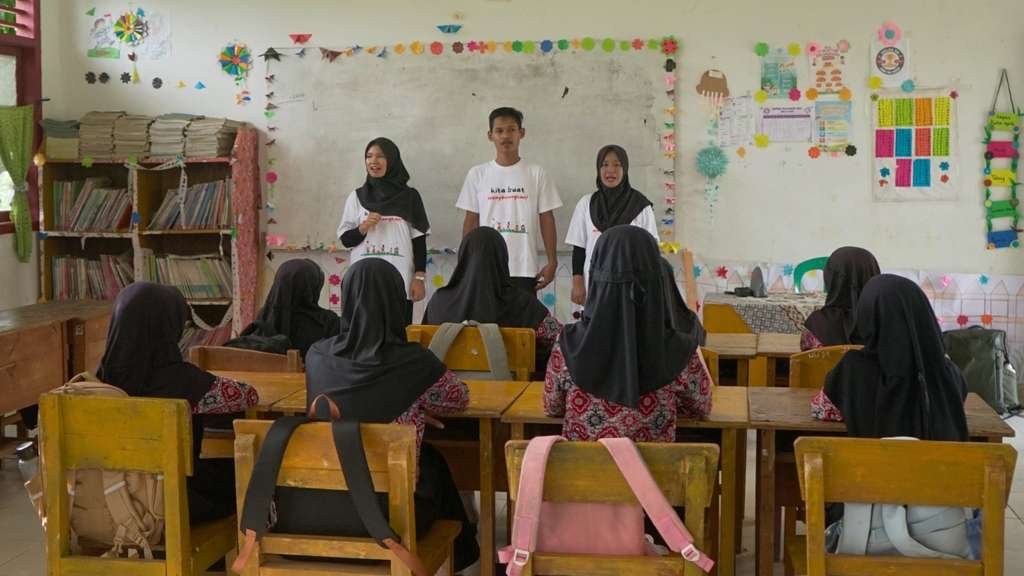
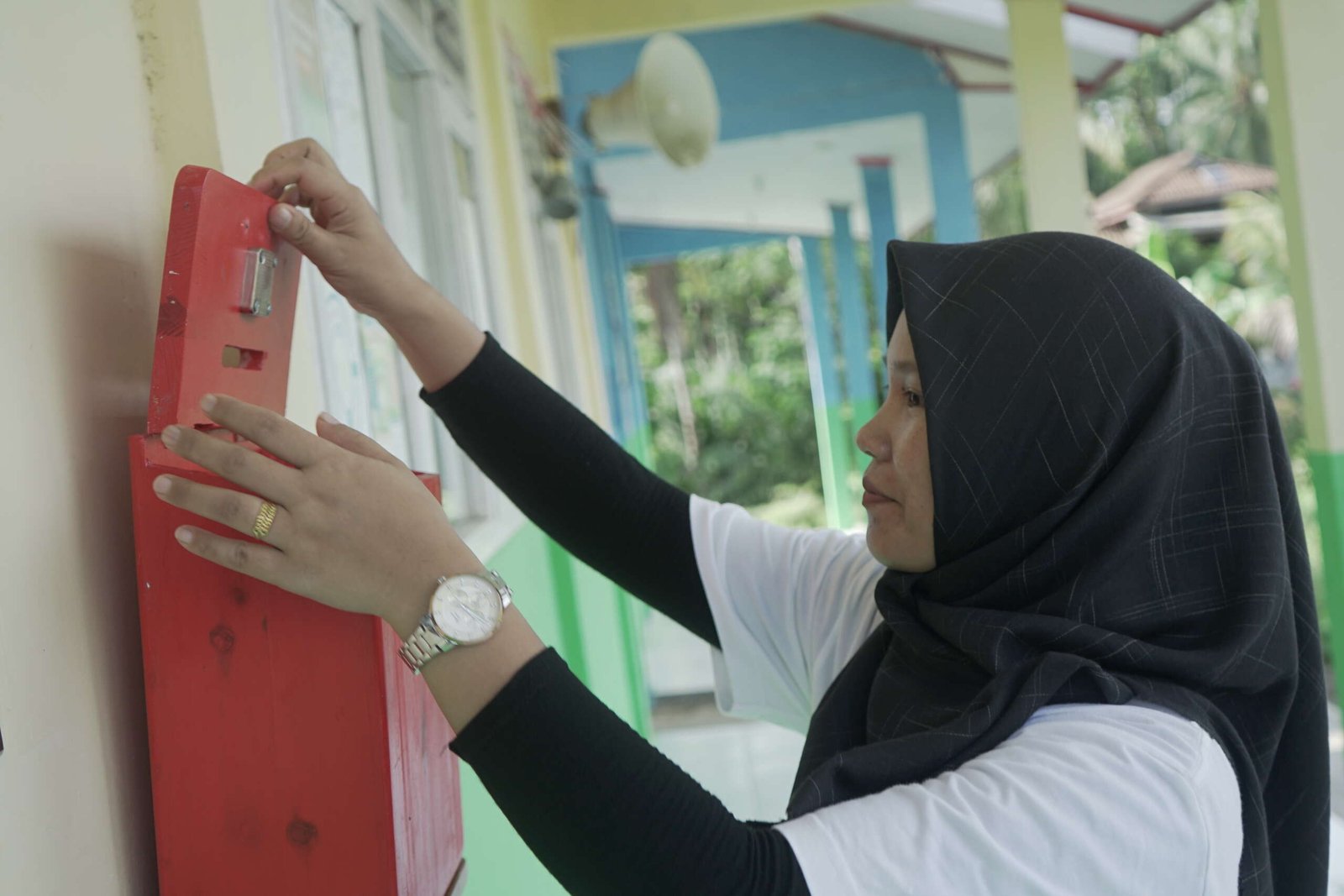
As one form of support for partner schools, KREASI Pesisir Barat provides suggestion and complaint boxes that can be utilized by teachers and the School Child Protection Team (Perlindungan Anak di Sekolah/PAS). These simple locked boxes serve as a channel for children to share their experiences, concerns, or anything that makes them feel uncomfortable. Students can choose to include their names or submit reports anonymously. The reports are then reviewed and followed up by the designated teacher or responsible staff member.
One initiative the school introduced was a suggestion and complaint box. This simple locked box provides a channel through which children can share experiences, concerns, or situations that make them feel uncomfortable. Students may include their names or submit reports anonymously. The reports are then reviewed and followed up by the designated teachers.
For children who are not yet ready to speak directly, the box can become a first step toward seeking help.
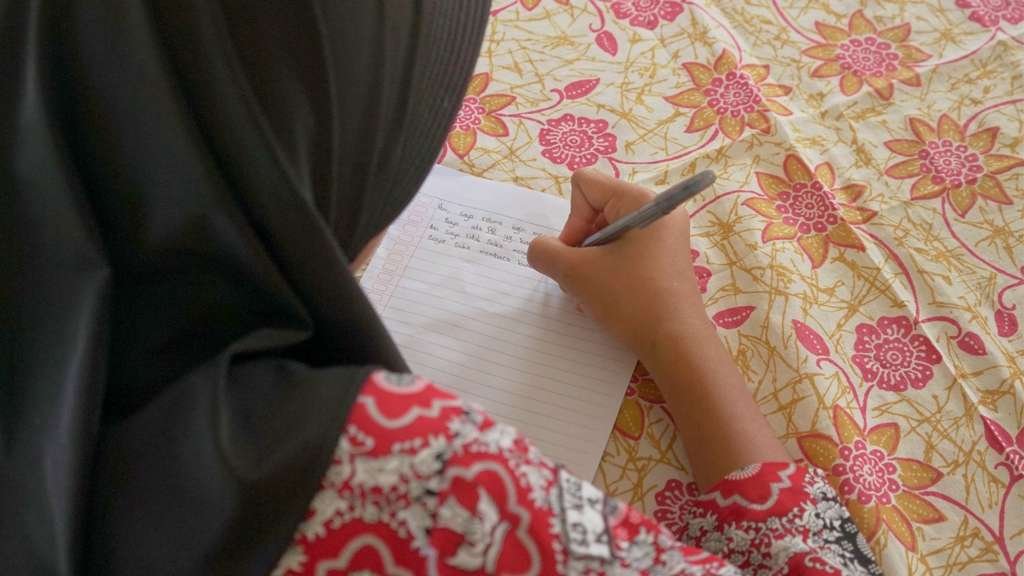
One report came from a fifth-grade student named Muli (not her real name). Muli struggled with reading and was frequently mocked by her classmates. Some called her “stupid” and questioned why a fifth-grade student was still unable to read fluently.
Over time, Muli grew tired of the teasing. She felt embarrassed and began to believe she was not capable. Yet she did not tell her teachers directly about how she felt. Instead, she asked a friend to help write and submit a complaint on her behalf.
After receiving the report, Dhynia met privately with Muli. She listened to her story and reassured her that every child has the opportunity to learn and develop at their own pace and according to their own abilities. Dhynia also addressed the behavior of the students who had been teasing her, doing so in a way that did not make Muli feel even more isolated.
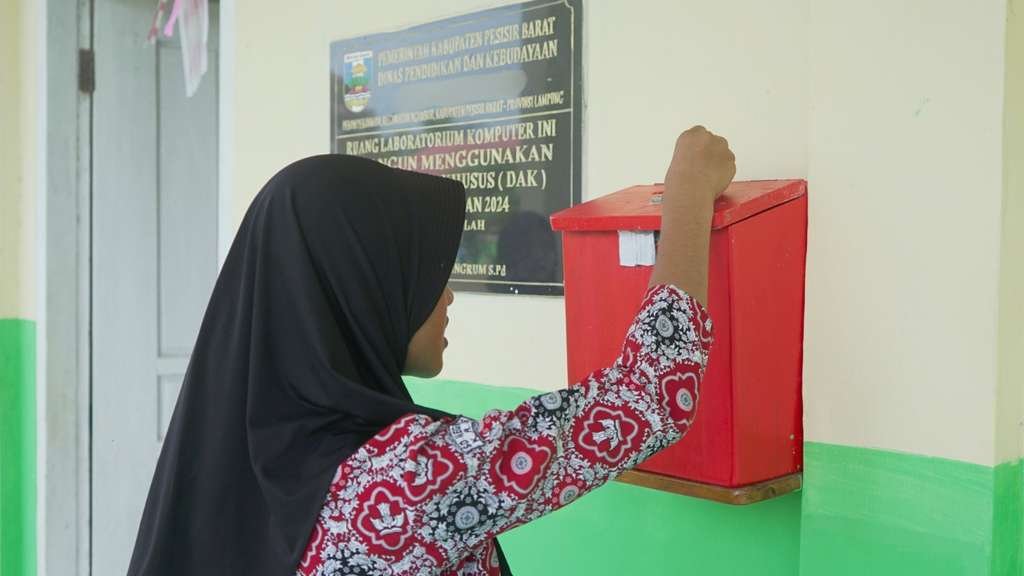
Gradually, positive changes began to emerge. Muli, who had previously become withdrawn, started smiling again and was willing to play with her classmates. Other students also began to understand that something they considered a joke might not feel amusing to the person receiving it.
The experience reminded Dhynia that children’s challenges are often more complex than they first appear. A child who struggles academically, for example, may also be facing difficulties at home or within their friendships. This is why teachers need to make time to listen to and understand children’s stories.
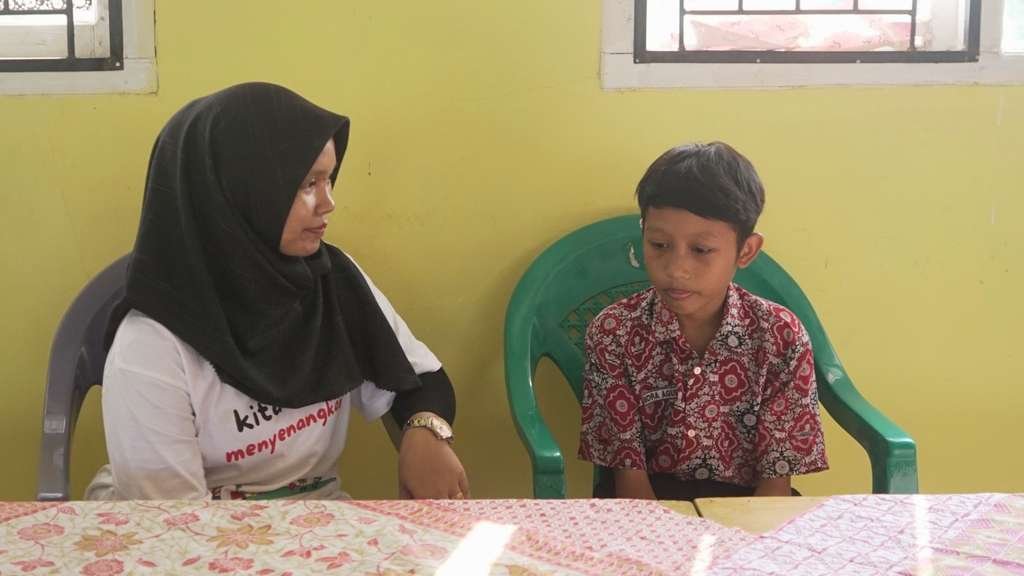
Of course, simply providing a suggestion box does not automatically make every child willing to report their concerns. Some still fear being identified by their peers, while others submit reports that lack enough information for follow-up. The school continues to learn and improve both the reporting process and the measures taken to protect children’s confidentiality.
For Dhynia, the most important thing is ensuring that children feel their concerns will be taken seriously.
“What children often need most is not an immediate solution or a lengthy lecture from a teacher. What they need is the reassurance that their feelings, fears, and discomfort are real, important, and worthy of being heard without judgment,” she said.
A suggestion box may seem like a simple intervention. Yet for a child who is not ready to speak out, it can be the beginning of courage. It can help a story reach a trusted adult. And it can help a child believe that when something hurts them, there is a safe place where they can ask for help.
_____
KREASI (Collaboration for the Education of Indonesian Children) is a program to improve the quality of education by strengthening literacy, numeracy, and character education. KREASI in Pesisir Barat is managed by Save the Children and implemented by Yayasan Guru Belajar, with funding from the Global Partnership for Education, as well as support from the Government of Pesisir Barat and Indonesia’s Local Education Group, led by the Ministry of Primary and Secondary Education and the Ministry of Religious Affairs.
Writer: Clara Sidharta | Photo: Clara Sidharta/KREASI/Yayasan Guru Belajar/Save the Children