


Fostering Best Practice in Pesisir Barat
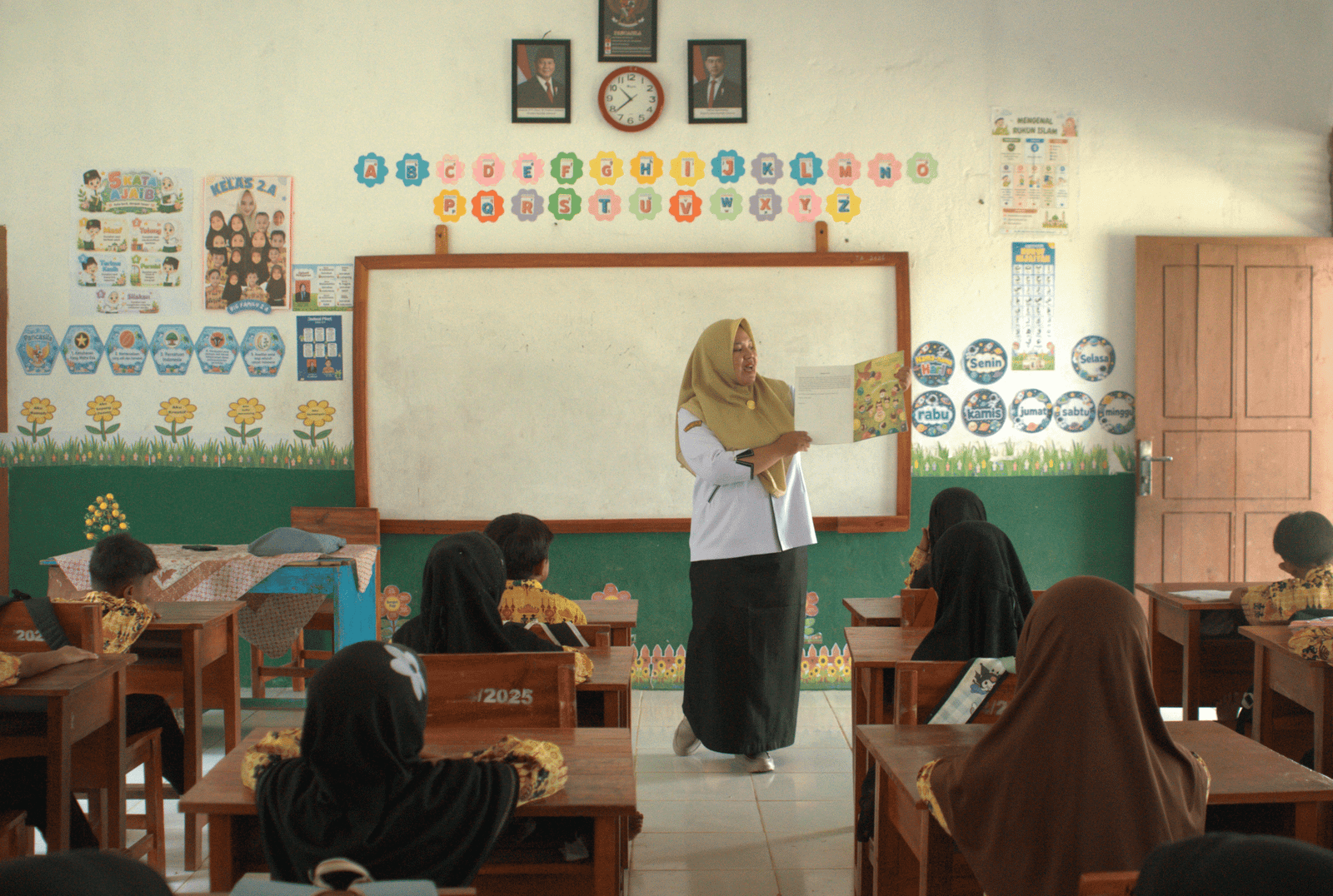
The walls of Amal’s classroom, a teacher at a public primary school in Pesisir Barat, did not have much to say in the past. Aside from the class schedule, cleaning roster, and annual calendar, there was little on display. There was no reading corner, and few visual materials that could spark children’s curiosity. The classroom was simply a place where students came to attend lessons, while recess was a time when most of them rushed outside to play.
Yet Amal had long been trying to nurture a culture of reading among her students. Every day, she set aside around ten minutes for reading activities. She encouraged students to read learning materials before taking notes and even distributed books that were no longer being used so children could bring them home.
Building reading habits, however, was not easy.
Her students’ abilities varied widely. Some were already fluent readers, while others were still sounding out words syllable by syllable. A few had not yet mastered letter recognition. Those who struggled with reading often found it difficult to understand texts, while others had little initiative to pick up a book unless they were specifically asked to do so.
Over time, Amal realized there was something she wanted to change about the learning environment itself. She wanted children to feel excited when they entered the classroom, comfortable while learning, and eager to stay even after lessons had ended. She envisioned a more vibrant space, filled with colorful visuals and books that children could access whenever they wished.
The opportunity to bring that vision to life came through the training by KREASI Pesisir Barat. Through the training, Amal gained new knowledge and practical skills, from introducing letters through phonics and conducting reading assessments to understand each child’s ability, to reading stories aloud using engaging tone, expression, and intonation.
The experience inspired her to rethink how reading could be presented in the classroom. She learned that reading activities could be far more interactive and enjoyable. Storybooks, for example, did not always have to be read independently. Teachers could read them aloud with expression, invite children to listen closely, and encourage discussions about the stories afterward.
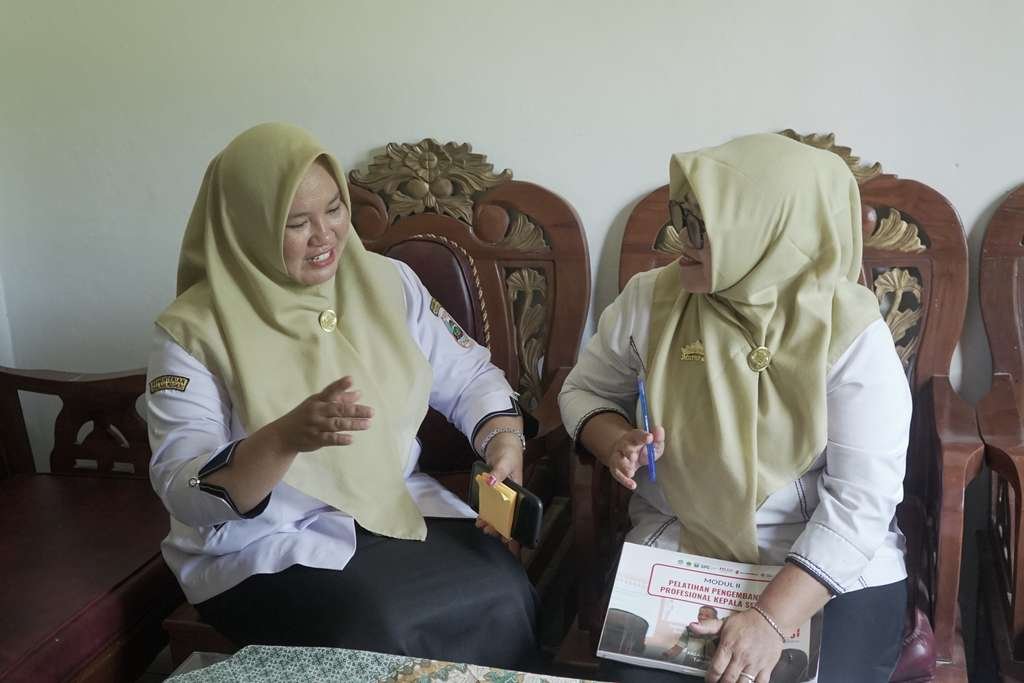
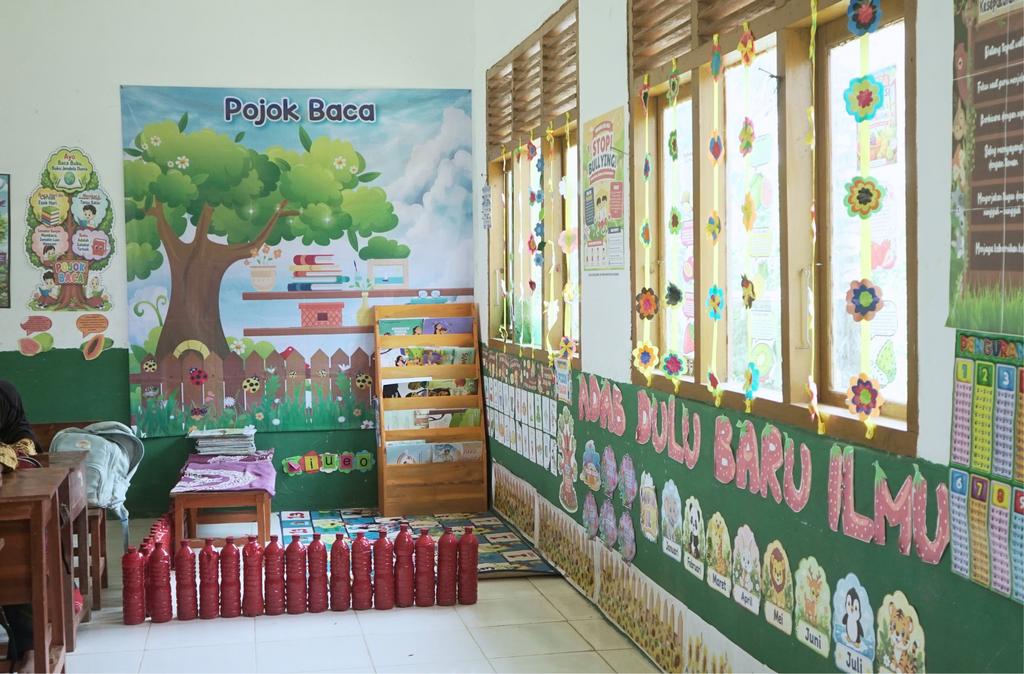
When she returned from the training, Amal began making changes in her own classroom. Together with fellow teachers who had also participated in KREASI training, she transformed the learning space by adding educational posters and visual displays. They printed reading materials, posted positive messages around the room, and set up a reading corner stocked with storybooks.
Gradually, the once-bare classroom walls came to life.
A poster promoting anti-bullying messages, for instance, became a starting point for conversations about respect, kindness, and the harmful effects of bullying. The images and messages displayed around the room were no longer just decorations. They became part of the children’s daily learning experience.
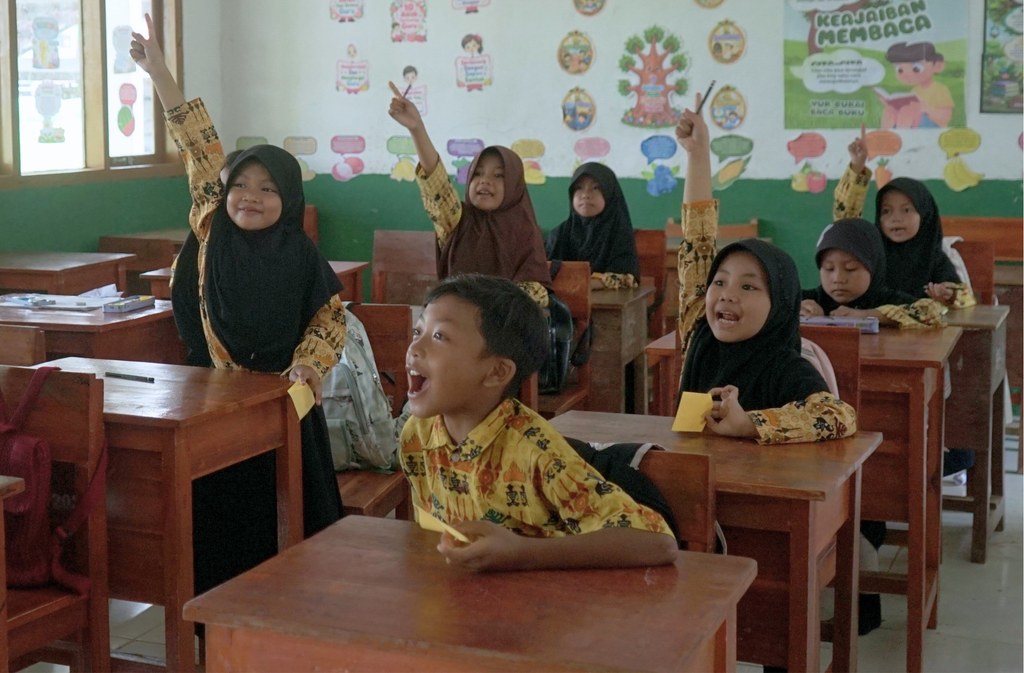
Amal also introduced regular read-aloud sessions. She read stories using expressive voices and animated delivery to capture students’ attention. At times, she invited them to answer questions, make predictions, or retell parts of the story they remembered.
These seemingly small changes brought a noticeable shift in the classroom atmosphere.
Students became more enthusiastic about spending time in a space that felt welcoming and engaging. The reading corner, which had not existed before, quickly became a place children visited of their own accord. During breaks or after completing their classwork, some students could be seen pulling books from the shelves and turning page after page without being prompted by a teacher.
One student who stood out to Amal was Muli (not her real name).
Previously, Muli had been known as a quiet child who rarely left her seat. But after the reading corner was introduced, Amal noticed a change. Once lessons ended, Muli often headed straight to the corner. Although she still struggled to read fluently, she began to enjoy spending time with books, studying the illustrations and attempting to read at her own pace.
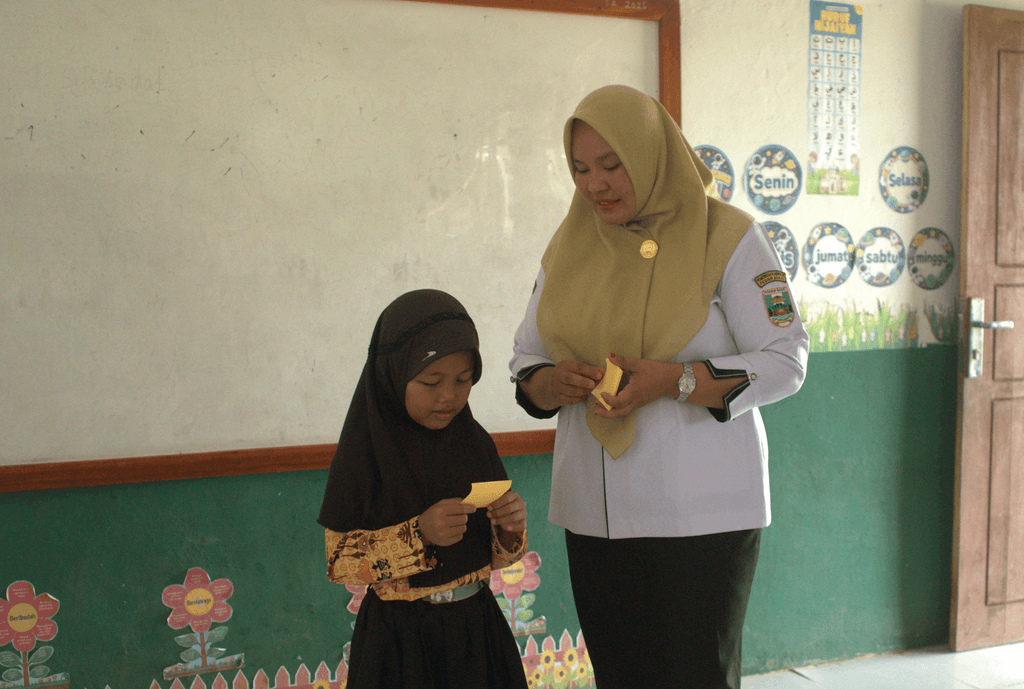
For Amal, moments like these were deeply rewarding.
She could see that children were beginning to take the initiative to approach books on their own. Not all of them became fluent readers overnight, but books were starting to become something they genuinely wanted to engage with.
The changes in Amal’s classroom also inspired her fellow teachers. Seeing how students embraced the reading corner encouraged other teachers to improve their own classrooms. Gradually, efforts to create literacy-rich learning environments began spreading throughout the school.
Of course, the journey is far from over. Every child has different interests, abilities, and learning needs. Amal continues to explore ways to ensure that each student has the opportunity to develop according to their individual potential. But she now carries new knowledge, experience, and confidence that motivate her to keep experimenting and learning.
Through the simple act of reimagining her classroom, Amal discovered an important lesson: the environment in which children learn plays a powerful role in shaping their motivation.
A welcoming and engaging classroom can spark enthusiasm for learning and encourage children to pick up a book not because they are told to, but because they want to.
“When the classroom is comfortable and inviting, children become much more enthusiastic about learning. They enjoy being in the classroom and start developing an interest in reading on their own,” said Amal.
Today, the reading corner has become one of the most vibrant spaces in Amal’s classroom. Some children are gaining confidence in sounding out words, others delight in exploring the illustrations in storybooks, and some simply come because they want to read.
Their steps may still be small, and each child’s journey may look different. Yet from a classroom intentionally designed to be more welcoming and engaging, new opportunities are growing every day, bringing children closer to the joy and lifelong habit of reading.
_____
KREASI (Collaboration for the Education of Indonesian Children) is a program to improve the quality of education by strengthening literacy, numeracy, and character education. KREASI in Pesisir Barat is managed by Save the Children and implemented by Yayasan Guru Belajar, with funding from the Global Partnership for Education, as well as support from the Government of Pesisir Barat and Indonesia’s Local Education Group, led by the Ministry of Primary and Secondary Education and the Ministry of Religious Affairs.
Writer: Clara Sidharta | Editor: Andika Ramadhan | Photo: Clara Sidharta/KREASI/Yayasan Guru Belajar/Save the Children