


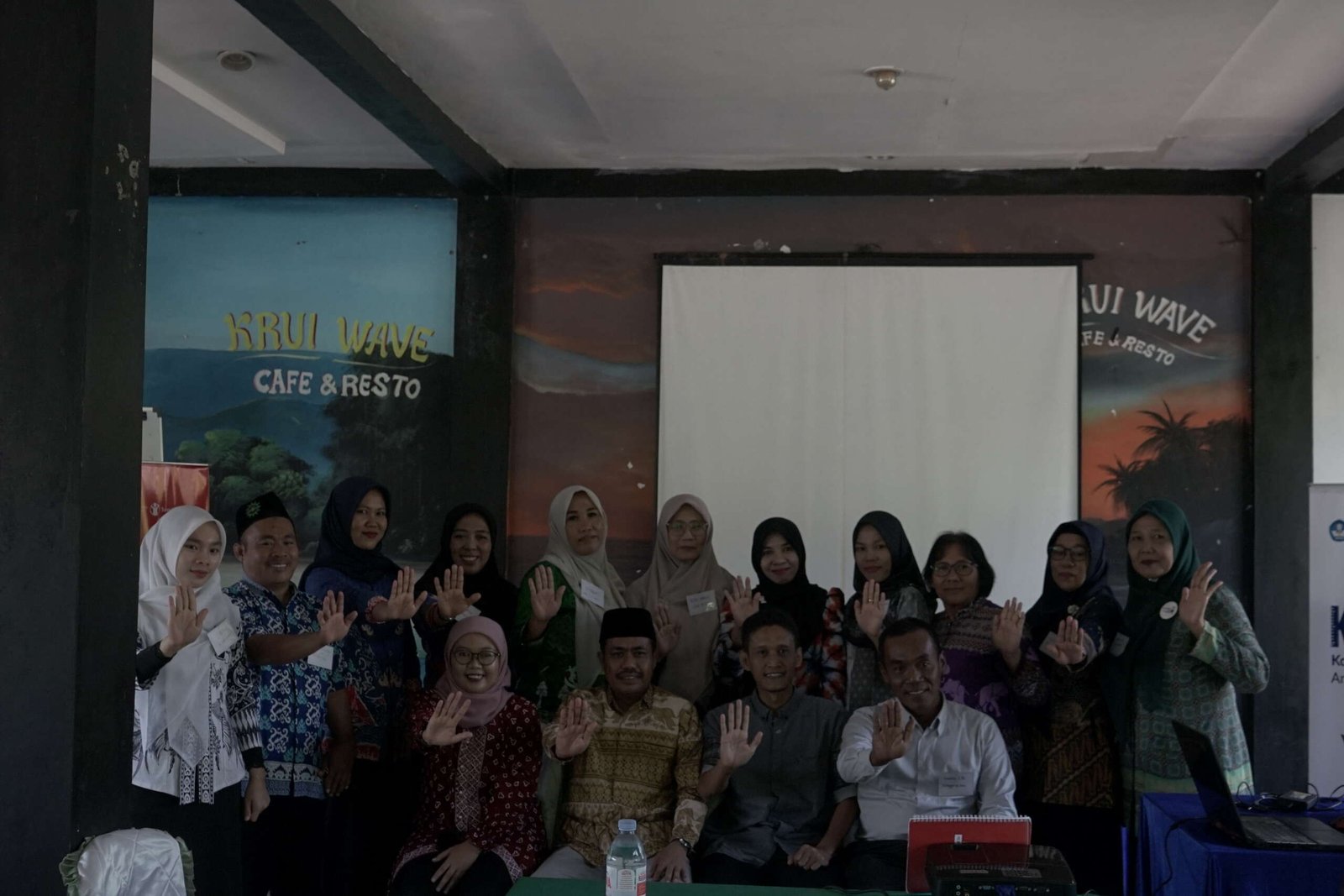
Eight school principals from KREASI partner schools participated in the Peer Learning Group Facilitator Training for School Principals, held on 17–18 July 2026 in Pesisir Barat District. The activity was part of the KREASI School Principal Capacity Development Program and served as a follow-up to the first phase of training conducted in June 2026. After strengthening the leadership and academic supervision capacities of all participating principals, this training focused on preparing eight selected principals to serve as group facilitators who will support peer learning activities for 22 other partner school principals.
Through peer learning, professional development does not end when formal training is completed. The KREASI Program encourages school principals to continuously discuss, reflect upon, and apply the good practices they have learned through principal learning groups. Within this approach, group facilitators do not act as supervisors or primary trainers. Instead, they serve as peers who help ensure that the learning process remains participatory, collaborative, and focused on addressing real challenges faced in schools.
Over the course of the two-day training, participants explored the concept of peer learning, gained a deeper understanding of the role of group facilitators, and practiced leading discussion sessions through various simulations. A range of learning methods was used, including experience sharing, group discussions, reflection exercises, case studies, and facilitated practice sessions in which participants took turns leading peer learning meetings. This approach allowed every participant to experience both the facilitator role and the learner role they will encounter when supporting their peers.
One of the most memorable sessions took place when participants were invited to share their experiences as school leaders. A variety of stories emerged from the discussions, ranging from efforts to strengthen teacher discipline and commitment to overcoming limited school facilities and creating more conducive learning environments for children. The atmosphere became emotional as several participants struggled to hold back tears while reflecting on their journeys as school principals. The session served as a reminder that behind every school lies a story of dedication and perseverance that often goes unnoticed.
Through these shared experiences, participants realized that many of the challenges they face are remarkably similar. While each principal encounters unique circumstances, they also bring valuable experiences and solutions that can benefit others. This realization reinforced the importance of peer learning as a safe space where school principals can exchange experiences, discuss challenges, and work together to identify solutions to issues affecting their schools.
On the second day, the training focused on practical facilitation skills. Participants were divided into two groups and took turns serving as facilitators. They practiced managing discussions, using mentoring tools, asking reflective questions, and responding to different participant characteristics that they may encounter in future group sessions, including dominant, passive, defensive, or less confident participants. These simulations helped participants visualize real situations they may face when facilitating principal peer learning groups in their respective areas.
The training also equipped participants with strategies to anticipate and address challenges that may arise during implementation. Through reflection and mitigation exercises, the facilitators mapped the characteristics of their future group members, discussed appropriate engagement approaches, and developed strategies to ensure that each peer learning session remains participatory and focused on collaborative problem-solving.
The activity marked an important first step in establishing principal learning groups that can support and strengthen one another. Amid the many challenges of leading schools, principals also need opportunities to share experiences, gain new perspectives, and receive encouragement from peers facing similar situations. Through peer learning, professional growth continues beyond formal training and is sustained through regular meetings that promote the adoption of effective practices across schools.
By strengthening the capacity of group facilitators, the KREASI Program aims to ensure that peer learning can be implemented independently and sustainably across all partner school clusters. Through a growing culture of continuous learning, school principals are expected not only to develop as instructional leaders but also to become part of a supportive professional network committed to advancing student-centered learning in their schools.
_____
KREASI (Collaboration for the Education of Indonesian Children) is a program to improve the quality of education by strengthening literacy, numeracy, and character education. KREASI in Pesisir Barat is managed by Save the Children and implemented by Yayasan Guru Belajar, with funding from the Global Partnership for Education (GPE), as well as support from the Government of Pesisir Barat and Indonesia’s Local Education Group, led by the Ministry of Primary and Secondary Education (Kemendikdasmen) and the Ministry of Religious Affairs (Kemenag).
Writer: Clara Sidharta | Editor: Andika Ramadhan | Photo: Clara Sidharta/KREASI/Yayasan Guru Belajar/Save the Children