


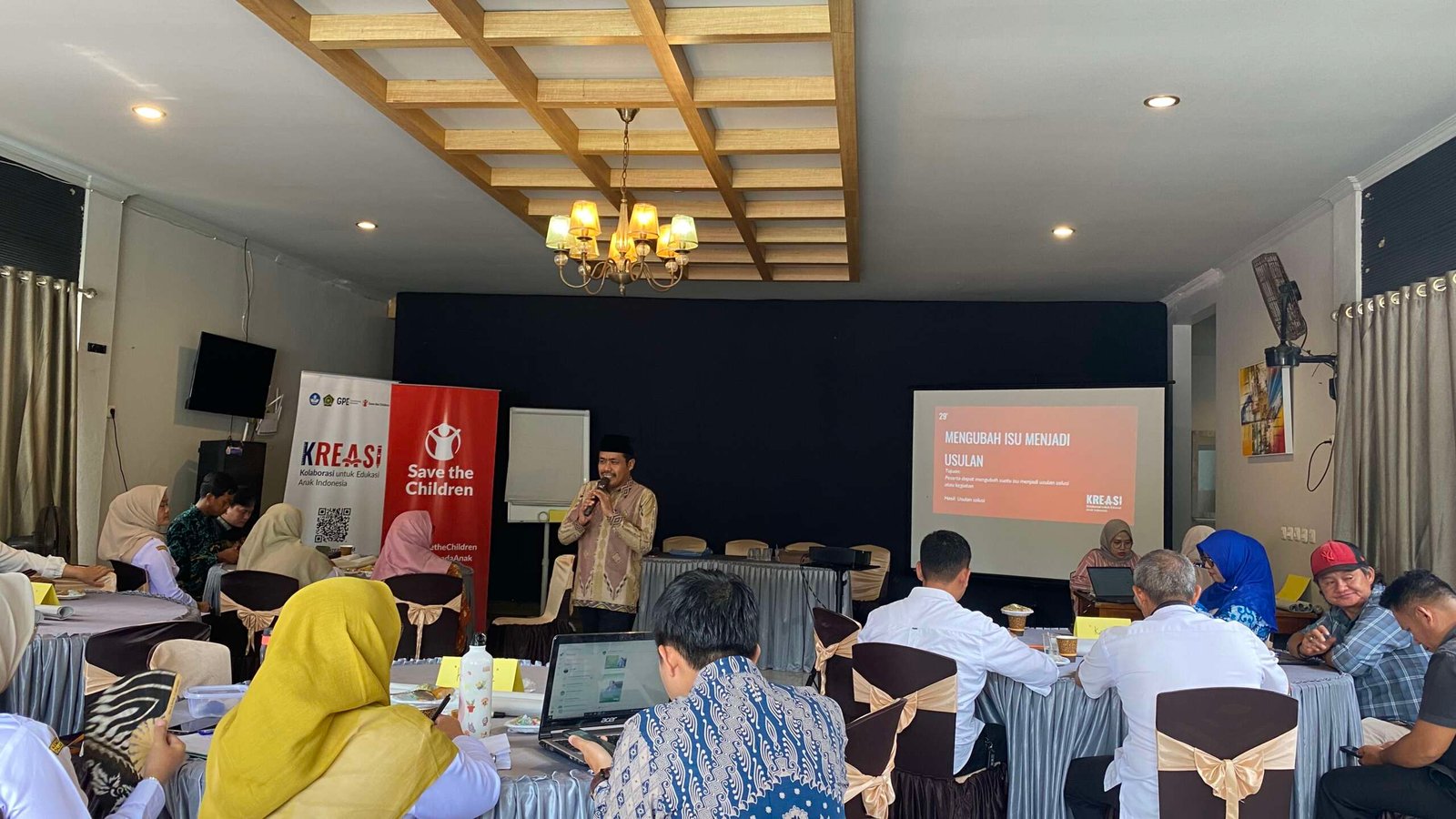
Building collaboration is an important first step in strengthening the education ecosystem. To ensure that collaboration generates meaningful impact, stakeholders must also have the capacity to advance education priorities through regional development planning processes. This spirit underpinned the 2026 Musrenbang Follow-up Meeting: Strengthening the Education Consortium’s Advocacy Strategy in the Regional Planning Cycle, held on 29 July 2026.
The event was part of the ongoing advocacy efforts of the KREASI Program, which began with the Education Dialogue and Stakeholder Mapping Session in May 2026, followed by the KREASI Reflection Forum in early July 2026. While the earlier stages focused on building a shared understanding among stakeholders and establishing the Education Consortium, this meeting concentrated on strengthening consortium members’ capacity to develop and advocate for education priorities through formal regional planning mechanisms.
Active participation from the local government and the Ministry of Religious Affairs once again played a key role in supporting the development of the Education Consortium. The learning sessions were facilitated by Eman Sulaeman, Junior Regional Planner at the Pesisir Barat District Regional Development Planning Agency (Bapperida), together with Slamet, Head of the Islamic Education Section at the Pesisir Barat District Office of the Ministry of Religious Affairs. Joined by 26 representatives from regional government agencies, teacher professional organizations, and community-based organizations, the forum provided a valuable learning space for understanding the regional planning cycle and enhancing participants’ advocacy skills so that education issues can be effectively promoted through regional planning forums.
A range of education issues were discussed during the meeting, including teacher competency development, strengthening early childhood education services, the use of educational technology, and child protection in school environments. Participants then worked together to formulate advocacy messages that were concise, clear, and relevant, equipping them to communicate education priorities effectively within regional planning discussions.
Through a Musrenbang simulation exercise, participants had the opportunity to practice presenting proposals in a setting that replicated actual regional planning forums. Facilitators emphasized the importance of developing proposals that are realistic, evidence-based, and aligned with local government priorities and authorities, thereby increasing the likelihood that the proposals will be considered and incorporated into development plans.
The activity demonstrated that strengthening the Education Consortium extends beyond establishing an organizational structure and building collective commitment. By improving advocacy capacity, consortium members are expected to become more effective in advancing strategic education issues and ensuring that they are integrated into regional development planning processes. In doing so, the collaboration that has been built can continue to evolve into concrete action that supports more responsive education policies and better addresses the needs of children across Pesisir Barat District.
_____
KREASI (Collaboration for the Education of Indonesian Children) is a program to improve the quality of education by strengthening literacy, numeracy, and character education. KREASI in Pesisir Barat is managed by Save the Children and implemented by Yayasan Guru Belajar, with funding from the Global Partnership for Education (GPE), as well as support from the Government of Pesisir Barat and Indonesia’s Local Education Group, led by the Ministry of Primary and Secondary Education (Kemendikdasmen) and the Ministry of Religious Affairs (Kemenag).
Writer: Clara Sidharta | Editor: Andika Ramadhan | Photo: Clara Sidharta/KREASI/Yayasan Guru Belajar/Save the Children