


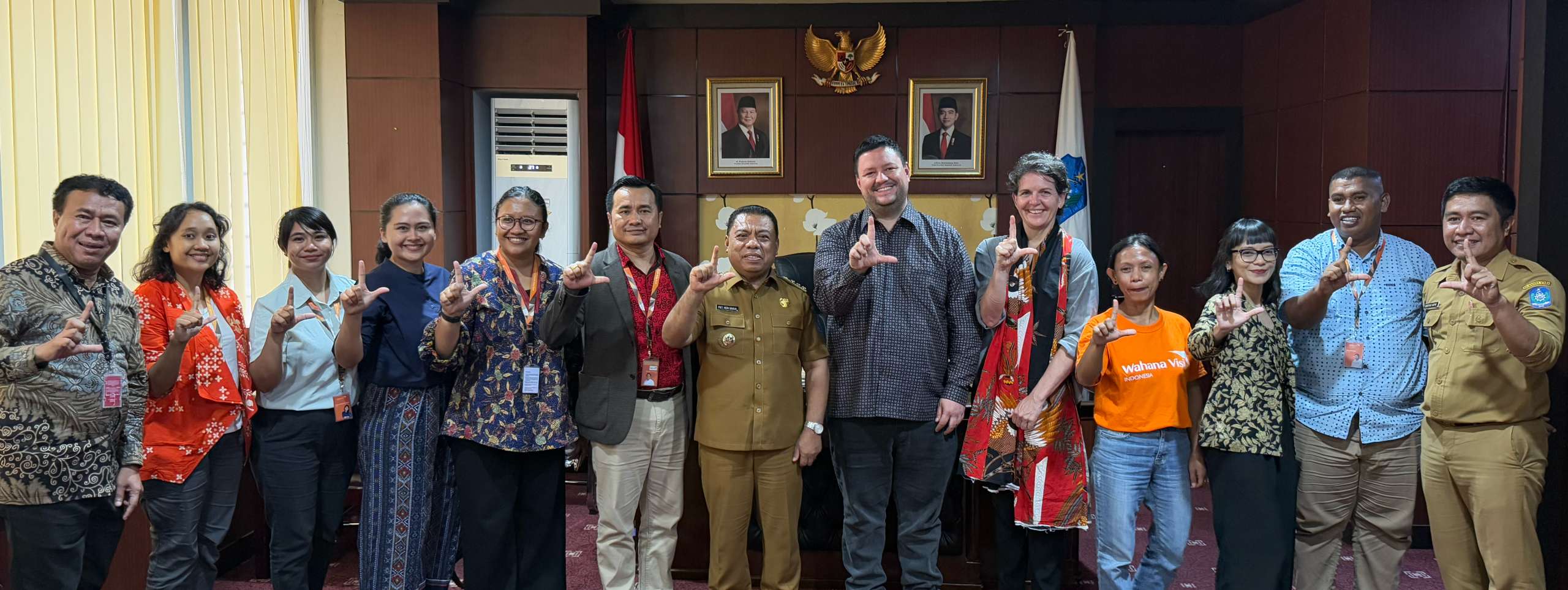
From April 29 to May 7, 2025, we traveled to North Maluku Province to visit KREASI program sites, meet with implementing partners, and gather stories from the field. Getting to Pulau Morotai from Jakarta takes nearly two days. We covered the distance by plane, long drives, and a boat ride across the sea. Our journey was indeed long, but once we arrived, it felt like the right place to be. The soft breeze, warm welcome, and genuine conversations were uplifting.
This visit was part of a leadership transition for the KREASI program. Eusebio Rincón Casado, our interim KREASI’s Chief of Party, came to observe firsthand, listen, and learn. He was accompanied by Rosianto Hamid, the former KREASI’s Chief of Party, who brought many years of field experience and insights. Caroline Keenan, Senior Education Technical Advisor from Save the Children Australia also joined, offering technical guidance and support. I was there representing the KREASI Communication and Media team, documenting stories that often remain behind the scenes.
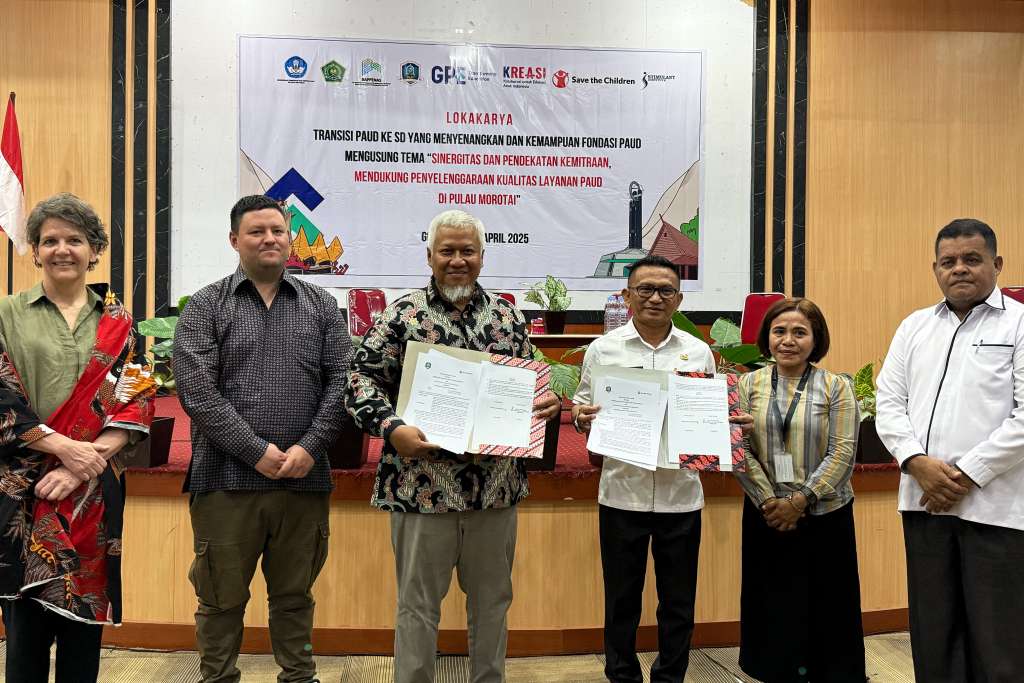
We began by attending a forum at the District Head’s Office in Pulau Morotai District, titled “Fun Transition from Early Childhood Education (ECE) to Primary School (SD).” While the name sounded light, the discussions carried weight. Together with Save the Children, Stimulant Institute, and the local government, the forum explored how to make the children’s transition from ECE to primary school smoother, more joyful, and focused on child well-being. One issue stood out. Many ECE teachers in Morotai haven’t received formal training in early childhood education. In fact, only two teachers currently hold a relevant degree. This significant gap, greatly impacts children’s learning experiences in their early years.
The next day, we visited a primary school in Buho-Buho, one of the schools identified with low literacy rates. We spoke with the teachers about their experiences with the KREASI program, implemented by Stimulant Institute. As we walked through the school, we discovered a room that functioned as a library. It was now filled with old furniture, unused items, and little light. However, it was filled with old furniture, unused items, and minimal light. Due to space limits, the school had combined it with a storage area. It was a reminder of how physical environments can either nurture or hinder a child’s love for reading.
We also held a focused discussion with Master Trainers. These educators support teachers and school leaders while delivering training on literacy, numeracy, and classroom leadership. They spoke about encouraging changes in teaching practices but also pointed to ongoing challenges. Many teachers still lack confidence in applying new methods. Another concern raised was the continuing issue of children out of school, often due to child marriage and economic hardship.
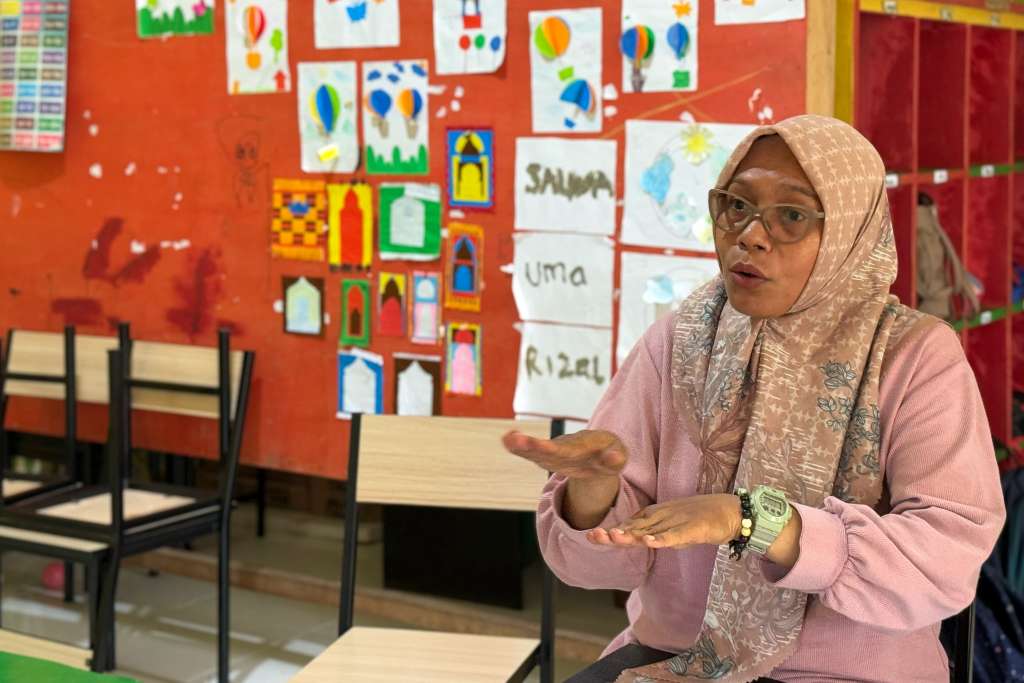
At one ECE, a teacher shared how many children come to school using harsh or inappropriate language they hear at home. In the classroom, the teacher patiently modeled positive and respectful communication, hoping to shift existing habits and culture.
When visiting an Islamic primary school, the stories we heard felt equally heavy. Teachers expressed the emotional toll they experienced witnessing the impact of domestic violence spilling into the school environment. The effects weren’t just felt by the children. It deeply affected the teachers too.
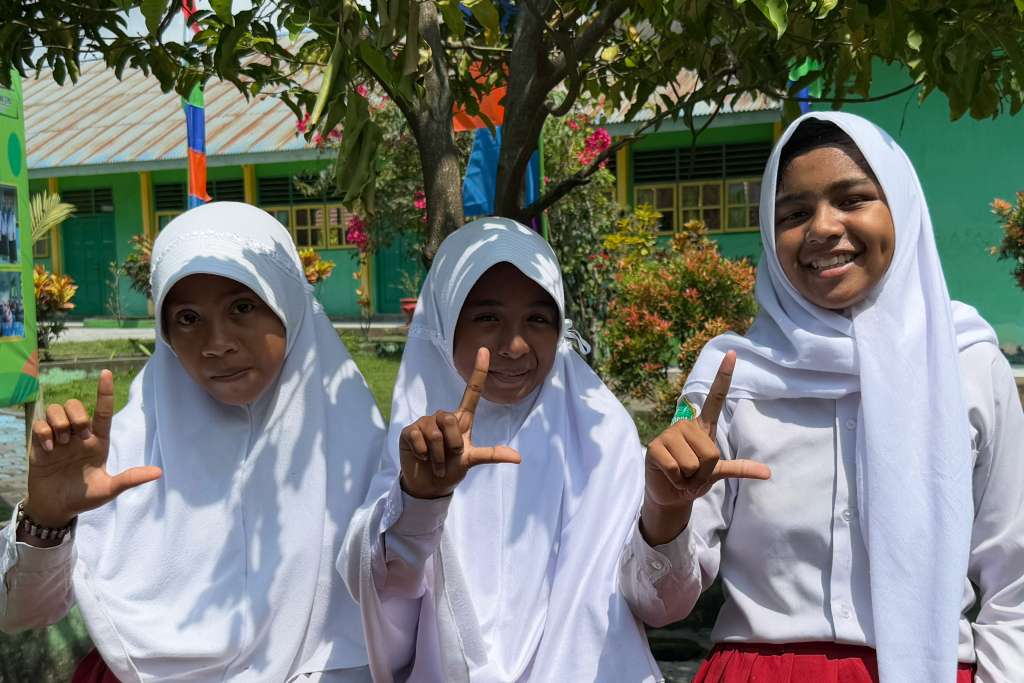
Our journey continued to Islamic primary school in Tobelo Tengah. The principal led us around several classrooms, primarily for Grades 1 to 3, as well as the library. In a follow-up discussion, teachers shared their involvement in KREASI training on literacy, numeracy, leadership, and child protection, implemented by Wahana Visi Indonesia. However, they haven’t yet begun applying knowledge gained, as their current focus is on final exams for Grade 6. Once the exams are complete, they plan to share and apply the knowledge with their fellow teachers.
Before wrapping up the visit, we had the opportunity to meet with the North Halmahera District Head, Pit Hein Babua. He confidently stated the importance of education in shaping the future. “If we want quality students, we must start by supporting quality teachers,” he emphasized. For the next five years, education will be one of his district’s top priorities. He stated that the government cannot do it alone. Collaboration is essential, and programs like KREASI have an important role.
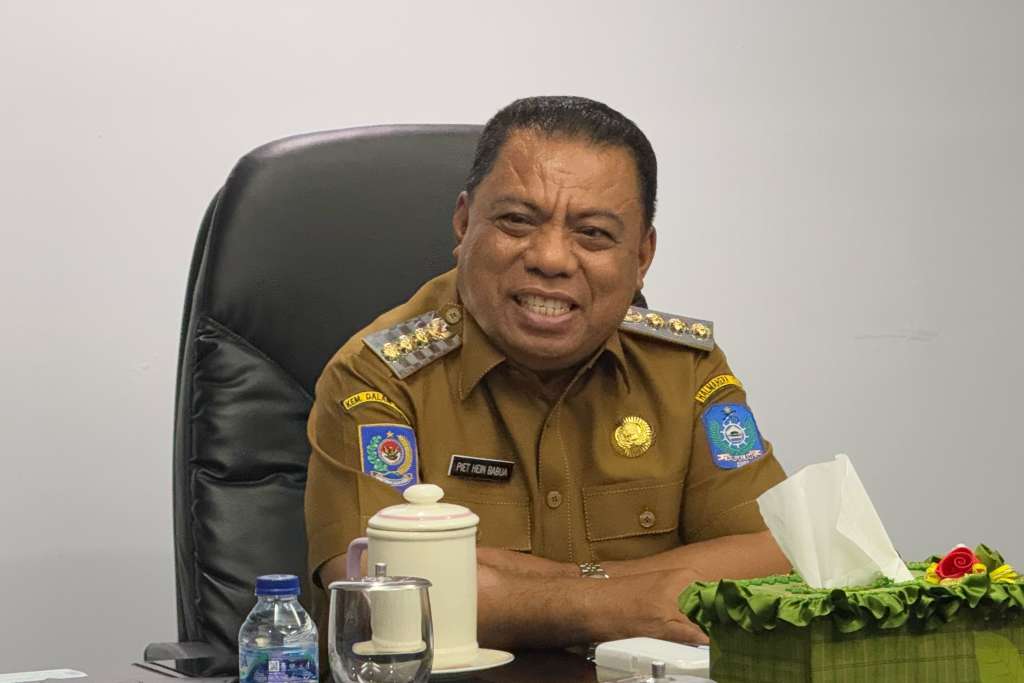
The Regent outlined three main priorities: improving school infrastructure, increasing teacher capacity, and ensuring that schools are safe and supportive spaces for every child. These priorities align closely with KREASI’s mission to strengthen literacy, numeracy, and character education from an early age.
As we made our way back from North Maluku, I reflected on the people we met. Teachers doing their best with what they have. Children carrying life experiences too heavy for their age. Leaders navigating the space between vision and reality. This visit reminded us that progress doesn’t always look grand or move fast. Sometimes, it begins with a conversation. Or, a teacher who chooses kindness, even on the most challenging days.
Writer: Laras Sabila Putri (KREASI Communication and Media Manager)